
TL;DR
A Livingetc article by a designer who grew up in Kyoto explains how Japanese tea-gathering principles can inform hosting at a Western table. Its focus is omotenashi, or hospitality attentive to particular guests, and ichigo ichie: the idea that each meeting happens only once.
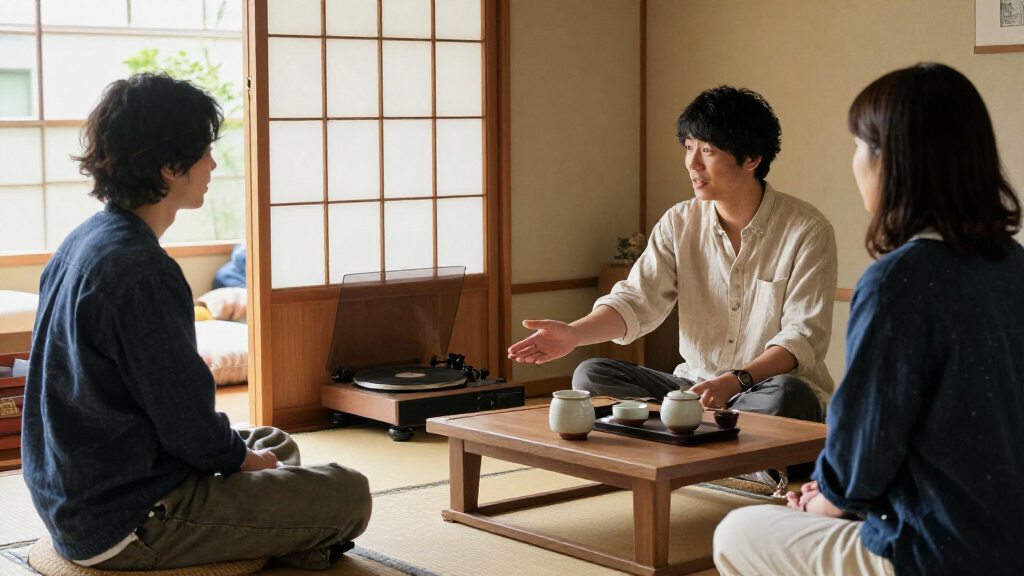
Livingetc has published a first-person report in which a designer who grew up in Kyoto and now designs homes in London describes how principles from Japanese tea gatherings can guide everyday hosting. The advice centers on omotenashi, or attentive hospitality, and ichigo ichie, the idea that a particular meeting will not happen in quite the same way again.

Get business pricing on your home office setup
- Business-only prices and quantity discounts
- Tax-exempt purchasing
- Multiple users, one account, clear invoices
The report applies tea-room practices to the five senses: sight, smell, sound, touch and taste. Rather than recommending elaborate ceremony, it asks hosts to make choices with the people attending in mind. The article says this approach can be used without serving tea or creating a dedicated tea room.
For sight, the writer describes a tea room arranged around a hanging scroll and a single flower, selected for the day and sometimes for a particular guest. At a Western dinner table, the comparable step is to remove competing objects and decide what guests should notice. The report’s suggestion is not to reproduce a tea room, but to make a deliberate choice about the setting.
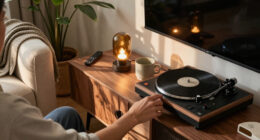
The other examples are similarly specific. The article describes seasonal incense, a kettle’s soft sound, bowls selected for temperature and feel, and sweets shaped to reflect the season. For home hosting, it suggests considering a room’s scent before the doorbell, choosing music for the people coming and lowering it once conversation begins, and serving a dish or treat selected for that group.
How Sensory Choices Shape Hosting
The report matters as a practical design perspective because it shifts the focus from decor and effort to the experience of particular guests. Its examples ask hosts to pay attention to what people see, hear, smell, hold and eat, while avoiding the assumption that more decoration or preparation necessarily makes a gathering more welcoming.
That framing also gives readers a way to adapt the ideas without copying a formal tea ceremony. A host might clear space on a table, consider whether a cup feels comfortable to hold, or select a dish with a guest in mind. These are suggestions from the writer, not findings from a study or a claim that one approach suits every household.
Products Worth Considering

EGO POWER+ 26-Inch Cordless Hedge Trimmer (Battery and Charger Not Included), HT2600

DEWALT DWS520K 6-1/2-Inch Corded Track Saw Kit

Makita XPS01PTJ 18V X2 LXT Brushless 6-1/2-Inch Plunge Circular Saw Kit with Two 5.0Ah Batteries
As an affiliate, we earn on qualifying purchases.
From Kyoto Tea Rooms to London Homes
The writer says they grew up in Kyoto and now design houses in London. The report draws on tea-room ideas to discuss domestic interiors and hosting across different settings. It presents ichigo ichie as the principle behind preparing for a meeting as a singular occasion, rather than treating hospitality as a fixed checklist.
The source describes seasonal contrasts in tea practice. In colder months, it says, a deep, narrow bowl helps retain heat and is held in both hands; in warmer months, a shallow bowl lets tea cool more quickly. It also describes incense changing with the season and sweets that may anticipate the coming season. The article uses these examples to show how a host can make a gathering feel attentive to its time and guests.
““one time, one meeting.””
— Yoko Kloeden, the Kyoto-raised designer quoted in the Livingetc report
What the Report Does Not Establish
The source is a first-person design report, not an independent study of hosting practices or their effects on guests. It does not provide research showing that the suggested changes improve a gathering, nor does it establish that the examples represent every Japanese tea tradition or household.
The supplied material also does not give the article’s publication date. Its advice is presented as the writer’s interpretation of ideas that can travel into Western homes; readers should not treat the examples as a complete account of tea ceremony or as rules that all hosts must follow.
Applying the Ideas at Home
The report offers no scheduled follow-up or broader announcement. Its next step for readers is practical: choose one or two sensory details to adapt for an upcoming gathering, such as clearing visual clutter or selecting music for the guests, rather than attempting to reproduce a full tea ceremony.
Whether hosts use those suggestions will depend on their own homes and the people they invite. The article’s central measure is not how closely a table resembles a tea room, but whether the choices reflect the specific guests and occasion.
Key Questions
What is ichigo ichie?
Ichigo ichie is translated in the report as “one time, one meeting.” It describes the idea that a particular gathering, with those people, will not happen again in exactly the same way.
What does omotenashi mean in the report?
The article describes omotenashi as Japanese hospitality that involves anticipating and considering a guest’s experience. It says the term’s meaning is connected to the tea-room principle of ichigo ichie.
Do hosts need a tea room or tea service to use these ideas?
No. The report says the principles can be adapted without serving tea or having a tea room. Its examples include simplifying a table, choosing music deliberately and considering the feel of a cup or plate.
What are the five senses used in the hosting advice?
The report organizes its suggestions around sight, smell, sound, touch and taste, with examples including a restrained setting, seasonal scent, a quieter soundscape, comfortable tableware and a treat chosen for the occasion.
Source: livingetc.com