TL;DR

Get business pricing on your home office setup
- Business-only prices and quantity discounts
- Tax-exempt purchasing
- Multiple users, one account, clear invoices
A source supplied by Thorsten Meyer AI compares 10 mobile workstation listings for AI, engineering and creative workloads, including models from Lenovo, HP and Dell. It highlights differences in graphics, memory, weight and display, but does not establish that these products are new for 2027 or provide testing results to verify their performance.
According to the comparison supplied by Thorsten Meyer AI, the Lenovo ThinkPad P1 Gen 7 is its overall pick, with an NVIDIA RTX 3000 Ada GPU and a 16-inch display. The source lists 32 GB of memory for this configuration and says that capacity may constrain users working with large datasets or virtualization. It also identifies the HP ZBook X G1i as a value-oriented performance option, listing an RTX PRO 1000 Blackwell GPU with 8 GB of VRAM and 32 GB of memory.
The same comparison highlights a Dell Precision 7680 configuration with 64 GB of DDR5 CAMM memory and an RTX 2000 Ada GPU with 8 GB of VRAM. It lists the laptop at 5.9 pounds, a tradeoff for frequent travel. Thorsten Meyer AI describes Lenovo’s ThinkPad P14s Gen 7 as a portable 14-inch option with an AMD Ryzen AI 7 PRO 450 processor, integrated Radeon 860M graphics and 32 GB of memory.
Other entries in the source include the ThinkPad P16s Gen 4, described as a 4.01-pound model with integrated graphics, and two HP ZBook 8 G1i listings. The HP entries show different configurations, including 32 GB or 64 GB of memory; one specifies a 4K, 120Hz display, while another lists Intel Arc 140T graphics. The comparison provides no test methods, prices or complete specifications for every listing, so its rankings are buying guidance rather than independently verified performance findings.
Choosing a mobile workstation for AI work in 2027
Thorsten Meyer AI compares 10 laptop listings for AI, engineering and creative workloads. The listed specifications offer a starting shortlist, but no tests establish which performs best.
Different workloads, different needs
The comparison points to tradeoffs in graphics, memory, portability and displays.
ThinkPad P1 Gen 7
Listed with an RTX 3000 Ada GPU, 16-inch display and 32 GB of memory. The source says that memory may constrain large datasets or virtualization.
Precision 7680
One listed configuration pairs 64 GB of DDR5 CAMM memory with an RTX 2000 Ada GPU and 8 GB of VRAM.
ThinkPad P14s Gen 7
The source describes a 14-inch system with an AMD Ryzen AI 7 PRO 450 processor, integrated Radeon 860M graphics and 32 GB of memory.
Portability has tradeoffs
The listed weights differ, and the comparison notes that sustained workloads can challenge thinner machines.
- ThinkPad P16s Gen 4 is listed at 4.01 pounds.
- ThinkPad P14s Gen 7 is described as a portable 14-inch option.
- The Precision 7680 listing weighs 5.9 pounds.
- Check sustained performance, memory capacity and GPU VRAM for your applications.
What the comparison establishes
The source lists configurations and recommendations, but does not document comparable testing.
| Question | What the source says |
|---|---|
| Benchmarks or test methods? | None provided |
| Evidence of 2027 evaluation? | None provided |
| Prices and full specs for every listing? | Not provided |
| Configurations with 64 GB memory? | Dell Precision 7680 and one HP ZBook 8 G1i listing |
How Workloads Shape the Choice
Thorsten Meyer AI’s comparison illustrates why “AI workstation” does not describe one set of requirements. Local model development and inference can depend heavily on GPU capability and memory, while engineering simulations and virtualization may benefit from sustained processing power and larger RAM capacity. The configurations listed in the source vary substantially across those needs.
The source also points to portability tradeoffs: it lists the Precision 7680 at 5.9 pounds and the P16s at 4.01 pounds, and notes that thinner machines may throttle sooner under sustained load. It flags display power use and limited brightness as considerations as well. These points can help readers frame a shortlist, but the comparison reports no comparable workload tests to establish which system performs best.
Products Worth Considering

WORX WG176 20V Cordless Brushless String Trimmer, 13–15-Inch

WORX BladeRunner Portable Tabletop Saw, 5.5 Amp, WX572L
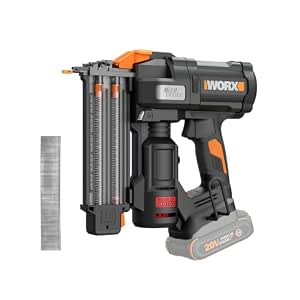
WORX 20V Brushless 18-Gauge Cordless Brad Nailer, WX838L.9
As an affiliate, we earn on qualifying purchases.
What the Comparison Lists
Thorsten Meyer AI groups its recommendations around use cases: the ThinkPad P1 Gen 7 for a premium system with dedicated graphics, the ThinkPad P14s Gen 7 for portability, the HP ZBook X G1i for a newer listed professional GPU, and the Precision 7680 for memory-heavy work. The source also describes OLED as a display option on the P16s Gen 4 and says higher-resolution panels can use more battery power.
The material refers to Intel Core Ultra and AMD Ryzen AI processors, NVIDIA Ada and Blackwell graphics, and professional drivers. These are descriptions in the source, not findings from a disclosed test. The comparison gives no common benchmark scores, battery measurements, exact prices or documented software certification comparisons across all 10 listings. One product name explicitly includes “2026,” but the source provides no publication date or explanation of how the selection was assessed for 2027.
What the Source Does Not Verify
The comparison supplied by Thorsten Meyer AI provides no independent benchmarks, test conditions or publication date. It is unclear whether every listed configuration is available in the same market, whether specifications and prices remain current, or whether the models were compared using identical workloads. Although the heading asks which systems suit AI professionals in 2027, the source documents no 2027 testing or forecast of future software and hardware requirements.
The source also does not define what “AI professional” means for its recommendations. A developer running smaller models locally, a researcher training models, and an engineer using AI-assisted design tools can have very different hardware needs. Readers should confirm the exact configuration, memory upgrade options, GPU memory and software support with the manufacturer or seller before buying.
Verify Configurations Before Buying
Thorsten Meyer AI’s source gives no scheduled update, follow-up review or next milestone. Buyers can use its model names as a starting shortlist, then check current manufacturer specifications and prices and compare independent tests using their own applications. For AI workloads, relevant checks include GPU model and VRAM, system memory, supported frameworks and sustained performance; travel-heavy users should also compare weight, battery life and display brightness.
Key Questions
Does this comparison prove which laptop is best for AI work in 2027?
No. The comparison supplied by Thorsten Meyer AI offers recommendations and listed specifications, but provides no dated 2027 evaluation or comparative benchmark results.
Which listed model has the most memory?
According to the source, a Dell Precision 7680 configuration and one HP ZBook 8 G1i listing each have 64 GB. Confirm the exact configuration before purchase; the comparison also shows lower-memory configurations for some models.
Which option is listed as the most portable?
The source describes the Lenovo ThinkPad P14s Gen 7 as a 14-inch portable option. It separately lists the ThinkPad P16s Gen 4 at 4.01 pounds; it does not provide weights for every model.
Does the source include direct test results?
No. Thorsten Meyer AI’s comparison states specifications and tradeoffs but gives no benchmark scores, test methodology or measured battery-life results.
Source: Thorsten Meyer AI