TL;DR

Get business pricing on your home office setup
- Business-only prices and quantity discounts
- Tax-exempt purchasing
- Multiple users, one account, clear invoices
A House Beautiful report outlines five ways to make a home feel more restful in colder, darker months: organize everyday items, spend mornings near a window, bring natural elements indoors, use a familiar evening scent and make the bedroom more inviting. The suggestions draw on comments from wellness and interiors experts; they are practical ideas, not a guarantee of improved mood or sleep.
House Beautiful has published five expert-backed suggestions for making homes feel calmer through the colder months, when shorter days and more time indoors can make comfort at home more important. The ideas include clearing visual clutter, using a bright spot near a window, bringing nature indoors, establishing an evening scent routine and making the bedroom more inviting.
The report’s first recommendation is to give frequently used belongings a clear place, using baskets, boxes and hooks to reduce visible clutter. Wellness expert Adrienne Herbert, speaking in collaboration with Homesense, says organized surroundings can feel more relaxing and make it easier to unwind. Storage expert Max Wilson, co-founder of Pocket Storage, suggests putting away seasonal items that are no longer in use and finding a proper home for things used regularly.
For darker mornings, Herbert recommends spending time near the home’s brightest window. That might mean moving a favorite chair or breakfast spot closer to the light. The report also proposes a small indoor nature area, using houseplants, seasonal foliage or natural materials such as wood, rattan and stone to bring outdoor textures inside.
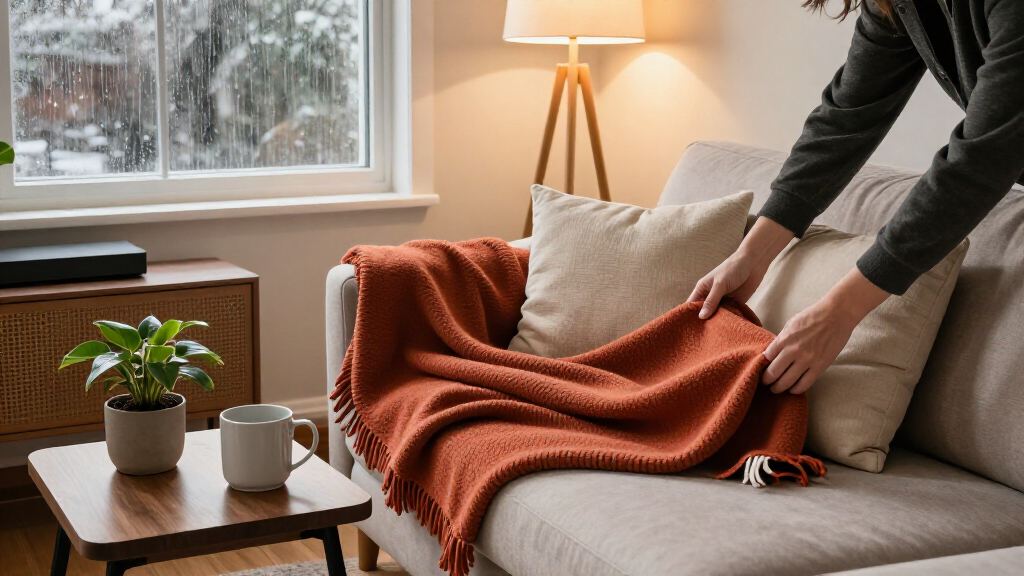
The remaining suggestions focus on routines and the bedroom. Herbert says a familiar scent can act as a cue to relax; Tapi Carpets and Floors trends expert Johanna Constantinou suggests warmer, spiced or woody fragrances for a seasonal atmosphere. Bedkingdom furniture and interiors expert Josh Branigan recommends soft textures, warm lighting and calming essentials such as a book or blanket within easy reach at bedtime.
Small Changes for Darker Days
The recommendations are low-cost adjustments to everyday surroundings rather than major renovations. Their relevance is practical: when people spend more time at home during cold, dark weather, clutter, lighting, sensory cues and bedroom comfort may affect how welcoming those spaces feel.
The report presents these ideas as expert guidance, not as a clinical treatment or a promise of better mental health or sleep. Readers can choose changes that fit their homes and routines, from putting away summer items to moving a chair toward a window. The suggestions also do not require adopting all five at once; the central takeaway is that modest changes may help create a more restful-feeling space.
home organization baskets and storage boxes
As an affiliate, we earn on qualifying purchases.
As an affiliate, we earn on qualifying purchases.
The Five Seasonal Adjustments
The recommendations are framed around the seasonal shift to shorter days and colder weather. The report says many people consider home more important to their well-being in winter, while also stating that many do not prepare their spaces for the season. The supplied material does not provide a survey, sample size or other figures to substantiate that broad observation.
Each suggestion targets a different part of the home experience: storage and visual order, access to daylight, natural materials, familiar scents and the bedroom environment. The advice focuses on changing how existing rooms are arranged or used, rather than buying a specific product or undertaking a renovation.
““A calmer home can help create a calmer mind.””
— Adrienne Herbert, wellness expert, in collaboration with Homesense
indoor houseplants and natural decor
As an affiliate, we earn on qualifying purchases.
As an affiliate, we earn on qualifying purchases.
Evidence Behind the Home Advice
The supplied report does not cite research studies, describe how the suggestions were tested or quantify their effects on mood, relaxation or sleep. Its recommendations are attributed to named wellness, storage and interiors experts, but readers should not interpret them as demonstrated medical or sleep treatments.
The source also gives no date for publication and provides no details behind its statement about Americans’ views or preparations for winter. It is not clear whether the advice works equally well for different people, homes or climates; the report presents it as a set of optional ideas.
As an affiliate, we earn on qualifying purchases.
Choose a Change to Try
The report does not announce a follow-up study or a scheduled next development. Its suggestions leave the next step to readers: identify one source of everyday friction at home and try a corresponding adjustment, such as storing items used less often, making a morning place near a window or setting up a consistent wind-down routine.
Any assessment of whether a change helps will depend on individual experience; House Beautiful’s article supplies no measurement method or promised result. The practical options range from rearranging existing furniture to adding a plant or changing bedroom lighting, with no claim that a purchase is necessary.
bedroom soft textures and cozy blankets
As an affiliate, we earn on qualifying purchases.
As an affiliate, we earn on qualifying purchases.
Key Questions
What are the five ways to make a home feel calmer?
The report recommends reducing clutter, creating a morning spot near a window, bringing natural elements indoors, using a familiar evening scent and making the bedroom more inviting.
Who provided the expert advice?
The article quotes wellness expert Adrienne Herbert, storage expert Max Wilson, Tapi Carpets and Floors trends expert Johanna Constantinou, and Bedkingdom interiors expert Josh Branigan.
Does the report show that these steps improve sleep or mental health?
No evidence or outcome measurements are supplied in the source material. The ideas are presented as expert-backed home suggestions, not as proven medical or sleep interventions.
Do these ideas require buying new furniture or products?
Not necessarily. Several suggestions involve rearranging or storing items already at home, such as moving a chair toward a window or putting seasonal belongings away. The report also mentions optional additions such as plants, candles or room spray.
Source: rss
Fall Picks
fall essentials
As an affiliate, we earn on qualifying purchases.