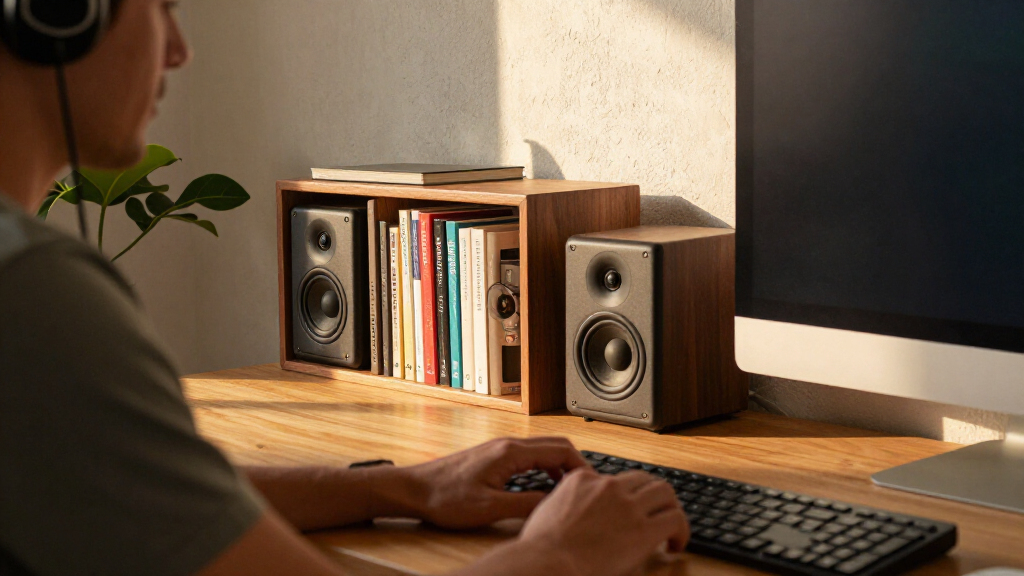
For most home offices, I’d start with the Edifier R1700BTs: its powered design and Bluetooth make it a versatile all-around choice without a separate amplifier. The Edifier R1280DBs is a strong alternative if you want optical input, while the compact Sanyun SW208 better suits a crowded desk. The main tradeoffs are active versus passive setup, speaker size, and whether you need Bluetooth or wired connections. Larger cabinets can offer a fuller sound, but they take up desk space; smaller models are easier to place but may have less bass weight. Read on for my full breakdown of all 13 options and how to choose for your workspace.

Get business pricing on your home office setup
- Business-only prices and quantity discounts
- Tax-exempt purchasing
- Multiple users, one account, clear invoices
Complete the kit


Key Takeaways
- Powered models reduce setup friction: The Edifier R1700BTs, R1280DBs, and R1280T have built-in amplification, so they do not require the separate receiver or amplifier needed by passive picks such as the Sony SS-CS5M2 and Edifier P12.
- Connection needs separate the leading Edifiers: The R1700BTs adds Bluetooth to a flexible active setup, while the R1280DBs is the more relevant pick for a computer or display with optical output; the R1280T is a simpler wired alternative.
- Small desk footprints come with a compromise: The 3-inch Sanyun SW208 models are easier to fit close to a monitor, while speakers with larger woofers or cabinets may suit listeners who have more room and want a fuller presentation.
- Passive speakers can make sense if you already own an amp: The Sony SS-CS5M2, Polk Audio T15, Edifier P12, Elimavi pair, and RIOWOIS passive pair avoid duplicating amplification, but add equipment and connection decisions for a first-time setup.
- The list contains a duplicate: Sanyun SW208 appears at positions 8 and 10, so it represents one distinct model, not two separate choices; compare it once against the other compact powered options.
| Edifier R980T 4-Inch Active Bookshelf Speakers, Pair |  | Best Simple Wired Setup | Speaker type: Powered bookshelf speakers | Audio output: Stereo, 2 channels | Total output power: 24 watts | VIEW LATEST PRICE | See Our Full Breakdown |
| Sony SS-CS5M2 3-Way Hi-Res Bookshelf Speakers (Pair) | 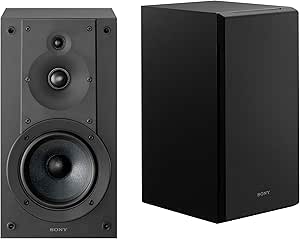 | Best for Receiver-Based Listening | Configuration: 3-way, 3-driver | Woofer diameter: 5.12 inches | Tweeter diameter: 0.98 inches | VIEW LATEST PRICE | See Our Full Breakdown |
| RIOWOIS Powered Bluetooth Bookshelf Speakers |  | Best for Multiple Desk Sources | Model: DS6701NP | Speaker type: Powered bookshelf speakers | Bluetooth: 5.3 | VIEW LATEST PRICE | See Our Full Breakdown |
| Elimavi Passive Bookshelf Speakers, 2-Way Stereo Pair, Black |  | Best for Wall-Mounted Passive Setup | Configuration: 2-way stereo pair | Woofer diameter: 4 inches | Tweeter diameter: 1 inch | VIEW LATEST PRICE | See Our Full Breakdown |
| Saiyin Powered Bluetooth Bookshelf Speakers |  | Best for Subwoofer Expansion | Bluetooth: 5.3 | Woofer diameter: 4 inches | Tweeter diameter: 12.7 mm (0.5 inches) | VIEW LATEST PRICE | See Our Full Breakdown |
| Polk Audio T15 Bookshelf Speakers, Black, Pair |  | Best for Receiver-Based Office Setups | Speaker type: Passive bookshelf | Driver: 5.25-inch Dynamic Balance | Tweeter: 0.75-inch | VIEW LATEST PRICE | See Our Full Breakdown |
| RIOWOIS Passive Bookshelf Speakers with 4-Inch Woofer |  | Best for Flexible Passive Placement | Model: DS6810 | Speaker type: Passive bookshelf speakers | Woofer: 4 inches | VIEW LATEST PRICE | See Our Full Breakdown |
| Sanyun SW208 3-Inch Active Bluetooth Bookshelf Speakers with 24-Bit DAC |  | Best Compact USB Desktop Pick | Speaker type: Active bookshelf | Driver size: 3 inches | Power: 60 W total (30 W x 2) | VIEW LATEST PRICE | See Our Full Breakdown |
| Edifier R1280DBs Bluetooth Bookshelf Speakers with Optical Input |  | Best Overall for Multi-Source Offices | Speaker type: Powered bookshelf speakers | Audio channels: 2 | Power output: 42 watts RMS | VIEW LATEST PRICE | See Our Full Breakdown |
| Sanyun SW208 3-Inch Active Bluetooth Bookshelf Speakers with 24-Bit DAC |  | Best for a Simple Compact Stereo Desk | Speaker type: Bookshelf | Speaker size: 3 inches | Power output: 30 W × 2 | VIEW LATEST PRICE | See Our Full Breakdown |
| Edifier P12 Passive Bookshelf Speakers, Pair |  | Best for Wall-Mounted Setups | Speaker type: Passive bookshelf speakers | Included quantity: 2 speakers | Bass driver: 4 inches | VIEW LATEST PRICE | See Our Full Breakdown |
| Edifier R1280T Powered Bookshelf Speakers |  | Best for Straightforward Wired Desk Audio | Speaker type: Powered bookshelf, stereo 2-channel | Maximum output power: 42 watts | Woofer: 4 inches | VIEW LATEST PRICE | See Our Full Breakdown |
| Edifier R1700BTs Active Bluetooth Bookshelf Speakers |  | Best for Wireless Flexibility and Expansion | Speaker type: Active bookshelf speakers | Continuous power: 66 watts | Woofer: 4 inches | VIEW LATEST PRICE | See Our Full Breakdown |
| bookshelf speakers for home office | Speaker type | Dimensions |
|---|---|---|
| Edifier R980T 4-Inch Active Bo | Powered bookshelf speakers | 11.5 × 7.5 × 17 inches |
| Sony SS-CS5M2 3-Way Hi-Res Boo | — | 8.7 × 7 × 13.2 inches |
| RIOWOIS Powered Bluetooth Book | Powered bookshelf speakers | 9.69 × 7.6 × 6.22 inches |
| Elimavi Passive Bookshelf Spea | — | 6.1 × 5.11 × 8.66 inches (D × W × H) |
| Saiyin Powered Bluetooth Books | — | 150 × 170 × 240 mm |
| Polk Audio T15 Bookshelf Speak | Passive bookshelf | — |
| RIOWOIS Passive Bookshelf Spea | Passive bookshelf speakers | — |
| Sanyun SW208 3-Inch Active Blu | Active bookshelf | 5.35 x 4.64 x 7.48 inches |
| Edifier R1280DBs Bluetooth Boo | Powered bookshelf speakers | — |
| Sanyun SW208 3-Inch Active Blu | Bookshelf | — |
| Edifier P12 Passive Bookshelf | Passive bookshelf speakers | 5.04 × 6.61 × 9.37 inches (D × W × H) |
| Edifier R1280T Powered Bookshe | Powered bookshelf, stereo 2-channel | — |
| Edifier R1700BTs Active Blueto | Active bookshelf speakers | 6.06 × 8.43 × 10 inches |
More Details on Our Top Picks
Edifier R980T 4-Inch Active Bookshelf Speakers, Pair
The Edifier R980T makes sense for a home-office desk where I want stereo sound without a separate amplifier. Its 24-watt powered design and two inputs let me connect, for example, a computer and another wired audio source at once. The included RCA and 3.5 mm cables also reduce setup guesswork. Compared with the Bluetooth-equipped Saiyin Powered Bluetooth Bookshelf Speakers, the R980T gives up wireless playback and broader connection options, but its straightforward wired setup may suit a fixed desk better. The front-facing bass ports can be useful when speakers sit near a wall. The tradeoff is that this is a basic, wired pair: buyers wanting Bluetooth, a subwoofer output, or more connection flexibility should look at the Saiyin instead.
Pros:- Powered stereo design works without a separate receiver or amplifier
- Two inputs allow two wired audio sources to stay connected
- Includes RCA, 3.5 mm, and speaker cables
- Front-facing bass reflex ports suit placement near a wall
Cons:- No Bluetooth or other wireless playback
- Limited connection flexibility compared with the Saiyin’s optical, coaxial, and subwoofer connections
- The listed dimensions suggest a relatively tall footprint for a crowded desk
Best for: Home-office users who keep a computer and one other wired source at their desk and want powered stereo speakers with cables included.
Not ideal for: People who want Bluetooth playback, easy expansion with a subwoofer, or a very compact speaker footprint.
- Speaker type:Powered bookshelf speakers
- Audio output:Stereo, 2 channels
- Total output power:24 watts
- Woofer diameter:4 inches
- Inputs:Auxiliary and RCA
- Enclosure material:Wood
- Power supply:110–240 V
- Dimensions:11.5 × 7.5 × 17 inches
- Warranty:2 years
Our verdict“Choose the R980T for a fixed home-office setup that values simple wired connections and included cables over wireless features.”
Sony SS-CS5M2 3-Way Hi-Res Bookshelf Speakers (Pair)
The Sony SS-CS5M2 is the passive, detail-focused choice here: its three-way, three-driver layout separates woofer, tweeter, and super-tweeter duties, while its wide listed frequency response suits listeners who want more than basic computer audio. In a home office, that design is most compelling when the speakers can sit on a desk or shelf and connect to an existing receiver. Unlike the Edifier R980T, the Sony does not provide its own amplification, so it adds an equipment requirement and more setup work. Its compact dimensions help it fit smaller spaces, but the wired-only connection and receiver dependency make it less convenient for someone who wants a quick, self-contained desktop system. I’d pick it for a receiver-based office where speaker detail matters more than plug-and-play simplicity.
Pros:- Three-way design gives the woofer, tweeter, and super tweeter separate roles
- Compact dimensions can fit a desk or small office shelf
- Listed frequency response extends from 53 to 50,000 Hz
- Compatible with Sony AV receivers
Cons:- Requires a compatible amplifier or receiver, unlike the powered Edifier R980T
- Wired connectivity only
- The 16-ounce weight listing may be inconsistent with the listed speaker dimensions, so confirm handling details before purchase
Best for: Home-office listeners who already own a compatible receiver and want a compact passive pair for focused stereo listening.
Not ideal for: People seeking a self-powered computer speaker setup or wireless playback without extra equipment.
- Configuration:3-way, 3-driver
- Woofer diameter:5.12 inches
- Tweeter diameter:0.98 inches
- Frequency response:53–50,000 Hz
- Impedance:6 ohms
- Maximum output power:100 watts
- Connectivity:Wired
- Enclosure:Bass reflex
- Dimensions:8.7 × 7 × 13.2 inches
Our verdict“Choose the Sony if your office already has a receiver and you prefer a compact three-way passive speaker over an all-in-one powered pair.”
RIOWOIS Powered Bluetooth Bookshelf Speakers
The RIOWOIS DS6701NP suits a home office where audio comes from several kinds of devices: it offers Bluetooth 5.3 alongside AUX, optical, and TV-ARC inputs, and it does not need a separate amplifier. A remote and button controls are handy when the speakers are placed beyond arm’s reach. Compared with the Edifier R980T, this model offers more connection choices and wireless playback, while the Edifier has a larger listed woofer and a more basic, cable-included setup. RIOWOIS’s smaller 2.75-inch woofer points to a more compact system, but it may be less satisfying for listeners who want fuller low-end presence at their desk. The optical input carries standard stereo only, and optical and ARC cables are not included, so plan around your source devices before choosing it.
Pros:- Bluetooth 5.3, AUX, optical, and TV-ARC connections cover varied sources
- Powered design does not require a separate receiver or amplifier
- Remote and button controls provide more than one way to adjust playback
- Compact tabletop dimensions are suited to limited desk space
Cons:- Not compatible with receivers or amplifiers
- Optical input supports standard stereo audio only, not Dolby or DTS
- Optical and TV-ARC cables are not included
Best for: Home-office users who switch between a computer, phone, TV, or turntable and want multiple inputs plus remote control in a powered pair.
Not ideal for: Listeners who need receiver compatibility, Dolby or DTS over optical, or stronger low-frequency output from a larger woofer.
- Model:DS6701NP
- Speaker type:Powered bookshelf speakers
- Bluetooth:5.3
- Connections:Bluetooth, AUX, optical, and TV-ARC
- Woofer diameter:2.75 inches
- Tweeter diameter:2 inches
- Cabinet materials:ABS, metal, and MDF
- Dimensions:9.69 × 7.6 × 6.22 inches
- Controls:Remote and buttons
Our verdict“Pick RIOWOIS for a compact office setup that needs flexible source switching and Bluetooth more than larger-woofer output.”
Elimavi Passive Bookshelf Speakers, 2-Way Stereo Pair, Black
The Elimavi MM-D4 earns its place for home offices where desk space is tight but wall placement is possible. Rear hooks offer an alternative to keeping speakers beside a monitor, and the 4-inch woofer plus 1-inch silk horn tweeter provide a two-way layout in a compact cabinet. This is a passive pair, though, so it needs an amplifier or receiver; the included speaker cables do not remove that requirement. Compared with the Sony SS-CS5M2, Elimavi adds wall-mount hooks and lists a smaller cabinet, while Sony offers a three-way design and a much wider listed frequency range. Elimavi’s 4-ohm impedance also means buyers should check amplifier compatibility before connecting it. I’d choose this pair for a planned, wired installation rather than a quick computer-audio upgrade.
Pros:- Rear hooks allow wall mounting to free desk or shelf space
- Two-way design combines a 4-inch woofer and 1-inch silk horn tweeter
- Wood cabinet fits shelf, desk, and media-stand placements
- Speaker connection cables are included
Cons:- Requires a separate amplifier or receiver
- Wired connection only, with no Bluetooth input
- 4-ohm impedance calls for checking amplifier compatibility
Best for: Home-office owners with a compatible amplifier who want to move speakers off the desk using rear wall-mount hooks.
Not ideal for: People without an amplifier or receiver, or anyone who wants powered, wireless speakers that connect directly to a computer.
- Configuration:2-way stereo pair
- Woofer diameter:4 inches
- Tweeter diameter:1 inch
- Frequency response:60 Hz–20 kHz (description)
- Maximum output power:60 watts
- Impedance:4 ohms
- Enclosure material:Wood
- Dimensions:6.1 × 5.11 × 8.66 inches (D × W × H)
- Mounting:Shelf mount; rear hooks for wall mounting
Our verdict“Choose Elimavi if you already have a suitable amplifier and want passive speakers that can be wall-mounted to clear your office desk.”
Saiyin Powered Bluetooth Bookshelf Speakers
The Saiyin is a strong fit for an office setup that may grow beyond two speakers: its subwoofer output lets me add a powered subwoofer later, while Bluetooth 5.3, optical, coaxial, RCA, and AUX cover a wide range of sources. The 4-inch woofer gives it a larger driver than the compact RIOWOIS Powered Bluetooth Bookshelf Speakers, whose 2.75-inch woofer favors a smaller footprint. Saiyin’s broader connections make it the more flexible hub, though its turntable guidance matters: a PHONO-only turntable needs a preamplifier, and Bluetooth playback requires a turntable with Bluetooth output. The listed details do not include an output-power figure, so buyers comparing systems by rated power have less information here. This is a practical pick for a desk where source options and future bass expansion matter more than minimal setup.
Pros:- Bluetooth 5.3 plus optical, coaxial, RCA, and auxiliary inputs
- Subwoofer output allows connection to a powered subwoofer
- 4-inch woofer is larger than the RIOWOIS model’s 2.75-inch woofer
- Remote control and top buttons offer flexible operation
Cons:- PHONO-only turntables require a separate preamplifier
- Wireless turntable use requires a turntable with Bluetooth transmitter output
- Remote control batteries are not included
Best for: Home-office users who want Bluetooth and several wired inputs now, with the option to connect a powered subwoofer later.
Not ideal for: Turntable owners with PHONO-only output who do not want to add a preamplifier, or buyers seeking water-resistant speakers.
- Bluetooth:5.3
- Woofer diameter:4 inches
- Tweeter diameter:12.7 mm (0.5 inches)
- Inputs:Optical, coaxial, RCA, auxiliary, and Bluetooth
- Subwoofer output:Yes
- Dimensions:150 × 170 × 240 mm
- Bluetooth range:10 meters
- Controls:Remote control and top buttons
- Enclosure materials:ABS, MDF, and metal
Our verdict“Choose Saiyin if you want a versatile powered office pair with a clear path to adding a subwoofer and can match its inputs to your sources.”
Polk Audio T15 Bookshelf Speakers, Black, Pair
The Polk Audio T15 suits a home office where a stereo receiver or AV receiver is already part of the setup. Its 5.25-inch Dynamic Balance driver gives it more room to produce bass than the smaller RIOWOIS DS6810, while the 0.75-inch tweeter is designed to keep speech and upper details clear. That can make work calls and background listening feel fuller without adding a separate subwoofer right away. The wall-mountable cabinet also helps free desk or shelf space, and the pair can serve as front or surround speakers in a larger system.
The tradeoff is its passive design: unlike the powered Edifier R1280DBs, the T15 needs an amplifier or receiver and speaker wire. Choose it for an office system you can build around; skip it if you want a quick, self-contained desktop connection.
Pros:- 5.25-inch driver offers more bass potential than the smaller RIOWOIS DS6810
- Wall-mountable design can keep speakers off a crowded desk
- Can serve as front or surround speakers in a receiver-based setup
- Wired connection suits a fixed, receiver-driven office system
Cons:- Requires a compatible amplifier or receiver
- Speaker wire is needed, adding setup and cable-management work
- Less convenient for switching among computer, phone, and other sources than the powered Edifier R1280DBs
Best for: Home-office listeners who already own a compatible receiver and want fuller sound from wall-mounted or shelf-placed speakers.
Not ideal for: Desk users who want speakers that connect directly to a computer or phone without a separate amplifier and speaker wire.
- Speaker type:Passive bookshelf
- Driver:5.25-inch Dynamic Balance
- Tweeter:0.75-inch
- Impedance:8 ohms
- Frequency response:Up to 24,000 Hz
- Connectivity:Wired
- Mounting:Wall-mountable with integrated keyhole slot
- Quantity:1 pair
Our verdict“Choose the Polk T15 if you have a receiver and want wall-mountable speakers with larger drivers; skip it for a simple plug-and-play desk setup.”
RIOWOIS Passive Bookshelf Speakers with 4-Inch Woofer
The RIOWOIS DS6810 is a compact passive choice for an office where the speakers need to sit on a tabletop one day and move to a wall the next. Its built-in wall-mount brackets offer more placement flexibility than the desktop-focused Sanyun SW208, while the 4-inch woofer and rear bass-reflex ports aim to retain some low-end weight from a small cabinet. The silk-dome horn tweeter is intended to keep voices and treble clear for everyday listening.
Compared with the larger-driver Polk T15, the DS6810 takes up less space but is a less compelling pick for listeners who want stronger bass presence. Its 4-ohm impedance also makes amplifier matching a detail to check before buying. This makes most sense for a buyer with a suitable amplifier who values flexible placement over an all-in-one powered speaker.
Pros:- Tabletop or wall-mount placement supports varied office layouts
- Rear bass-reflex ports are designed to add low-frequency output from a compact enclosure
- Silk-dome horn tweeter targets clear highs and midrange
- Gold-plated terminals accept banana plugs, U-type terminals, or bare wire
Cons:- Requires a separately purchased amplifier or receiver
- Speaker wires are not included
- 4-ohm impedance requires checking amplifier compatibility
Best for: Office listeners with a compatible amplifier who need compact passive speakers that can move between a tabletop and wall mounting.
Not ideal for: Buyers seeking powered speakers for direct computer connection, or those who want substantial bass without a separate subwoofer.
- Model:DS6810
- Speaker type:Passive bookshelf speakers
- Woofer:4 inches
- Tweeter:Silk-dome horn tweeter
- Impedance:4 ohms
- Frequency response:20 kHz
- Mounting:Tabletop or wall mount
- Enclosure materials:ABS, metal, and MDF
Our verdict“Pick the RIOWOIS DS6810 if a compact passive pair with flexible mounting fits your office, and pass if you want powered simplicity or stronger bass.”
Sanyun SW208 3-Inch Active Bluetooth Bookshelf Speakers with 24-Bit DAC
The white Sanyun SW208 is the most desk-oriented option here for someone who wants a small active pair and a direct USB connection. Its built-in 24-bit DAC lets a computer feed audio over USB, while Bluetooth 5.0 and AUX provide alternatives for a phone or other source. At 5.35 x 4.64 x 7.48 inches, it is easier to fit beside a monitor than the larger Polk T15, and its side controls let you adjust bass and treble without opening software menus.
The compact 3-inch drivers are the tradeoff: they are less suited to listeners seeking room-filling sound or deep bass than the Edifier R1280DBs with its 4-inch woofer. The listed Bluetooth range is 7 meters, and AC power is required. I’d choose this for a close-range computer desk, not as the main speaker system for a large office.
Pros:- USB input and built-in 24-bit DAC support a direct computer audio connection
- Bluetooth 5.0 and AUX add flexible source options
- Compact dimensions suit crowded desks and shelves
- Side controls adjust volume, bass, and treble
Cons:- 3-inch drivers are less suited to deep bass than the Edifier R1280DBs 4-inch woofer
- Listed Bluetooth range is 7 meters
- Requires AC power
Best for: Computer-based home-office users who need compact speakers with USB audio, Bluetooth, and physical tone controls.
Not ideal for: Listeners who need stronger bass, a long wireless range, or speakers for a larger room rather than near-field desk use.
- Speaker type:Active bookshelf
- Driver size:3 inches
- Power:60 W total (30 W x 2)
- Connectivity:Bluetooth 5.0, USB, 3.5 mm AUX
- DAC:Built-in 24-bit
- Controls:Volume, bass, and treble
- Bluetooth range:7 meters
- Dimensions:5.35 x 4.64 x 7.48 inches
- Power source:AC
Our verdict“Choose the white SW208 for compact computer audio and easy controls, but look to a larger powered pair if bass and room coverage matter more.”
Edifier R1280DBs Bluetooth Bookshelf Speakers with Optical Input
The Edifier R1280DBs is the most adaptable pick in this group for a home office that has more than one audio source. Optical, coaxial, RCA, and Bluetooth 5.0 inputs make it easier to connect a computer, compatible display, or phone than with the passive Polk T15, which needs a separate receiver. Its 42 watts RMS and 4-inch woofer give it a larger-scale role than the compact Sanyun SW208, while side-panel tone controls and a remote keep everyday adjustments convenient.
A subwoofer output leaves room to add more low end later, though the connection is wired and the subwoofer is not included. The cabinet also needs AC power and shelf space, so it is less suited to an especially cramped desk than the Sanyun. I’d rank it first for offices where input flexibility and easy operation matter more than minimum size.
Pros:- Optical, coaxial, RCA, and Bluetooth inputs suit mixed office equipment
- Powered design avoids the separate receiver required by the Polk T15
- Remote and side-panel controls support convenient adjustments
- Subwoofer output allows a wired bass upgrade
Cons:- Larger than the compact Sanyun SW208, so it needs more shelf or desk space
- Adding a subwoofer requires a wired connection
- Requires AC power
Best for: Home-office users connecting several sources, such as a computer, display, and phone, who want powered stereo speakers with a remote.
Not ideal for: People with very limited desk space or buyers who want a truly wireless subwoofer connection.
- Speaker type:Powered bookshelf speakers
- Audio channels:2
- Power output:42 watts RMS
- Bluetooth:Version 5.0
- Inputs:Optical, coaxial, RCA, Bluetooth
- Subwoofer output:Yes
- Woofer and tweeter:4-inch woofer; 0.75-inch tweeter
- Controls:Remote and side-panel bass, treble, and volume controls
Our verdict“Choose the Edifier R1280DBs for a flexible, powered office setup with several inputs, unless compact size is your main priority.”
Sanyun SW208 3-Inch Active Bluetooth Bookshelf Speakers with 24-Bit DAC
This black Sanyun SW208 shares the white version’s compact active design, USB DAC, Bluetooth, and AUX inputs, making it a straightforward stereo option for a smaller home-office desk. The 30 W × 2 output and on-speaker bass, treble, and volume controls give users practical adjustment without a separate receiver or a control app. Compared with the passive RIOWOIS DS6810, it is easier to connect to a computer because amplification is built in; unlike the Edifier R1280DBs, it takes up less room.
That smaller footprint comes with limits. The 3-inch drivers are not the choice for strong low-end weight, and no subwoofer output is listed. Its stated Bluetooth range is 10 meters, but the speakers still need AC power. This is a useful fit for near-field listening and a tidy desk, not for someone who wants a speaker system to fill a larger office.
Pros:- Bluetooth 5.0, USB, and AUX cover common computer and mobile sources
- Built-in 24-bit DAC supports USB audio
- Compact 3-inch design suits a desk or small bookshelf
- Main-speaker controls adjust volume, bass, and treble
Cons:- No subwoofer output is listed for adding a wired bass extension
- 3-inch drivers are less suited to deep bass than the Edifier R1280DBs
- Requires AC power
Best for: Desk-focused listeners who want a compact powered stereo pair with USB, Bluetooth, and accessible physical controls.
Not ideal for: Buyers who prioritize deep bass, a subwoofer connection, or sound coverage across a large home office.
- Speaker type:Bookshelf
- Speaker size:3 inches
- Power output:30 W × 2
- Connectivity:Bluetooth 5.0, USB, 3.5 mm AUX
- Bluetooth range:10 meters
- DAC:Built-in 24-bit DAC
- Audio channels:2
- Color:Black
- Power source:AC
Our verdict“Choose the black SW208 for compact, direct-connected desk listening, but choose a larger powered pair if you need fuller bass or room coverage.”
Edifier P12 Passive Bookshelf Speakers, Pair
The Edifier P12 is the clearest fit here for a home office where desk or shelf space is limited: its built-in wall-mount brackets let you place the pair off the work surface. The 4-inch drivers and silk dome tweeters give you a conventional two-way speaker layout, while the included speaker wire saves a separate accessory purchase. Unlike the powered Edifier R1280T, though, the P12 cannot connect directly to a computer or phone; you need a compatible amplifier or receiver, which adds equipment and setup. Its 40-watt maximum output also makes it less compelling if you want a more powerful, ready-to-play system like the R1700BTs. Choose it when mounting flexibility and an existing amp matter more than simplicity. It is not waterproof, so keep it indoors and away from spills.
Pros:- Built-in brackets support wall mounting to clear desk space
- 4-inch bass drivers and 19 mm silk dome tweeters provide a two-way design
- Speaker wire is included
- Wood enclosures suit shelf or tabletop placement
Cons:- Requires a separate amplifier or receiver, adding cost and setup
- No direct powered connection for a computer or phone
- Not waterproof
Best for: Home-office listeners who already own an amplifier or receiver and want to free desk space by mounting their speakers on a wall.
Not ideal for: Anyone seeking a simple computer-speaker setup without extra equipment; these passive speakers need a separately purchased amplifier or receiver.
- Speaker type:Passive bookshelf speakers
- Included quantity:2 speakers
- Bass driver:4 inches
- Tweeter:19 mm (3/4 inch) silk dome
- Impedance:6 ohms
- Maximum output power:40 watts
- Dimensions:5.04 × 6.61 × 9.37 inches (D × W × H)
- Mounting:Shelf/tabletop or wall-mounted
- Power requirement:Amplifier or receiver required; sold separately
Our verdict“Choose the P12 if you have an amplifier and want wall-mount flexibility; pick the powered R1280T for a simpler desk setup.”
Edifier R1280T Powered Bookshelf Speakers
The Edifier R1280T is a practical pick for a home office where you want stereo sound without adding a separate amplifier. Its powered design keeps setup simple, and the RCA and 3.5 mm AUX connections let you leave two wired sources connected, such as a computer and another audio device. A remote and side-panel controls for volume, bass, and treble make it easier to adjust sound from a seated workspace. Compared with the passive P12, it is far more direct to set up; compared with the R1700BTs, it gives up Bluetooth and a subwoofer output. That makes the R1280T a better match for fixed, wired desks than flexible, multi-source rooms. It is not waterproof, and its wired-only connections may frustrate anyone who wants wireless playback.
Pros:- Powered stereo setup does not require a separate amplifier
- RCA and 3.5 mm AUX inputs support two connected devices
- Remote and side-panel controls adjust volume, bass, and treble
- MDF wood-finish enclosures suit a desk or shelf
Cons:- Wired connectivity only, with no Bluetooth
- No subwoofer output listed
- Not waterproof
Best for: Desk-based workers who want powered stereo speakers with two wired inputs and convenient remote and tone controls.
Not ideal for: Listeners who need Bluetooth, a subwoofer connection, or a wall-mounted passive system; the R1280T is designed for wired shelf or tabletop use.
- Speaker type:Powered bookshelf, stereo 2-channel
- Maximum output power:42 watts
- Woofer:4 inches
- Tweeter:13 mm silk dome
- Inputs:RCA and 3.5 mm AUX
- Controls:Remote and side-panel volume, bass, and treble
- Impedance:4 ohms
- Power source:AC adapter
- Enclosure material:MDF wood
Our verdict“Choose the R1280T for uncomplicated wired desk audio and hands-on tone control, but choose the R1700BTs if you want Bluetooth or subwoofer expansion.”
Edifier R1700BTs Active Bluetooth Bookshelf Speakers
For an office that serves as both a work and listening space, the Edifier R1700BTs offers the most flexible connection options of these three Edifier picks. Bluetooth 5.0 with aptX HD allows wireless playback from a compatible device, while dual RCA inputs keep wired sources available; a subwoofer output gives you a path to add deeper bass later. Its 66W continuous power and 19 mm silk dome tweeters make it a stronger fit for a larger room or more demanding listening than the 42-watt R1280T. The tradeoff is a larger, heavier speaker pair and more capability than a small desk may need. Unlike the wall-mountable passive P12, it is a powered tabletop or shelf choice. Skip it if you want a compact setup or do not need wireless audio or expansion.
Pros:- Bluetooth 5.0 with aptX HD supports wireless playback from compatible devices
- Dual RCA inputs accommodate wired sources
- Subwoofer output supports later bass expansion
- Remote and side-panel EQ controls allow convenient adjustments
Cons:- Larger and heavier than the R1280T, so it may crowd a compact desk
- Powered design does not suit buyers specifically seeking passive speakers
- Wireless playback depends on Bluetooth range and compatible devices
Best for: Home-office users who switch between Bluetooth and wired sources, listen in a larger room, or want the option to add a subwoofer.
Not ideal for: Anyone with a cramped desk who needs a compact speaker pair, or a buyer who wants passive speakers for an existing amplifier setup.
- Speaker type:Active bookshelf speakers
- Continuous power:66 watts
- Woofer:4 inches
- Tweeter:19 mm silk dome
- Bluetooth:Bluetooth 5.0 with aptX HD
- Inputs:Dual RCA
- Subwoofer output:Yes
- Dimensions:6.06 × 8.43 × 10 inches
- Weight:6,600 g
Our verdict“Pick the R1700BTs if wireless playback, stronger continuous power, and a subwoofer upgrade matter more than compact size or a passive setup.”
How We Picked
I ranked these speakers for the conditions common to a home office: listening at close range, limited desk or shelf space, computer-friendly connections, and setup that does not distract from work. I weighed whether each pair is active or passive, what connections the listing names, cabinet and driver size where supplied, and how much extra equipment a buyer may need. I also considered practical fit: a speaker that sounds appealing on paper is less useful if its size or wiring is awkward beside a monitor.
The order favors flexible, straightforward powered options for readers building a typical office system, then models that serve narrower needs such as optical input, a compact footprint, or an existing amplifier. Passive speakers are ranked for buyers who already have suitable amplification, rather than treated as direct plug-in replacements. The product list repeats the Sanyun SW208, so I count it as one unique model and do not present the duplicate as a separate recommendation. These are feature- and use-case-based comparisons, not claims of hands-on testing or measured sound results.
Factors to Consider When Choosing Bookshelf Speakers For Home Offices
Choosing office speakers is less about filling a room than matching the system to your desk, computer, and listening habits. I’d settle the setup and placement questions before comparing feature lists; those choices often matter more day to day than a long specification sheet.
Choose Powered or Passive Before Comparing Features
Powered speakers contain their own amplification, which usually makes them the simpler route from computer to sound. Passive speakers need an external amplifier or receiver, adding cost, cables, and a place for another component. That extra gear is not automatically a drawback: if you already own an amp, passive models can fit naturally into your system. A common mistake is buying passive speakers because their listed features look appealing, then discovering the rest of the setup is missing. For a first office system, I’d favor powered models unless there is a clear reason to use existing amplification.
Match the Inputs to Your Actual Devices
List your sources first: a desktop computer, laptop dock, monitor, phone, or work-issued device may offer different outputs. Bluetooth is convenient for a phone or a laptop that moves around, while optical input can help when connecting compatible digital devices. Analog connections are widely useful, but the right cable depends on the output available on your computer or dock. Do not assume that a speaker’s Bluetooth feature replaces a wired connection for every device or workflow. I’d buy for the connections you will use weekly, rather than paying for inputs that sit idle.
Measure Desk Space and Listening Distance
Cabinet size affects placement as much as appearance: speakers need room beside a display and should not block controls, papers, or airflow. Measure the available width and height, including space for cables and any controls on the front or side. A compact pair can fit close to a monitor, but its smaller drivers may not deliver the same sense of scale as a larger cabinet. Larger speakers can be a poor office match if they must be squeezed against a wall or placed at uneven heights. I’d prioritize a stable, symmetrical position over buying the biggest pair that technically fits.
Set Expectations for Bass at a Desk
Room-filling bass is not the same as useful desk sound. Near-field listening happens at short distance, so clear speech and balanced playback may matter more than strong low-end output. Small speakers can work well for calls, videos, and background music, though bass-heavy music may expose their limits. A subwoofer can add low frequencies, but it takes floor or under-desk space and may be unwelcome in a shared home. Before adding one, try careful speaker placement and modest volume; close listening often needs less output than buyers expect.
Plan for Calls, Volume, and Shared Rooms
Speaker choice affects other people when an office shares walls or sits near a living area. Larger systems or a subwoofer may carry low frequencies into adjacent rooms, while near-field placement can let you listen at a lower level. Speakers do not replace a microphone or headphones for private calls, so check whether your work routine calls for separate communication gear. A physical volume control can be more convenient than changing levels through several software menus during the day. I’d prioritize easy volume adjustment and restrained placement if you work around family, roommates, or frequent video meetings.
Pay for Useful Flexibility, Not Spec-Sheet Appeal
Spend more only when the added capability solves a real problem. Multiple inputs can help if you regularly switch between a computer and phone, while Bluetooth may be unnecessary if the speakers stay wired to one desktop. Passive models are a better fit when an amplifier is already part of the system; otherwise, the added component can erase their apparent simplicity. Likewise, larger cabinets are worthwhile only if your desk has room and you value their potential for a fuller presentation. I’d compare the complete setup—including cables, amplification, and placement—rather than judging speakers by one headline feature.
Frequently Asked Questions
Should I choose powered speakers or passive speakers for a computer desk?
Powered speakers are usually easier for a new desk setup because their amplification is built in. You can connect a compatible computer output without adding a receiver or amplifier, which saves space and reduces cable decisions. Passive models make more sense if you already own an amp or want the flexibility to build a separate audio system. Before choosing passive, check that the amplifier has suitable speaker outputs and that you have room for it. If you are starting from scratch, compare the complete system rather than the speaker pair alone.
Is Bluetooth a good choice for work calls and everyday computer audio?
Bluetooth is handy for music from a phone or for a laptop that moves between locations, but it may not be the best connection for every work task. Compatibility and delay can vary by device and use, and speaker playback does not provide a microphone for calls. A wired connection can be simpler for a stationary desktop and avoids relying on a wireless link. If calls are part of your day, keep a headset or separate microphone available. Choose Bluetooth as a useful extra, not as a substitute for checking your computer’s audio setup.
Will compact speakers be enough for a small home office?
Compact speakers can suit close listening for video, speech, and everyday music, especially when desk space is limited. Their smaller cabinets are easier to place beside a monitor, but they may not provide the same bass weight or scale as larger speakers. The right fit depends on listening distance, preferred volume, and the kind of audio you play. If you mostly want clear background sound, a compact pair may be a sensible space-saving choice. If bass-heavy music is a priority, check whether the speaker can meet that need before sacrificing desk space for a larger model or subwoofer.
Do I need optical input for speakers connected to my computer?
Optical input is useful only when a source has a compatible optical output, such as some computers, docks, or displays. Many laptops and desktops instead use analog output, USB audio, or a dock that handles the connection, so verify the ports before choosing. Optical can provide a direct digital connection from compatible equipment, but it is not automatically better for every desk. If your computer has no optical output, you may need another connection method or an adapter. Buy for the ports you can actually use, not simply for a longer input list.
How much desk space should I leave around bookshelf speakers?
Measure the speaker footprint and cable clearance before placing an order, then check that both speakers can sit at a similar height and distance from your listening position. A pair crowded against a monitor, wall, or desk edge may be harder to position well and can interfere with work items. Leave access to volume controls and connections if those are placed on the side or rear. Do not assume that a model called a bookshelf speaker will fit comfortably on a shallow desk. If space is tight, a smaller pair may be the better office choice even if a larger one offers a fuller sound.
Conclusion
For the best overall fit, I’d choose the Edifier R1700BTs for its active design and Bluetooth flexibility. The best value for a straightforward wired setup is the Edifier R1280T, while the R1280DBs is a stronger match for buyers who need optical input. For beginners, I’d start with an active pair such as the R980T or R1280T to avoid buying an amplifier; choose between them based on the connections and size that suit your desk. The best compact option is the Sanyun SW208, though the list repeats this model and offers only one distinct SW208 choice. For a premium-leaning setup within this lineup, the R1700BTs is the most versatile pick; for buyers who already own an amp, compare the passive Sony SS-CS5M2, Polk Audio T15, and Edifier P12 instead. My final advice: match the speaker type and inputs to your existing gear, then let desk space and listening habits break the tie.
Fall Picks
fall essentials
As an affiliate, we earn on qualifying purchases.