TL;DR
Gubi has brought Carlo Nason’s Lotus table lamp, first introduced as the LT305 in 1969, back into production. The reissue retains its four nested, mouth-blown glass shades and adds a re-engineered steel base intended to improve stability and make cleaning and bulb replacement easier.
Gubi has returned Carlo Nason’s Lotus table lamp to production, reviving the Italian designer’s 1969 LT305 with its four nested, mouth-blown glass shades. The reissue keeps the original sculptural form while updating the steel base for greater stability and easier disassembly, according to the company.

Get business pricing on your home office setup
- Business-only prices and quantity discounts
- Tax-exempt purchasing
- Multiple users, one account, clear invoices
The lamp was originally introduced by Nason, an Italian glassmaker who grew up in a family connected to Murano glassmaking traditions. It remained in production for only a few years after its 1969 debut, but later developed a following among collectors, who called it the “Lotus lamp.” Gubi has adopted that name for the new production run.
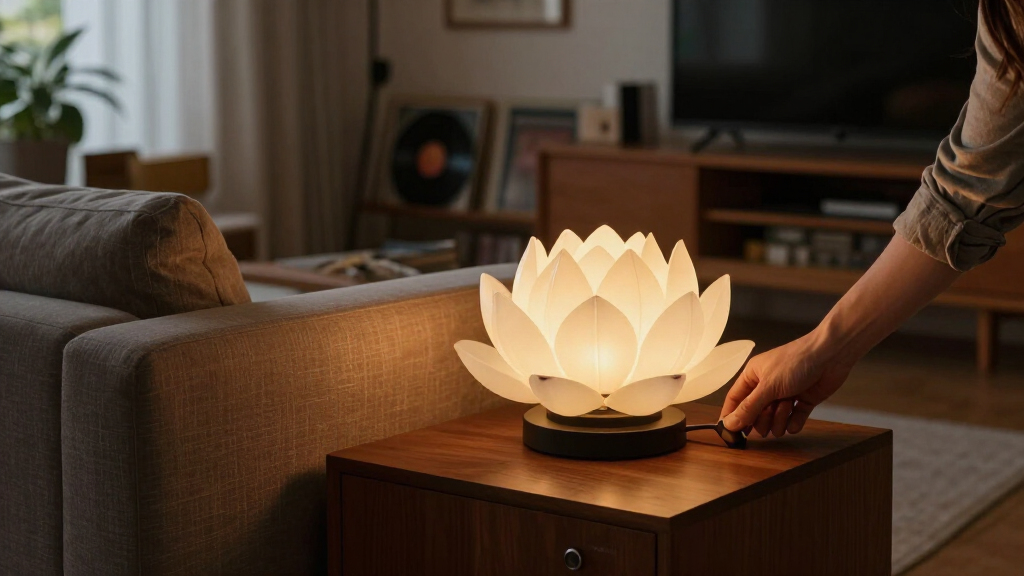
The shade is made from four distinct mouth-blown glass pieces, nested to evoke a flower in bloom. Each shade uses the Murano technique known as pulegoso, which introduces small air bubbles into the glass. The layered construction conceals the bulb where the shades overlap while allowing more light through the lamp’s outer curves.
Gubi says it worked with Nason’s son, Alberto, during development and kept the design faithful to the original specifications. The company’s stated changes are confined to the steel base, which holds the socket and shades. It has been re-engineered to improve stability and to make the lamp easier to take apart for cleaning and bulb replacement.
A Collector Design Returns to Production
The reissue brings a design that was made for only a limited period back to a wider market. Collectors’ use of the Lotus name helped give the lamp an identity beyond its original LT305 designation; Gubi’s decision to retain that nickname connects the new product to the design’s later history as well as its original release.
The lamp also puts handmade glasswork at the center of a contemporary furniture launch. Gubi says natural differences in the glass and in the distribution of the bubbles mean each lamp varies. Those variations are part of the product’s character, but they also mean buyers should not expect every example to look exactly alike. The revised base addresses day-to-day handling without changing the visible form, according to the company.
The revival carries added personal significance following Nason’s death earlier this year, as reported by Design Milk. His son said the reissue will let more people experience the design in person. The lamp’s return therefore serves both as a commercial release and as a continuation of a designer’s work, while the extent of its availability and production remains unspecified in the supplied information.
Products Worth Considering

Bosch GKT13-225L 6-1/2-Inch Track Saw with Plunge Action and Carrying Case

DEWALT 10-Inch Drill Press with 7-Amp Motor and LED Worklight

Makita SP6000J 6-1/2-Inch Plunge Circular Saw
As an affiliate, we earn on qualifying purchases.
From LT305 to the Lotus Name
Nason introduced the lamp in 1969, during a period when industrial product design and Space Age forms were influencing objects for the home. The LT305 paired a streamlined, bulbous outline with a technically demanding arrangement of glass layers. While many of Nason’s relatives and peers worked in more decorative styles, the source report describes him as interested in experimental and contemporary directions.
The glass construction shapes both the lamp’s appearance and its light. Four layers overlap around the center, obscuring the bulb, while the outer edges have single layers that appear more transparent. The pulegoso bubbles give the glass a textured, semi-opaque quality. Gubi says the new lamp follows the original specifications, with practical adjustments to the base developed in collaboration with Alberto Nason.
Gubi CEO Marie Kristine Schmidt told Design Milk that collectors had already given the lamp a name that reflected its design and history. The company’s use of “Lotus” formalizes that established nickname for the reissue. The report says the lamp is available through gubi.com and select retailers.
““Collectors had already given the lamp a name that captures the design beautifully. The name had become part of the design’s identity and history, and we wanted to respect that.””
— Marie Kristine Schmidt, Gubi CEO
Pricing and Production Details Not Given
The supplied report does not state the lamp’s price, production volume, materials or finish options, or whether Gubi plans to produce it indefinitely. It identifies gubi.com and select retailers as sales channels but does not list locations, stock levels or delivery dates. The company describes the base as more stable and easier to disassemble, but the source provides no technical specifications or independent testing of those changes.
Gubi says the glass’s natural variation means no two lamps are exactly alike. The source does not specify how much appearance may differ between individual pieces. It also does not give a detailed schedule for the reissue or explain whether the lamp will be available in every market where Gubi sells its products.
Check Gubi and Retailer Availability
Readers interested in the reissue can check Gubi’s website and select retailers for current stock, pricing and delivery information. Availability may differ by retailer and location; the source report does not provide a release calendar or further production details.
Gubi has not announced additional changes or future milestones for the lamp in the supplied material. The next practical details for buyers are expected to come through the company’s product listing and participating retailers, including specifications for the updated base and any market-specific availability.
Key Questions
What is the Gubi Lotus Table Lamp?
It is Gubi’s reissue of Carlo Nason’s 1969 LT305 table lamp, a design later nicknamed the Lotus lamp by collectors.
What has Gubi changed in the reissue?
Gubi says it has re-engineered the steel base to improve stability and make the lamp easier to disassemble for cleaning and bulb replacement. The company says the changes do not alter the design’s expression.
How is the glass shade made?
The lamp has four nested, mouth-blown glass shades. Each uses the Murano technique called pulegoso, which creates small air bubbles and a textured, semi-opaque appearance.
Where can the lamp be purchased?
The source report says the Lotus Table Lamp is available at gubi.com and select retailers. It does not provide prices, stock information or a list of retailers.
Will every Lotus lamp look the same?
According to Gubi CEO Marie Kristine Schmidt, natural variations in mouth-blown glass and the distribution of bubbles mean individual lamps differ. The source does not specify the range of variation.
Source: rss