TL;DR
Standing desk stools support a semi-standing, semi-sitting posture that reduces fatigue and improves circulation. Proper use encourages movement and better posture, making work healthier and more comfortable.
If you’ve ever felt the dull ache creeping in after hours of standing or sitting, a simple shift could make all the difference. Standing desk stools offer a way to stay active without sacrificing comfort, giving your body a break while keeping you productive.
They’re not just another gadget. When used right, these stools help you find a middle ground—perching instead of sitting or standing all day. This guide will walk you through what makes a good standing desk stool, recent innovations, and how to get the most out of yours.
Standing Desk Stools: Perching Posture Done Right
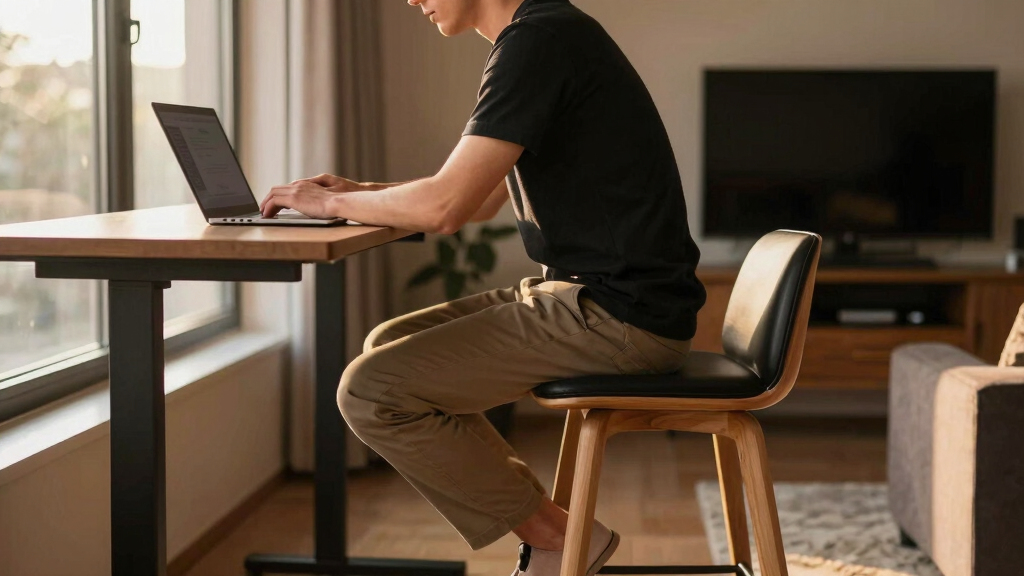
A standing desk stool creates a useful middle ground between sitting and standing. The goal is not to hold one “perfect” pose—it is to support frequent, comfortable movement while keeping your spine neutral and your feet grounded.
Potential improvement with proper stool use and adjustment.
Potential reduction linked to varied posture and micro-movement.
Minutes sitting, standing, then perching or moving.
Set hips slightly higher than knees with feet supported.
What perching actually does
A small, height-adjustable seat supports a semi-standing, semi-sitting position. Unlike a conventional chair, it allows subtle changes in angle and weight distribution—helping prevent the stiffness caused by static work.
Relieves tired legs
The seat carries part of your body weight without letting you collapse into a fully seated posture.
Engages the core
A gentle forward or backward lean keeps stabilizing muscles working without demanding rigid tension.
Invites micro-moves
Small shifts, swivels and foot changes distribute pressure and encourage healthier blood flow.
Protects alignment
With hips above knees, the pelvis can settle into a more natural position and support a neutral spine.
Reduces stagnation
Alternating muscle activity helps counter the sluggish circulation associated with long periods of stillness.
Still not all-day seating
Even an excellent stool cannot replace posture variety. Perching works best as one part of a movement cycle.

IWMH Standing Desk Stool, Height Adjustable Standing Desk Chair, Ergonomic Sit Stand Stool with Footrest, 360° Swivel Leaning Stools for Office Home (Black)
Ergonomic Design: The standing chair features lumbar support, with an ergonomic design that cradles your lower back to…
As an affiliate, we earn on qualifying purchases.
As an affiliate, we earn on qualifying purchases.
Five features that matter
The best stool adapts to your body and makes movement feel safe. Prioritize functional fit over novelty or appearance.
Adjustable height
Choose enough range to place the hips slightly higher than the knees and maintain a natural spinal curve.
Stable base
A wide, anti-slip footprint builds confidence to shift weight without tipping or bracing unnecessarily.
Useful padding
Memory foam or gel helps reduce pressure points while preserving enough firmness for active support.
Foot support
A footrest or firm floor contact supports lower-limb alignment and discourages awkward dangling or twisting.
Easy movement
Swivel, glide or gentle rocking functions make frequent posture changes natural instead of disruptive.
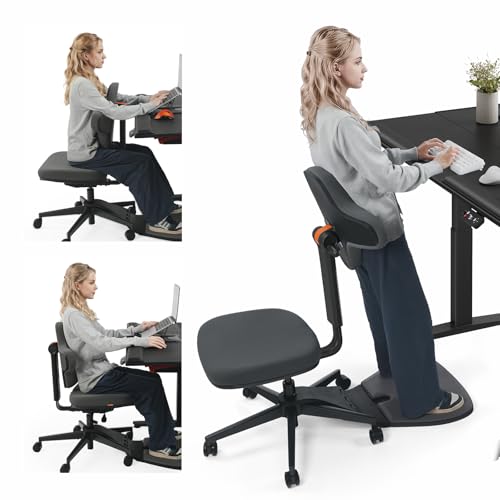
Newtral Standing Desk Chair, 6-in-1 Ergonomic Standing Mate Chair, Adjustable Sit Stand Lean Perch Saddle Stool with Flip Backrest, Dynamic Posture Support & Built-in Anti-Fatigue Design, MT-M-DG
【6-in-1 Versatility The Chair That Moves With You】Replace your traditional office chair with a dynamic seating solution. Whether…
As an affiliate, we earn on qualifying purchases.
As an affiliate, we earn on qualifying purchases.
Use the right posture for the moment
No single position wins the entire workday. The advantage comes from rotating between supported sitting, active standing and perching before discomfort begins.
| Factor | Traditional sitting | Perching | Static standing |
|---|---|---|---|
| Lower-body load | ✓ Low | ~ Shared | ✗ High |
| Core engagement | ✗ Limited | ✓ Gentle | ~ Moderate |
| Micro-movement | ✗ Often low | ✓ Encouraged | ~ Variable |
| Circulation support | ✗ Reduced when static | ✓ Improved by shifts | ~ Better with movement |
| Best use | Focused seated tasks | Active transitions | Short standing blocks |

Storex Active Tilt Stool – Ergonomic Seating for Flexible Office Space and Standing Desks, Adjustable 12-24 Inch Height, Teal (00325U01C)
Adjustable seat height of 12 to 24 Inches in 2-inch increments
As an affiliate, we earn on qualifying purchases.
As an affiliate, we earn on qualifying purchases.
Small shifts create meaningful relief
Stillness allows muscles to tighten, joints to stiffen and circulation to slow. Leaning, swiveling, changing foot position or briefly stepping away interrupts that pattern. Think of micro-movement as maintenance—not exercise, but a steady signal that keeps tissues active.

The Wobble Stool- Self Balancing Stool with 360 Degree Rotation, Promotes Healthy Posture to Relieve Back and Neck Pain, Lightweight Portable Seat Cushion (Mini) – Weight Limit – 220LBS
Balancing Wobble Stool- If you suffer from back pain, it is most likely a result of poor posture….
As an affiliate, we earn on qualifying purchases.
As an affiliate, we earn on qualifying purchases.
The modern stool is becoming responsive
New materials and feedback systems are turning a simple perch into a more adaptable part of hybrid and home workspaces.
Lighter foundations
Durable eco-friendly composites reduce weight while memory foam and gel improve pressure relief.
Finer personal fit
Twist and lever systems make height changes faster across standing and traditional desk setups.
Posture awareness
Integrated tracking can recognize prolonged stillness and monitor movement patterns.
Timely reminders
Apps or gentle vibration cues prompt a shift before stiffness becomes discomfort.
A practical movement rhythm
Try the 20–8–2 framework as a starting point, then adjust it around your comfort, tasks and health needs.
What Exactly Is a Standing Desk Stool—and Why Should You Care?
A standing desk stool is a small, adjustable seat designed for a semi-standing, semi-sitting position. Unlike traditional chairs, it encourages micro-movements, helping you avoid the stiffness and fatigue that come from static postures.
Imagine a sturdy, cushioned perch that lets you lean slightly forward or backward, shifting your load from your legs to your core. It’s like balancing on a gentle slope—steady enough to support you, but dynamic enough to keep your muscles engaged.
Using one can cut back on lower back pain and improve circulation. It’s especially helpful if you spend long hours at a standing desk, craving relief without sinking into a chair or standing stiffly all day. This balance is crucial because staying static—either sitting or standing—can lead to muscle fatigue, joint strain, and circulation issues. The ability to micro-move with a stool helps distribute weight more evenly and reduces the risk of repetitive strain injuries. However, it’s important to recognize that over-reliance on any one position can still cause stress; thus, integrating movement and varied postures remains key.
How to Pick the Perfect Standing Desk Stool — 5 Must-Know Tips
- Adjustable Height: Choose a stool that lets you set the seat height so your hips are slightly higher than your knees. This promotes a natural spinal curve and minimizes strain. Proper adjustment ensures your core muscles work gently to support your posture, reducing long-term fatigue.
- Stability & Balance: Look for a wide, anti-slip base. Stability isn’t just about safety; it directly influences your confidence to shift positions smoothly. A wobble-free stool allows for subtle micro-movements, which are essential to prevent stiffness and muscle fatigue from static postures. Without stability, you might feel hesitant to move, leading to more stiffness and less engagement of supportive muscles.
- Padded Comfort: Opt for cushioned seats made of memory foam or gel, especially if you’ll be on it for hours. Comfort influences how often and how long you’ll use the stool, and better padding reduces pressure points, helping you maintain good posture without discomfort. A comfortable seat encourages longer, more frequent use of micro-movements, which are vital for circulation and reducing fatigue.
- Foot Support: A built-in footrest or a place to support your feet helps maintain proper alignment of the lower limbs and reduces strain on your back and hips. Proper foot positioning allows your muscles to relax and improves circulation, especially during prolonged use. When your feet are supported, you’re less likely to adopt awkward postures that can lead to discomfort or joint strain over time.
- Ease of Movement: The stool should glide smoothly, encouraging micro-movements and shifts in posture without fuss. Features like a swivel base or a gentle rocking mechanism can facilitate natural adjustments, minimizing static muscle loading and promoting circulation. This fluid movement capability is essential because it prevents muscle stiffness and keeps blood flowing, which are critical for sustained ergonomic health.
For example, a remote worker with a small home office chose a stool with adjustable height and a wide base. She found that shifting her weight every 15 minutes kept her feeling energized and prevented stiffness, illustrating how proper features support sustainable use. The key is understanding that the right stool not only adapts to your body but also encourages active engagement throughout your workday, leading to better overall comfort and health.
What’s New? Recent Innovations in Standing Desk Stool Design
Designers are getting creative with materials and features to enhance comfort and functionality. Modern stools often feature lightweight frames made of eco-friendly composites, combined with plush memory foam or gel padding. These materials stand up to hours of use and add a touch of luxury to your workspace.
Some models now include adjustable mechanisms that let you fine-tune the height with a simple twist or lever. Others incorporate smart tech—sensors that track your posture and remind you to move. Imagine a stool that gently vibrates when you’ve been in one position too long—making movement effortless and integrated into your routine. These innovations address the common challenge of maintaining ergonomic postures over extended periods, providing real-time feedback and encouraging healthier habits.
Adapting to the rise of remote work and hybrid setups, these features also emphasize flexibility and health consciousness, making standing desk stools not just functional, but essential for modern workspaces.
The Science of Moving: Why Your Posture Matters More Than You Think
Proper use of standing desk stools can significantly cut back on discomfort. According to an anonymous researcher, micro-movements and varied postures prevent stiffness and promote circulation. Sitting still for long stretches causes blood flow to slow, increasing fatigue and discomfort. Without movement, muscles tend to tighten, joints stiffen, and circulation diminishes, which can lead to long-term musculoskeletal issues.
Using a stool encourages subtle shifts—leaning forward, scooting back, or resting your feet differently. These small adjustments are backed by studies showing they reduce the risk of musculoskeletal issues by up to 40%. The key implication is that static postures are detrimental; instead, integrating frequent, gentle movements prevents muscle fatigue and joint strain. Think of it as giving your muscles a gentle massage every few minutes, which keeps tissues healthy and promotes blood flow. This dynamic approach to working posture emphasizes the importance of movement as a core component of ergonomic health.
Remember, the goal isn’t to stay perched all day but to alternate positions and keep your body moving naturally. Incorporating micro-movements through a stool can be a simple yet powerful way to sustain ergonomic health and prevent chronic discomfort. The tradeoff is that without mindful movement, even the best stool can’t fully prevent strain, so awareness and habits are essential for long-term benefits.