TL;DR

Get your home office setup delivered free — and shop member deals
- Fast, free delivery on millions of items
- Access to Prime Big Deal Days deals on October 6–7
- Prime Video, Amazon Music and more included
Your chair influences your slouching because many lack proper support, especially in the lumbar area. Adjusting your setup, incorporating movement, and using ergonomic tools can make a big difference in maintaining good posture.
Ever catch yourself leaning forward or slouching, even when you know better? It’s not just you. The chair you sit in every day plays a big role in how you hold yourself. Many chairs are designed without your natural spine in mind, pushing you into bad habits. The good news? Small tweaks can make your sitting habits healthier and more comfortable.
In this guide, you’ll see why your chair causes slouching, what to look for, and simple fixes. No fancy equipment needed—just practical advice to help you sit smarter, stay more comfortable, and protect your back in the long run.
Choose a chair with adjustable lumbar support to maintain your spine’s natural curve.
Set your seat height so your feet are flat, knees at a 90-degree angle, and hips slightly higher than knees.
Incorporate movement and take breaks every 30 minutes to prevent slouching and muscle fatigue.
Use ergonomic accessories like cushions or footrests to customize your sitting setup.
Regularly evaluate your sitting habits and make small adjustments to stay upright and comfortable.
Why Your Chair Is the Main Culprit in Slouching
Your chair’s design can either support your spine or push it into a slump. Chairs without lumbar support often encourage you to lean forward or hunch over. When the lower back isn’t supported, your pelvis tilts backward, flattening your spine’s natural curve. This misalignment forces your muscles to compensate, often leading to fatigue and discomfort, which in turn makes slouching a default posture.
Imagine sitting in a cheap plastic chair for hours. You feel a pinch in your lower back, and your shoulders start creeping forward. Over time, this habitual leaning becomes ingrained, making it difficult to sit upright without conscious effort. Such poor posture, sustained over months or years, can cause chronic back pain, decrease circulation, and even impact breathing by restricting your ribcage movement.
Recent studies highlight that poor chair support increases the risk of back pain and musculoskeletal issues by up to 50%. An ergonomic, well-designed chair keeps your spine aligned naturally, reducing strain and fatigue. Investing in good support isn’t just about comfort; it’s about preventing long-term health problems that can diminish your productivity and quality of life.
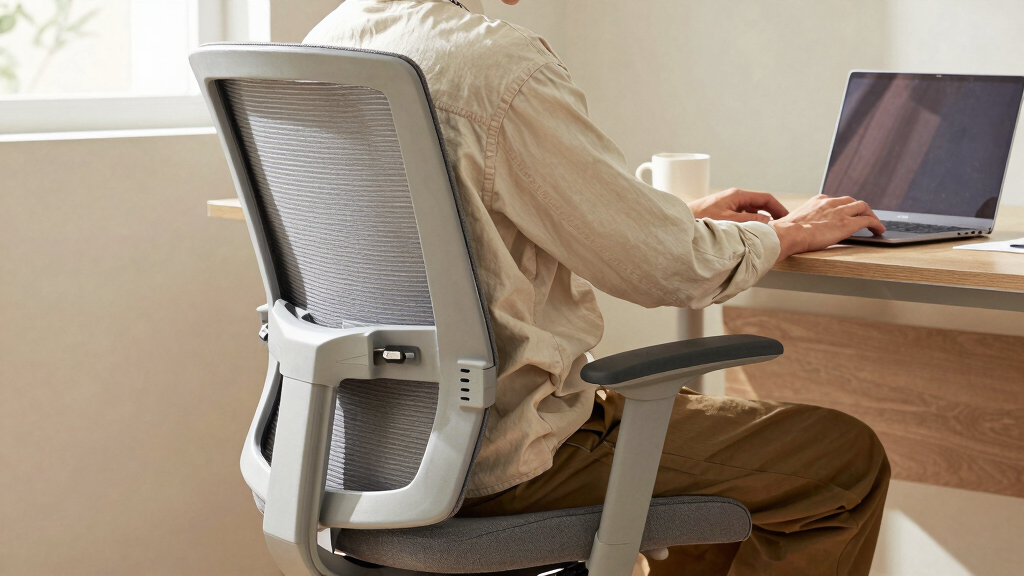
ergonomic office chair with lumbar support
As an affiliate, we earn on qualifying purchases.
As an affiliate, we earn on qualifying purchases.
How to Spot a Chair That Promotes Slouching
- Check if the lumbar support fits your lower back snugly. If it’s absent or too stiff, your back won’t stay supported, leading to a tendency to lean or slump. A poorly fitting lumbar support can cause your muscles to work harder to maintain posture, leading to fatigue and a higher likelihood of slouching. Recognizing this allows you to see whether your chair is actively contributing to poor alignment or if it needs adjustment.
- Look at the backrest angle. A reclined or floppy backrest encourages leaning and slouching, which can cause muscles to weaken over time and reduce your ability to maintain proper posture. If the backrest is too far reclined or lacks firm support, your body compensates by leaning forward or slumping, which over time can lead to chronic postural issues. Understanding this helps you choose or modify your chair to promote upright sitting.
- Assess seat height. If your feet don’t rest flat or your knees aren’t at a 90-degree angle, your pelvis tilts, affecting spinal alignment and increasing the likelihood of slouching. An incorrect seat height forces your muscles to work harder to stabilize your position, leading to fatigue and poor posture. Proper height adjustment ensures your pelvis remains in a neutral position, supporting the natural curvature of your spine.
- Test armrests. If they’re too high or too low, they can distort shoulder and neck positions, causing you to adopt compensatory postures that promote slouching. Armrests that are improperly positioned can cause you to hunch your shoulders or lean, which over time can lead to tension and misalignment. Proper armrest height supports your arms naturally, reducing strain and promoting better posture.
- Notice discomfort after sitting for a while. Persistent aches often mean your chair isn’t supporting your posture properly, leading to automatic slumping as your muscles fatigue. Recognizing early signs of discomfort can alert you to support deficiencies, allowing you to adjust your setup before developing chronic issues. Addressing these signs promptly helps maintain healthy spinal alignment.
For example, a friend switched to a chair with adjustable lumbar support and noticed her back pain dropped by 70%. Recognizing these signs can help you identify whether your current chair is contributing to poor posture, and prompt you to seek or modify support accordingly. Remember, a poorly fitting chair doesn’t just cause discomfort—it can fundamentally alter your spinal health if used long-term.
As an affiliate, we earn on qualifying purchases.
5 Simple Fixes to Keep You Sitting Upright
- Adjust your chair’s lumbar support. Ensure it fills the natural curve of your lower back. Proper lumbar support maintains spinal alignment, reducing the tendency to slouch and preventing muscle strain. If your chair lacks support, adding a small cushion or rolled towel can mimic the support your spine needs, helping to distribute weight evenly and keep your posture neutral.
- Set the seat height right. Feet should be flat on the floor, knees at a 90-degree angle, and hips slightly higher than knees. This positioning minimizes pressure on your lower back and promotes optimal spinal curvature, reducing fatigue and the urge to slouch. When your hips are properly elevated, your pelvis remains in a neutral position, supporting your spine’s natural curves and preventing postural collapse.
- Lean back slightly. A recline angle of 100-110 degrees decreases pressure on your lumbar discs and encourages a more natural spine alignment. Slight recline also relaxes your back muscles, making it easier to maintain good posture over longer periods. This slight tilt allows your back muscles to work less hard, reducing fatigue and promoting comfort.
- Use ergonomic accessories. A footrest can improve circulation and stabilize your pelvis, while seat cushions can provide extra support where needed. These accessories compensate for design flaws and help you customize your sitting environment for better support. Properly positioned accessories help distribute weight evenly and reduce strain on specific areas, thereby supporting long-term postural health.
- Take regular breaks. Standing, stretching, and walking around every 30 minutes prevents muscles from stiffening, reduces pressure on your discs, and resets your posture muscles. These micro-movements are crucial in breaking the cycle of slouching and maintaining spinal health over time. Regular movement also helps prevent stiffness and promotes circulation, which are essential for muscle recovery and posture maintenance.
For instance, a remote worker added a small lumbar pillow and started standing for 5 minutes every hour. Her slouching decreased noticeably, and she felt less fatigued at the end of the day. These small, intentional adjustments can significantly improve your sitting habits and reduce long-term back issues.
As an affiliate, we earn on qualifying purchases.
Why Moving More Matters More Than Just Sitting Right
Even perfect posture can’t be sustained for hours. Muscles and discs need movement to stay healthy. Sitting in one position for over 30 minutes increases pressure on your spine, muscles, and discs, which can lead to pain, stiffness, and decreased circulation. Incorporating movement isn’t just about comfort; it’s a vital health strategy.
For example, setting a timer to remind yourself every 30 minutes to stand and stretch can significantly reduce back pain and muscle fatigue. Simple desk stretches like spinal twists, shoulder rolls, or gentle neck stretches can activate muscles that become dormant during prolonged sitting. Walking to the kitchen or taking a quick lap around your workspace promotes circulation, prevents stiffness, and helps reset your posture muscles.
Research from ergonomic studies confirms that dynamic sitting—changing your position often—improves circulation, reduces fatigue, and decreases the tendency to slouch. The key is to integrate movement into your routine as a non-negotiable habit, not an afterthought. This proactive approach ensures your muscles stay engaged and your back remains healthier over time.
seat height adjustable office chair
As an affiliate, we earn on qualifying purchases.
As an affiliate, we earn on qualifying purchases.
Comparison: Fixed Support vs. Dynamic Sitting Solutions
| Feature | Fixed Support Chairs | Dynamic Sitting Tools |
|---|---|---|
| Support | Generally static, fixed lumbar and backrest support | Encourage movement, often with adjustable features or instability that promote active sitting |
| Benefit | Provides consistent support, which can help maintain proper posture during long periods, especially if well-designed | Reduces muscle fatigue, promotes active engagement of core muscles, and prevents stiffness by encouraging movement |
| Drawback | Can promote slouching if poorly designed or improperly adjusted; may become uncomfortable over time if support isn’t adaptable | May feel unstable initially, requiring an adjustment period, and sometimes less supportive for prolonged static sitting |
| Best for | Long hours at a desk, where consistent support is crucial for spinal health | Frequent movement, active sitting, or alternating positions to prevent fatigue and promote circulation |
Frequently Asked Questions
Why do I tend to slouch even when I know I shouldn’t?
Fatigue, habits, and poorly designed chairs all contribute. Your muscles tire, and your brain defaults to the easiest position—slouching—unless you actively correct it.How can I tell if my chair is causing poor posture?
If you find yourself leaning forward, feeling back or neck pain, or having trouble sitting upright comfortably, your chair likely isn’t supporting your spine well. Adjustments or a different chair may help.What are the best ways to fix slouching?
Adjust your chair for proper lumbar support, set the right seat height, take regular movement breaks, and consider ergonomic accessories. Awareness and routine are key.Are standing desks better than sitting chairs?
Alternating between sitting and standing is best. Standing desks can reduce slouching if used correctly, but they still require proper setup and movement breaks.What stretches or exercises help improve posture?
Core-strengthening exercises, chest and back stretches, and posture-awareness routines help maintain good alignment and reduce reliance on your chair’s support alone.Conclusion
Your chair is a powerful tool—when it supports your natural posture, slouching becomes less automatic. Small tweaks, like adjusting lumbar support and moving more often, keep your spine happy and muscles energized. Remember: sitting upright isn’t a one-time fix; it’s a habit you build daily.
Picture yourself sitting in a chair that feels supportive, not restrictive. Your back thanks you. Your energy levels improve. The key? Stay aware, adjust, and move regularly. That’s the real secret to stopping slouching for good.
Fall Picks
fall essentials
As an affiliate, we earn on qualifying purchases.