
TL;DR
A Livingetc report outlines four Japanese-inspired sofa features that can make a small living room feel more open: a low seat, visible space beneath the sofa, slimmer cushions and a form chosen to suit the room. Interior designer Yoko Kloeden says these choices affect sightlines and how much visual bulk a sofa adds; the effect will depend on the room and its layout.
Interior design publication Livingetc has reported four features of Japanese-inspired sofas that, according to London-based designer Yoko Kloeden, can make a small living room look more open: a low seat, an open base, slimmer cushions and a shape scaled to the room. The advice offers practical ways to reduce a sofa’s visual bulk, though it does not establish that these design choices will make every room feel larger.

Get business pricing on your home office setup
- Business-only prices and quantity discounts
- Tax-exempt purchasing
- Multiple users, one account, clear invoices
Kloeden says Japanese-style sofas generally sit lower than Western ones, at around 38 centimetres (15 inches) from floor to seat. A lower seating position leaves more wall visible above the sitter, which she says can make the ceiling appear higher and the room feel more open. She also connects the style to Japanese traditions of living close to the floor, including sitting on tatami.
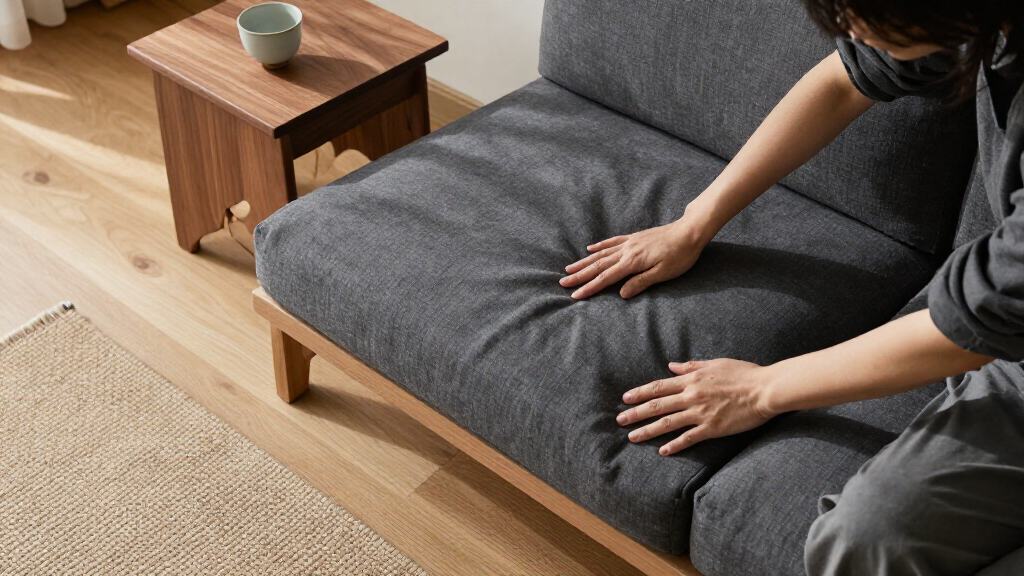
The report’s first two suggestions concern the sofa’s base and upholstery. An open-base design stands on legs rather than extending down to the floor; Kloeden says Time & Style leaves about 14 to 15 centimetres (roughly 6 inches) beneath some of its sofas. The visible floor and light beneath the frame can make the piece seem less like a solid block. She also points to shallower cushions: around 11 centimetres for the seat and 16 centimetres for the back in the examples she discusses. In her view, reducing upholstery bulk does not necessarily mean giving up comfort.
The other recommendations concern sightlines and furniture count. A low sofa back can leave views across a room unobstructed, while a higher back may be useful when a sofa needs to divide an open-plan space. Kloeden advises deciding which function is needed before choosing the sofa’s width or depth. She also says one sofa can look more balanced than a sectional or several smaller pieces, although modular designs may help when a particular arrangement is necessary.
How Sofa Shape Changes Sightlines
In a small living room, a sofa occupies a large share of the visible space. A low profile, exposed floor beneath the frame and less bulky upholstery can make the furniture appear lighter, while a considered back height can preserve or deliberately divide sightlines. These are visual and layout effects, not a guarantee that the room gains usable floor area.
The advice may be useful to people choosing furniture for a compact home or an open-plan room. It also suggests that dimensions alone are not the only factor: the sofa’s visual volume and relationship to the room can affect whether the layout feels crowded. Buyers still need to weigh comfort, access, seating needs and the actual measurements of their space.
Products Worth Considering

EGO Power+ SNT2122 21-Inch Single-Stage Snow Blower with Two 4.0Ah Batteries and 320W Charger

Greenworks 24V Brushless Drill and Impact Driver Combo Kit with Two USB-C Batteries

Metabo HPT NT1850DG 18V Cordless 18-Gauge Brad Nailer Kit
As an affiliate, we earn on qualifying purchases.
The Four Design Choices
The Livingetc report frames the recommendations as traits to look for when shopping, rather than as a review of a single product. Its examples include sofas from Time & Style and Karimoku Case, as well as a MUJI futon sofa bed. The figures Kloeden gives describe particular designs and should not be treated as dimensions shared by all Japanese-inspired sofas.
The report also includes comments from Lian Kittler, identified as deputy manager and head of brand and B2B at Time & Style Amsterdam. Kittler’s role is relevant to the discussion of sofa design, but the supplied material does not provide a separate direct quotation from Kittler. The core advice and quoted measurements are attributed to Kloeden.
“They sit lower than Western ones at around 38 cm (15 in) from floor to seat, and those few centimetres change the room.”
— Yoko Kloeden, interior designer
What the Advice Does Not Establish
The report presents an interior designer’s guidance, not measured research comparing room perception across different sofa styles. It does not specify how much larger a room might appear or whether the suggestions work equally well across different ceiling heights, layouts and lighting conditions. Kloeden’s statement that slimmer cushions can offer the same comfort is also not supported in the supplied material by consumer testing or product specifications across brands.
The source gives selected dimensions for particular designs, but does not provide a complete set of product measurements, prices, availability or suitability details. Readers would need to check those details with sellers and assess the furniture in relation to their own room.
Measure Before Choosing a Sofa
The report does not announce a product launch or a scheduled follow-up. For shoppers, the next step is to measure the room and compare the sofa’s seat height, overall height, depth and clearance beneath its base with the intended layout. A low back may suit a room where sightlines matter, while a higher back may work better as a divider. The available information offers design considerations rather than a single recommended model.
Key Questions
What seat height does the report give for Japanese-inspired sofas?
Yoko Kloeden says they sit at around 38 centimetres (15 inches) from floor to seat. This is a general figure in her comments, not a measurement for every sofa in the style.
How can an open sofa base affect a small room?
Kloeden says visible floor and daylight beneath a sofa can make it look less like a solid block. The report cites a 14-to-15-centimetre gap on some Time & Style open-base sofas.
Does a low sofa back always work better?
No. Kloeden says a low back keeps sightlines open, while a high back can help divide an open-plan room where there is no wall behind the sofa. The choice depends on the sofa’s role in the layout.
Do thinner cushions provide the same comfort?
Kloeden says the slimmer cushions in the designs she discusses retain comfort while reducing bulk. The supplied report does not include independent comfort testing, so shoppers may want to try a sofa before buying.
Source: livingetc.com