
TL;DR

Get your home office setup delivered free — and shop member deals
- Fast, free delivery on millions of items
- Access to Prime Big Deal Days deals on October 6–7
- Prime Video, Amazon Music and more included
Lumbar support helps maintain your lower back’s natural curve, preventing slouching and reducing strain. Adjustable support and smart features are evolving to meet individual needs, making ergonomic seating more effective and customizable.
Imagine sitting for hours, feeling that familiar ache creep into your lower back. Now, picture a simple feature in your chair that could prevent it: lumbar support. This small but mighty part of your seating setup plays a huge role in protecting your spine, especially if you’re glued to your desk all day. Whether you’re working, studying, or gaming, knowing what your lower back needs from a chair can make all the difference in comfort and health.
In this guide, you’ll learn what lumbar support actually is, why it matters, and how to pick a chair that keeps your spine happy. No fluff, just practical advice to help you sit smarter and move better.
Adjustable lumbar support ensures your lower back maintains its natural inward curve, reducing strain.
Modern ergonomic chairs often feature dynamic and multi-zone lumbar support, enhancing comfort.
External cushions can boost support but need correct positioning to be effective.
Proper lumbar support can cut your risk of back pain by nearly 50%, according to research.
Combine good support with movement and core exercises for the best spinal health.
What Exactly Is Lumbar Support — and Why It Matters
Lumbar support is a feature in chairs designed to support the lower back, where your spine has a natural inward curve called the lumbar lordosis. Without it, your back tends to slouch, putting extra pressure on discs and muscles. Think of lumbar support as a gentle hug for your lower back, helping it stay aligned and comfortable.
Why does this matter? When your lumbar spine is properly supported, it maintains its natural shape, which distributes weight evenly and reduces unnecessary strain. This alignment prevents muscles from overcompensating, which can lead to fatigue, soreness, or even long-term issues like herniated discs. Conversely, inadequate support can cause a cycle of poor posture, leading to back pain and discomfort that worsens over time. The tradeoff is that some supports, if too rigid or poorly positioned, might restrict movement or cause pressure points, so proper fit and design are critical for effective support.
For example, a well-designed lumbar support contour follows the natural curve of your lower back, encouraging an upright posture. This reduces the tendency to slouch, which is one of the main causes of back pain during prolonged sitting. The key is balance: support should be firm enough to maintain alignment but comfortable enough to avoid creating pressure or restricting movement.
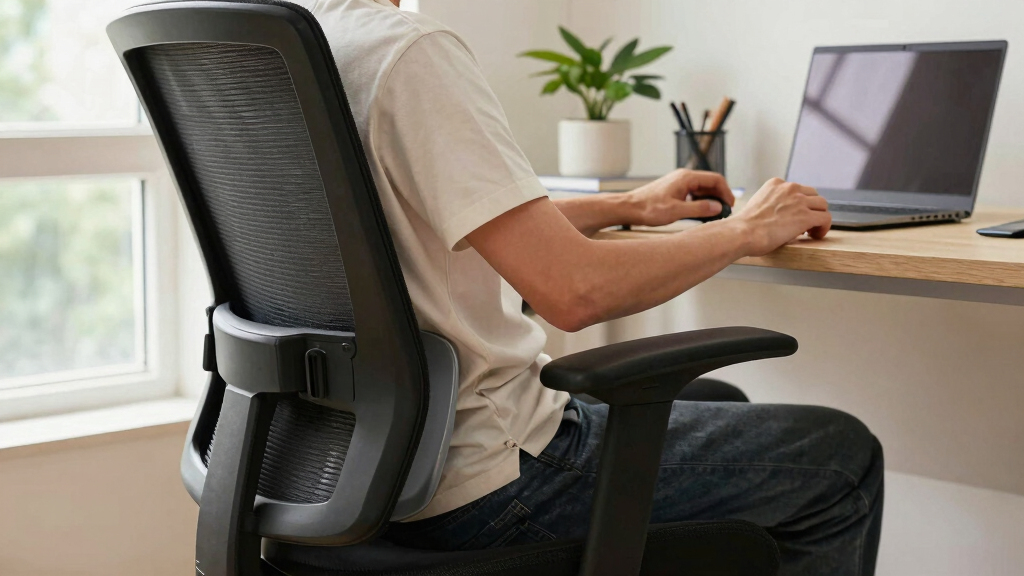
ergonomic office chair with adjustable lumbar support
As an affiliate, we earn on qualifying purchases.
As an affiliate, we earn on qualifying purchases.
Different Types of Lumbar Support — Which One Fits You Best?
Not all lumbar supports are created equal, and understanding their differences can help you choose what best fits your needs. Fixed supports are embedded into the chair, offering consistent support but limited customization. Adjustable supports allow you to fine-tune the height or depth, giving you control over how much support you get and where it sits. Removable cushions provide flexibility, letting you retrofit existing chairs or switch between different levels of support depending on your activity or comfort preference.
Choosing the right type involves considering your body size, sitting habits, and any existing back issues. For example, a user with a history of back pain might benefit from an adjustable or multi-zone support system that can be precisely tailored to their lumbar curve. On the other hand, someone who prefers simplicity might opt for a fixed or cushion-based support. The tradeoffs involve convenience versus customization: fixed supports are low-maintenance but less adaptable, while adjustable systems offer better fit but may require some setup. Ultimately, the goal is to match support type to your specific needs to prevent slouching and promote spinal health over long periods.
lumbar support cushion for desk chair
As an affiliate, we earn on qualifying purchases.
As an affiliate, we earn on qualifying purchases.
How to Pick a Chair That Supports Your Spine — 3 Simple Steps
- Check if the lumbar support mimics the natural inward curve of your lower back. Sit in the chair and observe if the support aligns with your lumbar region, encouraging an upright posture without forcing you into unnatural positions. Proper support should feel like a gentle cradle that promotes spinal alignment rather than a rigid brace that restricts movement.
- Adjust the support to fit your body. If your chair features movable lumbar components, tweak them until they snugly fit your lower back’s shape. If not, ensure the overall chair height and seat depth allow your back to rest comfortably against the support, avoiding slouching or over-arching. This step is crucial because even the best support won’t help if it doesn’t match your specific anatomy.
- Evaluate the entire chair’s ergonomics. Your feet should sit flat on the floor, knees at a 90-degree angle, and the support should keep your back upright without forcing it into a slouched or overly arched position. Consider how the chair encourages movement; a good ergonomic chair allows slight shifts that prevent stiffness and promote circulation, which are essential for long-term spinal health.
For instance, an office worker might fine-tune the lumbar support to sit just below their shoulder blades, maintaining a natural inward curve. A remote worker might prefer a chair with multi-zone support that adapts throughout the day, preventing fatigue and discomfort from prolonged sitting.
ergonomic chair with dynamic lumbar support
As an affiliate, we earn on qualifying purchases.
As an affiliate, we earn on qualifying purchases.
The Latest in Lumbar Support — What’s New and Why It Matters
Modern chairs are incorporating advanced technology to enhance lumbar support, recognizing that different users have unique needs and movements. Dynamic lumbar support systems automatically adjust to your shifting posture, providing continuous support and reducing the need for manual readjustments. Memory foam and gel padding contour more precisely to your lower back, distributing pressure evenly and reducing hotspots that can cause discomfort. Smart support systems integrate sensors that monitor your posture and provide real-time feedback via apps, encouraging better sitting habits and alerting you when you need to move or adjust.
Why do these innovations matter? They allow for a more personalized sitting experience, reducing fatigue and strain over extended periods. For example, a chair that senses when you slouch can gently nudge you to sit upright, preventing long-term back issues. These features also accommodate a variety of body types and movement patterns, making ergonomic support accessible and effective for more people. The tradeoff might be higher cost or complexity, but the potential health benefits and comfort improvements are significant, especially for those who spend many hours seated daily.
As an affiliate, we earn on qualifying purchases.
Key Facts About Lumbar Support That Could Save Your Back
Here are some eye-opening facts that underscore the importance of proper lumbar support. Proper support maintains the natural inward curve of your lumbar spine, distributing weight evenly and preventing uneven stress that can lead to disc degeneration or muscle strain. Ergonomic studies have shown that individuals with adjustable lumbar support experience significantly less back pain and fatigue, especially during long hours of sitting. When support is fixed or poorly positioned, it can force your spine into unnatural positions, increasing the risk of injury over time. External cushions can be a quick fix, but if not positioned correctly, they may shift or cause pressure points that negate their benefits. The key is to find a support that fits your body’s unique shape and movement patterns.
Investing in quality lumbar support is a small step that can yield long-term health benefits, reducing the likelihood of chronic back issues, improving comfort, and increasing productivity. The tradeoff is ensuring that support is properly adjusted and positioned to avoid unintended strain or discomfort.
Your Most Common Questions About Lumbar Support — Answered
Why is lumbar support so important? It maintains your lower back’s natural curve, reducing strain and preventing discomfort. Without it, muscles and discs work overtime, risking long-term issues. Proper support helps distribute weight evenly, preventing localized stress that can cause pain or injury. It also encourages good posture, which is essential for spinal health and overall comfort during long sitting periods.
How can I tell if my chair has enough support? Sit in the chair and lean back gently. If your lower back feels supported and you can sit upright without slouching or feeling strain, the support is likely adequate. If your back feels flat against the chair or you find yourself slouching, support may be insufficient or improperly positioned. Testing different positions and adjusting support features can help determine what’s best for your body’s needs.
Can I add lumbar support to any chair? Yes. External cushions or pillows are versatile options that can be attached or placed behind your back to enhance support where built-in features fall short. They are especially useful for retrofit purposes or when traveling, offering immediate relief without needing to replace your entire chair.
What should I look for in an ergonomic chair? Adjustable lumbar support, proper seat height, breathable and supportive materials, and a design that encourages correct posture are key. The chair should allow for movement and support your spine’s natural curves, reducing fatigue and discomfort during prolonged use.
Is lumbar support necessary for short sitting periods? While less critical for brief use, even short periods of sitting benefit from some support to prevent unnecessary strain, especially if you tend to slouch or have existing back issues. Consistent support promotes better posture habits over time, reducing the risk of developing chronic problems.
Are exercises helpful alongside lumbar support? Absolutely. Strengthening your core muscles through targeted exercises and stretches can complement ergonomic support, providing a more resilient foundation for your spine and reducing reliance solely on external support features for back health.
Conclusion
Supporting your lower back isn’t just a comfort upgrade — it’s a health move. A well-chosen chair with proper lumbar support keeps your spine aligned, reduces fatigue, and can prevent pain that nags long after your workday ends. Think of your spine as a delicate sculpture — support it well, and it’ll serve you for years to come.
Next time you sit down, ask yourself: does my chair support my back the way it needs to? If not, a quick fix or upgrade now can save you from bigger problems down the line.
Halloween Picks
halloween
As an affiliate, we earn on qualifying purchases.