TL;DR

Get business pricing on your home office setup
- Business-only prices and quantity discounts
- Tax-exempt purchasing
- Multiple users, one account, clear invoices
Sitting on an exercise ball may activate core muscles and promote movement, but evidence for long-term benefits is limited. It works best as part of a varied sitting routine, not a replacement for ergonomic chairs.
If you’ve ever seen someone bouncing on a bright, round ball at their desk and wondered if it’s a productivity hack or just hype, you’re not alone. The idea of replacing your office chair with an exercise ball sounds appealing—more movement, better posture, a fun twist to sitting.
But does sitting on an exercise ball actually deliver these promises? Or is it a passing trend that might do more harm than good? Today, we’ll explore what science says, what practical steps you should take, and how to decide if this quirky seating option fits your workspace.
Start with short sessions (15-20 mins) on the exercise ball and gradually increase as your body adapts.
Ensure proper sizing, inflation, and placement to maximize safety and benefits.
Alternate between the ball and traditional chairs to prevent fatigue and discomfort.
Exercise balls activate core muscles but don’t replace ergonomic back support for long-term comfort.
Consult a healthcare professional if you have balance issues, musculoskeletal problems, or pregnancy concerns.
Sitting on an Exercise Ball at Your Desk: Helpful or Hype?
Exercise balls can add movement and core activation to your workday, but they are not a magic ergonomic upgrade. The evidence points to a smarter middle path: short sessions, proper setup, and plenty of variety.
Active sitting with a built-in wobble.
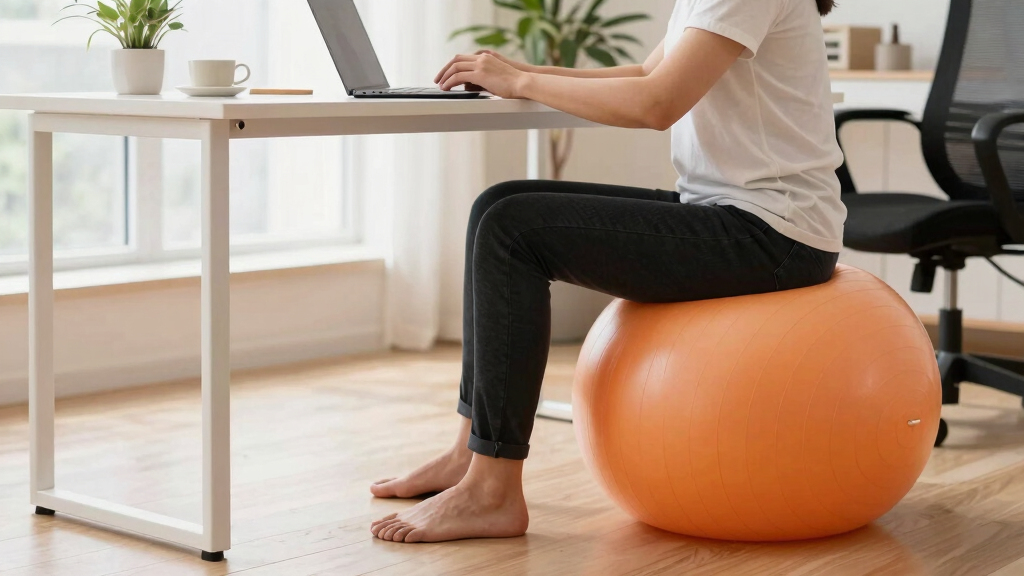
A stability ball, also called a Swiss ball, replaces the fixed base and backrest of a chair with a round inflatable surface. That unstable surface nudges you to make tiny balance corrections through the hips, trunk, and legs.
More movement
The slight bounce and instability can interrupt static sitting and make desk work feel less locked in place.
Core engagement
Your abdominal and back muscles work harder to keep you upright, especially during short focused tasks.
No backrest
The same instability that creates activity can also lead to fatigue, discomfort, or poor positioning over time.
Where the science looks helpful, and where it gets shaky.
Research generally supports a modest rise in muscle activity, but does not clearly show that exercise balls improve posture or reduce back pain when used alone. Think of the ball as a movement prompt, not an ergonomic cure.
Helpful when…
- You use it for short sessions rather than full workdays.
- Your ball is the correct size and properly inflated.
- You alternate with a supportive chair and regular standing breaks.
Riskier when…
- You have balance issues, pregnancy concerns, or musculoskeletal problems.
- You sit for long periods without back support or movement breaks.
- The ball slides, sags, overinflates, or forces your knees above or below 90 degrees.
A five-step setup that keeps the idea grounded.
The practical goal is not to bounce through the whole workday. It is to create a controlled, short-duration option that adds variety without removing the support your body still needs.
Exercise ball versus traditional office chair.
The ball wins on active engagement, while the chair wins on support and predictable comfort. The strongest routine usually borrows from both instead of treating one as the hero.
| Feature | Exercise Ball | Traditional Chair | Practical Read |
|---|---|---|---|
| Core engagement | ✓ Moderate to high | ~ Low to moderate | Useful if short sessions are the goal. |
| Back support | ✗ None or minimal | ✓ Built-in support | Important for long work blocks. |
| Stability | ~ Requires balance | ✓ Stable base | Ball use needs a non-slip setup. |
| Comfort over time | ~ Variable | ✓ More predictable | Fatigue can build on the ball. |
| Best use case | Movement breaks | Primary seating | Alternate rather than replace. |
From intention to outcome.
Most problems happen when the ball is treated as a full chair replacement. The healthier chain starts with setup, moves through short use, and ends with body feedback.
Helpful, with boundaries.
Sitting on an exercise ball can make desk time more active, but it should complement ergonomic seating, movement breaks, and strength work. For all-day comfort and back support, a good chair still matters.
What is an Exercise Ball Desk Chair — and Why Do People Use It?
An exercise ball, also called a stability ball or Swiss ball, is a large, inflatable sphere made of burst-resistant material. Instead of a traditional ergonomic chair, you sit on this ball, which encourages you to engage your core muscles to stay balanced.
People use them to promote active sitting—meaning you’re constantly making tiny adjustments to stay upright. It’s like trying to balance a beach ball on your fingertips—only with your hips and abs doing most of the work. Some say it helps improve posture and makes sitting less sedentary.
Imagine sitting at your desk, feeling the textured rubber under your hands and the slight bounce as you shift your weight. It’s a different sensory experience—more dynamic, more engaging. But is it enough to replace your trusty office chair? That depends on your needs and how you use it.
As an affiliate, we earn on qualifying purchases.
The Real Benefits of Sitting on an Exercise Ball — What Does Science Say?
Sitting on an exercise ball can activate your core muscles more than a traditional chair. An anonymous researcher points out that studies show muscle activity can increase by up to 30% when sitting on a ball, compared to standard seating. That’s a tangible benefit if you want to strengthen your abs and back muscles over time.
However, evidence for improved posture or reduced back pain is mixed at best. According to ergonomic experts, sitting on a ball isn’t a magic bullet. It’s more like adding a dash of movement—helpful, but not a complete fix.
Picture this: you’re working, feeling the slight wobble of the ball, which nudges you to sit upright. That’s the core activation in action. But if you sit too long without breaks, fatigue can set in, and the lack of back support might cause discomfort.
Why this matters: while increased muscle activation can contribute to better core strength, it also means your muscles are working harder, which can lead to fatigue or strain if overused. The tradeoff is that without proper support, prolonged sitting may cause discomfort or exacerbate existing issues. So, the key is moderation and proper technique—using the ball to complement other ergonomic practices, not replace them.
As an affiliate, we earn on qualifying purchases.
When Sitting on an Exercise Ball Works — And When It Doesn’t
Sitting on an exercise ball works best if you use it as part of a varied sitting routine. For example, alternate 15-minute sessions on the ball with regular chair sitting. This approach helps balance muscle activation with rest, preventing fatigue and discomfort that can come from overuse.
Imagine working in a small office or home setup. You start your day on a traditional chair, then switch to the ball for about 15 minutes during a task that benefits from movement, like brainstorming or reading. This variation can help keep your muscles engaged, improve circulation, and reduce stiffness.
However, relying solely on the ball for extended periods—say, an entire workday—can lead to fatigue, instability, or falls if your balance isn’t perfect. For individuals with musculoskeletal issues or balance problems, the risk increases. In such cases, consulting a healthcare professional before making the switch is advisable, as the tradeoff involves balancing core activation benefits against potential instability and discomfort from prolonged use.
Why this matters: knowing when and how to incorporate the ball ensures you get the benefits without risking injury or discomfort. It’s about smart integration—using the ball as a tool, not a sole solution for ergonomic support.
As an affiliate, we earn on qualifying purchases.
How to Use an Exercise Ball Safely at Your Desk — 5 Practical Tips
- Choose the right size: Your knees should be at a 90-degree angle with feet flat on the floor. Measure your height to pick a ball between 55-75 cm. An appropriately sized ball ensures proper posture and reduces strain, as sitting too high or low can cause compensatory postures leading to discomfort or musculoskeletal issues.
- Inflate properly: The ball should be firm but allow slight give when you sit. Over-inflation makes it too hard, increasing pressure points and reducing stability. Under-inflation causes sagging, which can lead to poor posture and discomfort. Proper inflation balances support and mobility, promoting better alignment and reducing strain.
- Use on a non-slip surface: Place the ball on a rug or a non-slip mat. This prevents slipping, which can cause sudden falls or injuries, especially if you tend to shift or bounce during work. Stability in setup is critical for safety and confidence while sitting.
- Limit sitting time: Start with 15-20-minute sessions, then take breaks or switch to a regular chair. Extended sitting on the ball can tire muscles or cause discomfort due to lack of back support. Regular breaks help maintain alertness, prevent fatigue, and protect your musculoskeletal health.
- Pay attention to your body: If you feel pain, numbness, or fatigue, switch back to a traditional chair or adjust your sitting habits. Listening to your body is crucial—discomfort may indicate improper setup or overuse, and ignoring signals can lead to injury or strain.
As an affiliate, we earn on qualifying purchases.
Exercise Ball vs. Traditional Office Chair — Which Is Better?
| Feature | Exercise Ball |
|---|---|
| Core Engagement | Moderate to High |
| Back Support | None or minimal |
| Stability | Less stable, requires balance |
| Comfort | Varies, may cause discomfort over time |
| Suitability | Depends on individual needs and health |
Tradeoffs are important: while the ball encourages active sitting and can strengthen core muscles, it sacrifices some stability and support, which are crucial for long hours or for individuals with existing musculoskeletal issues. Conversely, traditional chairs prioritize comfort and support but may lead to prolonged sedentary behavior. The decision hinges on your health needs, work style, and preferences—balancing active engagement with comfort and safety.
Risks and Downsides You Should Know Before Sitting on an Exercise Ball
Sitting on a ball isn’t risk-free. Without proper technique, you could develop discomfort, fatigue, or even falls. People with balance issues, pregnant women, or those with certain back problems should check with a healthcare provider first. The risks involve not just falling but also overtaxing muscles or developing poor posture if the ball is used improperly or excessively.
Imagine a coworker who starts bouncing vigorously to stay alert—only to lose balance and fall. That’s a real risk if the ball isn’t used carefully. Overusing the ball without breaks can also strain muscles and cause soreness, especially if your core isn’t conditioned for prolonged activity.
Experts warn that prolonged, unvaried sitting on a ball might do more harm than good. Using the ball continuously without proper technique or breaks can lead to muscle fatigue, discomfort, or even injury. It’s essential to recognize these risks and incorporate safety measures—like proper sizing, limited duration, and balanced routines—to mitigate potential downsides.
Why this matters: understanding the risks and implementing safety precautions ensures you gain the potential benefits without exposing yourself to unnecessary hazards. It’s about balancing movement and stability—using the ball as a tool, not risking safety for novelty.
Best Practices: How to Incorporate an Exercise Ball into Your Day Without Risks
Start slow: Use the ball for short bursts, gradually increasing as your body adapts. This allows your muscles to build endurance and reduces the risk of fatigue or injury. Always listen to your body—discomfort or fatigue means it’s time to switch back or adjust your routine.
Set up your workspace: Ensure the ball is properly inflated, at the right height, and placed on a stable, non-slip surface. Proper setup minimizes the risk of accidents and maximizes comfort. Keep a timer or reminder to shift between sitting styles, preventing prolonged periods on the ball that could lead to fatigue.
Mix it up: Don’t sit on the ball all day. Alternate with ergonomic chairs, standing desks, or walking during breaks. Movement reduces stiffness, promotes circulation, and prevents overuse injuries. Incorporating varied postures is key to sustainable ergonomic health.
Imagine your workspace as a dance floor—vary your moves and avoid staying in one position too long. This intentional variation ensures you enjoy the benefits of active sitting while minimizing risks. Planning your sitting routine with these principles promotes safety and effectiveness.
The Final Word: Should You Swap Your Chair for an Exercise Ball?
Sitting on an exercise ball can be a playful, dynamic addition to your workspace, but it’s not a magic fix for posture or back pain. It works best when used smartly—short intervals, proper setup, and as part of a broader movement routine.
Think of the ball as a spice—not the main course. It adds flavor, engagement, and movement, but shouldn’t replace your ergonomic staples. Using it as a supplementary tool encourages more active sitting, which can benefit your core and circulation. However, long-term reliance without proper posture support may lead to discomfort or strain. The key is moderation and integration—using the ball to complement, not substitute, your ergonomic setup.
Frequently Asked Questions
Is sitting on an exercise ball better for my back than a regular chair?
It can promote better posture and core engagement, but it’s not a universal solution. It depends on your individual needs and how you use it. Proper setup and moderation are key.
How long should I sit on an exercise ball each day?
Start with 15-minute intervals and gradually increase, always paying attention to how your body feels. Mix it with regular chair time and breaks for best results.
Are exercise balls safe for everyone?
Not necessarily. People with balance issues, certain back conditions, or who are pregnant should consult a healthcare professional before use. Use caution and listen to your body.
Can sitting on an exercise ball help reduce back pain?
Evidence is mixed. Some find relief through core activation, but it’s not a guaranteed solution. Combine with other ergonomic strategies and movement breaks for best results.
What should I consider when choosing an exercise ball for desk sitting?
Pick a size that keeps your knees at 90 degrees, ensure it’s firm enough but not over-inflated, and use it on a non-slip surface. Proper fit and setup matter for safety and comfort.
Conclusion
Sitting on an exercise ball can energize your work routine—if used thoughtfully. It’s not a replacement for a good ergonomic chair, but a tool to add movement and core engagement.
Picture yourself shifting between sitting styles, feeling more alert and balanced. That’s the real benefit—staying active, one small change at a time.
Halloween Picks
halloween
As an affiliate, we earn on qualifying purchases.