TL;DR
Livingetc has featured four radiator-table designs used in hallways, landings and a child’s bedroom. The examples show how a shallow shelf or console can add a useful surface without taking up floor space, though the report does not provide heating-performance tests or installation guidance.
Livingetc has featured four radiator-table designs that add display or storage space above radiators in compact rooms, offering an alternative to bulky radiator covers or separate furniture. The examples include a marble-topped console on a half-landing, a bedroom surface designed for dressing-table use, and a slim shelf in a narrow entryway; the report presents them as design solutions, not as tested products or evidence of improved heating performance.

Get business pricing on your home office setup
- Business-only prices and quantity discounts
- Tax-exempt purchasing
- Multiple users, one account, clear invoices
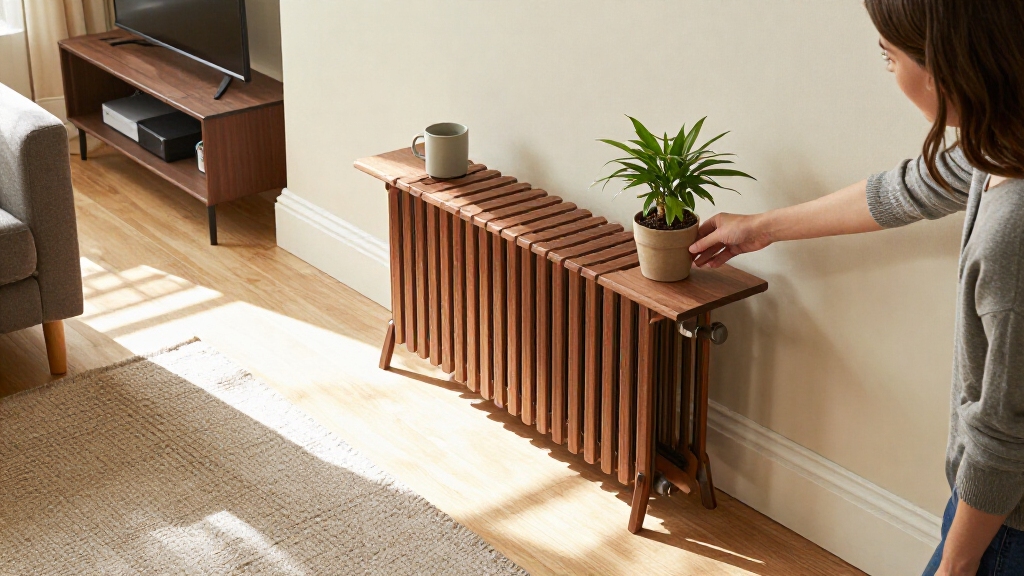
The designs share a basic approach: they use a shallow surface above a radiator to make use of wall space while keeping the floor clear. Some examples add legs or decorative details, while others are closer to a simple shelf. Livingetc frames the idea as especially suited to narrow hallways and small rooms, where a freestanding console could take up too much space.
One example, by Alex Keith of Otta Design, sits on a half-landing outside a bedroom. Keith said the clients wanted a focal point without using a traditional radiator cover. The team worked with master joiners at Creative Edge on a marble-topped design with open wooden legs; Keith said the marble was intended to buffer heat from artwork above, while the open construction allowed heat to escape into the room.
Another design, by Laura Stephens, was made for a child’s bedroom and intended to serve as a future dressing-table surface. Stephens said the shelf needed to be 250 millimeters deep to accommodate a lamp and sturdy enough to support makeup storage and a ceramic lamp base. A third example from Charlotte Simpson of Lotte Studio uses a radiator shelf in a narrow entryway, where she said a simple surface could provide function without adding floor-standing furniture. The supplied report introduces a fourth example but does not include its details.
Making Use of Narrow Rooms
The examples address a familiar constraint in smaller homes: residents may need a place for a lamp, keys, artwork or daily routines, but have little room for another piece of furniture. A wall-mounted or radiator-spanning surface can add some utility without occupying the floor area needed for circulation. The bedroom example also shows how a built-in feature may be planned for changing needs, rather than only the room’s current use.
There is a practical trade-off. The designs need to fit the radiator and the available wall space, and their construction may affect how warm air moves. The report describes open legs and a marble top in one project as design choices intended to let heat circulate and protect nearby artwork, but it does not offer measurements or independent performance evidence. Readers should treat the projects as design inspiration rather than a universal installation specification.
Products Worth Considering

DEWALT 20V MAX XR Cordless 1/2-Inch Impact Wrench Kit (DCF900P1)

Greenworks 24V 6-Tool Combo Kit with 4.0Ah and 2.0Ah Batteries, USB-C Power Bank, and 65W Charger

Greenworks 24V Cordless Brushless Leaf Blower, 515 CFM, 130 MPH, with 5.0Ah Battery and Charger
As an affiliate, we earn on qualifying purchases.
A Shelf Instead of a Cover
Livingetc contrasts these tables with conventional radiator covers, saying covers can reduce a radiator’s effectiveness and may draw attention to the unit. That is the publication’s general design rationale; the report does not compare heating output across specific cover and table models. Its featured projects instead use an open arrangement or a shelf-like form, with the aim of making the radiator area serve another purpose.
The projects also show that radiator tables are not a single standardized product. Keith’s design was developed around artwork and a half-landing, while Stephens tailored depth, brackets and lighting to a child’s room. Simpson’s entryway approach focused on avoiding extra floor furniture. Their common feature is adapting the surface to a particular space, rather than using one off-the-shelf solution in every room.
“We wanted to create a focal point on the half landing outside her bedroom but didn’t want a traditional radiator cover.”
— Alex Keith, Otta Design
Heating Performance Is Not Tested
The report does not include heating-output tests, temperature measurements, or comparisons between the featured tables and radiator covers. It also does not provide installation instructions, product specifications for all four examples, or detailed information about the fourth design. Keith’s comments describe the intent of one custom project, but do not establish how much heat any radiator table allows to circulate in other settings.
It is also unclear whether the featured designs are available as products or were made specifically for individual clients. The report gives project details for selected examples but does not state costs, materials for every design, or whether the installations suit all radiator types and locations.
Check Fit Before Installation
Livingetc’s report is an inspiration feature rather than an announcement of a new product range or a change in building guidance. Anyone considering a similar setup would need to check the radiator’s dimensions, the shelf’s depth and support, and the placement of objects above it. The designs highlighted by the publication rely on project-specific choices, including a custom depth and sturdy brackets in Stephens’s bedroom example.
The next practical step for homeowners is to seek advice suited to their radiator and room, particularly where a shelf could affect airflow or sit close to artwork, lamps or other heat-sensitive items. The article provides no follow-up testing or confirmed performance data, so whether a particular installation preserves the radiator’s output remains a matter not answered by the report.
Key Questions
What is a radiator table?
A radiator table is a shelf or shallow console positioned above a radiator, sometimes with legs or brackets. The examples in Livingetc’s report use the surface for display, storage or dressing-table activities.
Do radiator tables improve heating performance?
The report does not establish that they improve heating performance. It describes open construction intended to let heat circulate in one project, but provides no test results or measured comparisons.
Where might a radiator table be useful?
The featured designs are in a half-landing, a child’s bedroom and a narrow entryway. Livingetc presents them as options for compact spaces where another floor-standing piece of furniture may be impractical.
Are the designs available to buy?
The supplied report does not say whether the featured tables are sold as ready-made products. It describes custom design work and project-specific details, so availability and pricing are unclear.
Source: livingetc.com