TL;DR
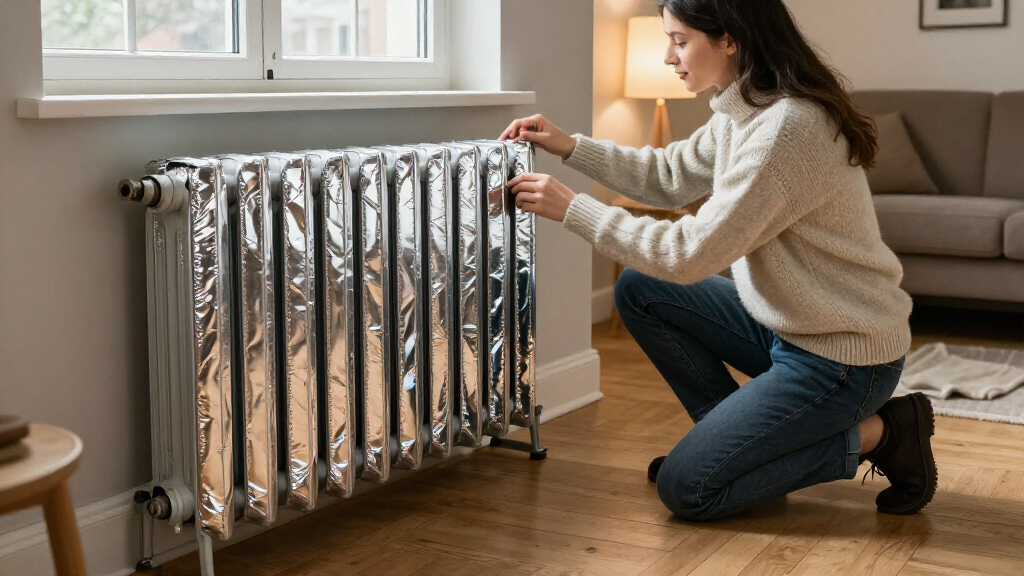
An Ideal Home writer reports using radiator reflectors behind most radiators on external walls since November 2022. She says she was comfortable with her thermostat at 18–19°C rather than 21°C, but did not isolate the reflectors’ effect or report measured bill savings.
An Ideal Home writer says radiator reflectors installed behind most of her radiators on external walls in November 2022 have helped her stay comfortable with a lower thermostat setting. Her account offers a four-year household experience, not a controlled test: she did not report measured energy savings and says other changes to her home make the reflectors’ individual effect hard to establish.

Get business pricing on your home office setup
- Business-only prices and quantity discounts
- Tax-exempt purchasing
- Multiple users, one account, clear invoices
The writer says her thermostat was regularly set to 21°C before installation. In the winters after fitting the reflectors, she says she was comfortable at 18–19°C. That is a reported change in her usual settings, but the article does not provide energy bills or meter readings showing how much energy or money the reflectors saved.
She fitted Radflek panels behind most radiators attached to external walls. She left out a bathroom towel rail and a designer radiator where the panels would be too visible. The account says reflectors are less useful on internal walls because heat passing through those walls stays within the home; a wall adjoining an unheated space, such as an attached garage, may be a more relevant location.
The writer also says she bleeds and dusts her radiators, checks that they warm evenly, and takes steps to reduce draughts and heat loss. She recommends purpose-made reflector products rather than kitchen foil, citing the Energy Saving Trust’s advice that ordinary foil lacks the same insulating properties. The article does not include an independent test of specific products or a quantified comparison between them.
Why Lower Thermostat Settings Matter
The account is relevant to households looking for relatively low-cost ways to reduce heat escaping through external walls. It suggests that, in this home, reflectors accompanied a lower thermostat setting while the writer remained comfortable. That matters because heating settings can affect household energy use, although the report does not establish that the reflectors caused the change or calculate the resulting bill impact.
The article cites British Gas as saying that lowering a thermostat by one degree can reduce an energy bill by 10%. This is a general company claim, not a measured result from the writer’s home, and the report does not specify the conditions or bill baseline behind that figure. Readers should not treat it as a guaranteed saving from installing reflectors.
The main practical takeaway is that placement and the home’s existing insulation matter. A reflector behind a radiator on an external wall may return some heat toward the room, while a well-insulated home may lose less heat through that wall in the first place. The reported experience is therefore a prompt to assess a home’s setup, rather than proof of a uniform benefit.
Products Worth Considering

Metabo HPT C10FCG2 10-Inch Single Bevel Compound Miter Saw

DEWALT DCS374P2 20V MAX Brushless Deep Cut Band Saw Kit

EGO Power+ LV5000 Cordless Leaf Vacuum, Mulcher, and Blower
As an affiliate, we earn on qualifying purchases.
Installation and Home Conditions
The writer describes a home about 60 years old, which she says is not as well insulated as some newer houses, though it does not lose as much heat as some older homes. She sees the reflectors as potentially more worthwhile where radiators sit on poorly insulated external walls. No insulation survey or heat-loss measurement is provided, so the home’s performance is described from the writer’s experience rather than a technical assessment.
Her account also emphasizes that reflectors are one part of a wider set of household measures. She says she changed appliance use, improved insulation in a conservatory, managed draughts and avoided leaving windows open longer than necessary. Because several actions were taken, the article cannot separate the effect of reflectors from those other changes, the weather, energy prices or changes in how the home was heated.
Radiator reflectors are designed to sit between a radiator and a wall, with products using reflective surfaces and, in some cases, an insulating layer. The writer says product formats include panels attached with clips as well as rolls fixed to the wall. Her warning about kitchen foil reflects the source article’s cited Energy Saving Trust guidance; she does not provide test data comparing foil with the products she installed.
““Each winter since I installed the reflectors, I was comfortable with the thermostat set at 18-19°C.””
— Ideal Home writer describing her experience
Savings Have Not Been Measured
The article does not give the household’s energy consumption, bills before and after installation, the cost of the reflectors or a payback period. It is not clear how much of the lower thermostat setting resulted from the panels, as opposed to other home improvements, weather conditions or changed habits. The writer also offers no room-by-room temperature readings or measurements of heat escaping through the walls.
Results for other households remain uncertain. The article suggests benefits may be smaller in newer, well-insulated homes and greater where radiators face uninsulated external walls, but it does not provide comparative testing across different building types. The cited 10% bill reduction for lowering a thermostat by one degree is attributed to British Gas, not demonstrated as an outcome of using reflectors.
Check Wall Placement and Heating
The report does not announce a new product, trial or follow-up measurement. For households considering reflectors, the account points to checking whether radiators are on external walls, whether those walls are insulated, and whether the radiators heat evenly. The writer’s experience suggests those details may shape the potential value, but it does not guarantee a particular result.
Any assessment of savings would require comparing energy use over suitable periods while accounting for weather, thermostat settings and other changes in the home. Until such data are available, the four-year account remains a homeowner’s reported experience rather than evidence of a specific average reduction in heating costs.
Key Questions
What did the Ideal Home writer report after using radiator reflectors?
She says that after installing them in November 2022, she was comfortable setting her thermostat to 18–19°C in winter, compared with a previous regular setting of 21°C. She did not report measured energy or bill savings.
Where did she install the reflectors?
She put them behind most radiators fixed to external walls. She left out a bathroom towel rail and a designer radiator because the reflectors would have been too visible.
Will radiator reflectors save every household the same amount?
No. The article says results may depend on wall insulation and the home’s existing heat loss. It offers no comparative testing or guaranteed savings figure, and a well-insulated home may see less benefit.
Did the writer prove the reflectors lowered her energy bills?
No. She reported a lower thermostat setting and a subjective sense of comfort, but gave no bill data, meter readings or controlled comparison. She also said she used other energy-saving measures, making it difficult to isolate the panels’ effect.
Does the article recommend kitchen foil behind radiators?
No. The writer recommends purpose-made reflectors, saying ordinary kitchen foil is thinner and tears more easily. She also cites the Energy Saving Trust’s view that kitchen foil does not have the same insulating properties as a designed reflector.
Source: idealhome.co.uk