
TL;DR

Get business pricing on your home office setup
- Business-only prices and quantity discounts
- Tax-exempt purchasing
- Multiple users, one account, clear invoices
A report by Ideal Home says gardening experts recommend native hedges, especially managed mixes built around hawthorn, to provide food and shelter for wildlife in UK gardens. Experts also describe hedges as sources of shade and wildlife corridors, and say they can trap some air particles and help soil hold water.
Gardening experts have recommended native hedging, including hawthorn, hazel and holly, for UK gardens, citing its potential to provide wildlife food, nesting cover and shade. The advice, reported by Ideal Home, also points to hedges’ role as connected routes between habitats and says they can help trap some air pollution and improve soil water retention.
Ideal Home identifies hawthorn as a strong option for a garden hedge, describing it as fast-growing and useful for wildlife. Environmentalist Nick Mann, founder of Somerset-based Habitat Aid, recommends a well-managed mixed native hedge, with hawthorn commonly forming its base. He advises against blackthorn in garden hedges because it can spread aggressively through suckering.
Mann says different species can add varied features: hawthorn flowers in spring and produces red haws in autumn; hazel provides nuts; and other native plants can offer blossom, berries or food for particular moth and butterfly larvae. Horticultural expert Richard Barker says dense, thorny hedges such as hawthorn can provide birds with nesting cover. He also points to hedge leaf litter as shelter for insects and small animals.
The source presents several wider benefits as expert commentary rather than measurements for a particular garden. Mann says hedges can trap larger air particulates, absorb carbon dioxide and help reduce flooding by improving soil health and water retention. He also describes established hedges as shade and cooler shelter for wildlife, and as corridors that can link fragmented habitats.
How Hedges Support Garden Wildlife
A hedge can serve as more than a boundary: a mixed native planting may provide nesting places, seasonal food and shelter at different times of year. Its value depends on the species used and how the hedge is maintained. The advice gives gardeners a way to consider wildlife support as part of the garden’s structure, rather than relying only on separate features such as bird feeders or ponds.
Hedges may also create shaded, sheltered areas and connect patches of habitat, which experts say can help animals move through landscapes divided by roads and development. Those functions matter as summers become hotter, Mann says, though the source does not provide temperature data or quantify the effect of hedges on wildlife populations. Claims about pollution capture and water retention are similarly presented as general benefits, not as measured results for an individual property.
native UK hedging plants for wildlife
As an affiliate, we earn on qualifying purchases.
As an affiliate, we earn on qualifying purchases.
Choosing Species for UK Gardens
In the report, “native hedging” means hedge plants native to the UK, with hawthorn and hazel given as examples. The experts’ case rests partly on these plants being suited to local conditions and partly on the food and habitat they can offer. Ideal Home also names holly as an option, noting its year-round cover, while hawthorn is described as offering blossom and autumn berries.
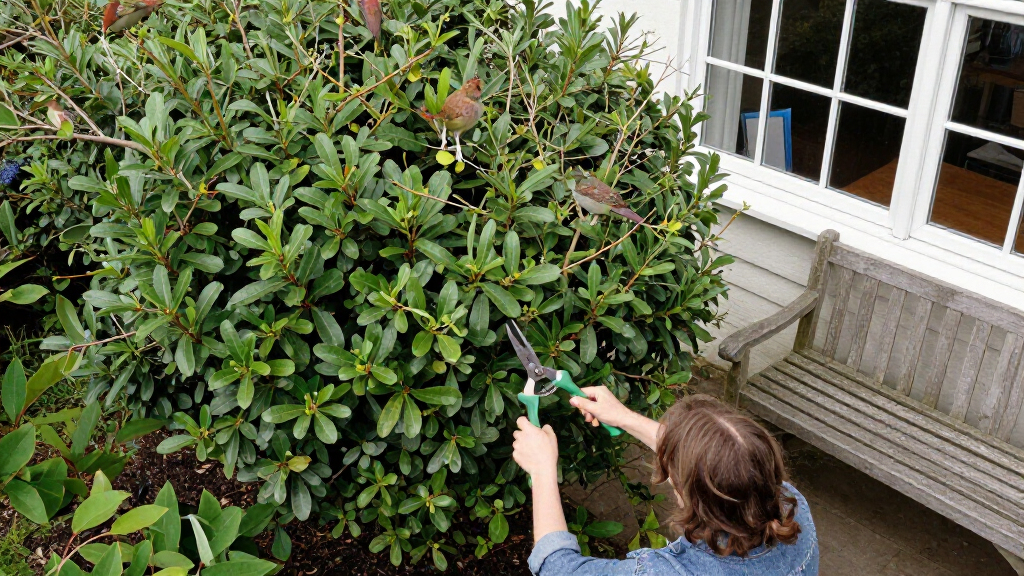
Barker recommends traditional hedge laying as a way to create a dense barrier and keep cover close to the ground, rather than allowing a hedge to become a row of trees with gaps beneath it. He advises attempting the work only during the dormant season, between October and March, and on hedges with several years of growth. For inexperienced gardeners, complex hedges or long barriers, he recommends professional help.
“We recommend a well-managed mixed native hedge.”
— Nick Mann, environmentalist and founder of Habitat Aid, as quoted by Ideal Home
As an affiliate, we earn on qualifying purchases.
Limits of the Reported Benefits
The report does not provide comparative studies or measured results for how much pollution a garden hedge captures, how much carbon it absorbs, or how much it reduces flooding. It also gives no data comparing native hedges with other planting choices or estimating their effect on local wildlife numbers. The benefits described are attributed to the experts and should not be read as guaranteed outcomes for every garden.
Which species will thrive at a particular site depends on local conditions, and the source does not offer a site-by-site planting plan. It also does not specify the best mix or spacing for different garden sizes. Readers considering hedge work should seek advice suited to their plants and circumstances.
As an affiliate, we earn on qualifying purchases.
Planting and Hedge-Laying Advice
The advice in the report is practical rather than tied to a forthcoming policy or scheduled event: gardeners can choose a suitable native mix and plan planting or maintenance around the needs of their site. Anyone considering traditional hedge laying should follow Barker’s guidance to work during the October-to-March dormant season and start with a small section if they have the relevant experience. He recommends a professional for complex work or when a durable barrier is needed.
Ideal Home’s report gives no announced follow-up research, planting campaign or next publication date. The scale of any environmental benefit from a particular hedge will depend on its design, condition and setting, and is not quantified in the material provided.
thorny hedge plants for nesting birds
As an affiliate, we earn on qualifying purchases.
As an affiliate, we earn on qualifying purchases.
Key Questions
Which native hedge plant does the report recommend?
Hawthorn is highlighted as a fast-growing option that provides spring blossom and red berries in autumn. The experts also recommend considering a mixed native hedge, which may include plants such as hazel or holly.
How can a native hedge help wildlife?
According to the experts quoted by Ideal Home, hedges can offer nesting cover, food, shade and shelter. They may also provide routes between separated habitats, although the report does not quantify effects on wildlife populations.
When should a hedge be laid?
Richard Barker advises traditional hedge laying during the dormant season, from October to March, and only on hedges with a few years of growth. He recommends professional advice for people without experience or for complex work.
Does the report measure how much pollution hedges remove?
No. Mann says hedges can trap larger particulates, but the report supplies no measurements or comparison figures for pollution capture, carbon absorption or other environmental effects.
Source: rss
Halloween Picks
halloween
As an affiliate, we earn on qualifying purchases.