
TL;DR
Open a free Amazon Business account
Business pricing, bulk buying and tax-exempt orders.
Create a free accountAs an affiliate, we earn on qualifying purchases.
Most people need a desk at least 48″ long and 24″ deep for deep work. Organizing your space efficiently and reducing clutter often outweighs having a larger desk. The right setup boosts focus and minimizes distraction.
Imagine sitting at your desk, surrounded by clutter or cramped into a tiny corner. Your focus wanes even before you start. The truth is, your workspace size isn’t just about comfort — it’s about your ability to dive deep into tasks without distraction.
In this guide, you’ll learn exactly how much desk space you really need for deep work, based on real-world scenarios and expert insights. Whether you prefer a minimalist setup or have a few tools you can’t live without, there’s a sweet spot for everyone.
A desk of at least 48" x 24" is a good starting point for most digital deep work tasks.
Organization and reducing clutter often matter more than sheer size for maintaining focus.
Adjust your workspace based on your work style — creative, digital, or hybrid setups need different spaces.
Smart organization, vertical storage, and cable management make even small desks work well.
Prioritize ergonomic design alongside space to sustain focus longer and avoid fatigue.
Deep Work Desk Geometry
How Much Desk Space Do You Really Need for Deep Work?
Most people need a desk at least 48 inches long and 24 inches deep for focused digital work. The bigger lever is not always a bigger surface: it is a clear work zone, fewer visible distractions, and enough ergonomic room to stay immersed.
Enough room for a laptop, monitor, keyboard, mouse, notepad, and one drink without constant rearranging.
Better for multiple monitors, drawing tablets, reference materials, or hybrid creative workflows.
Clear space can matter more than extra space.
Length for most digital deep work setups.
Keeps screens, arms, and inputs from feeling cramped.
Cleaner, lower-distraction environments can support cognitive performance.
A quick declutter prevents the desk from becoming a distraction zone.
Choose the surface by your workflow.
Deep work thrives when the desk fits the tools without inviting piles. A compact digital setup can feel spacious at 48 inches; creative and hybrid setups often need 60 inches or more because paper, tablets, books, and second screens need dedicated zones.
48″ × 24″
Ideal for writing, coding, research, or laptop-plus-monitor work. Keep only essentials within reach and remove visual noise before each focus block.
60″ × 30″
Better for a monitor pair, notebook, reference documents, and a small tool zone. This is the sweet spot for people who move between screen and paper.
72″ × 36″
Useful for sketching, design tablets, physical materials, books, and wider arm movement. Organization matters even more because open space attracts clutter.
Small desk or large desk?
The right answer depends on whether your desk disciplines your attention or dilutes it. Small desks force curation. Large desks create useful zones, but only if you keep them from becoming storage surfaces.
| Feature | Small Desk 36″–48″ | Large Desk 60″–72″ | Deep Work Verdict |
|---|---|---|---|
| Clutter potentialVisual load | ~ High if storage is weak | ✓ Lower if zones stay defined | Organization beats size. |
| MobilityReset speed | ✓ Easier to clean and move | ~ Stable but less agile | Small wins for fast resets. |
| FocusDistraction control | ~ Requires strict essentials | ✓ Supports separate work zones | Match size to discipline. |
| EquipmentDevices and materials | ✗ Limited for multi-tool work | ✓ Strong for screens and references | Large wins for complex setups. |
Rule of thumb: choose 48″ × 24″ for minimalist digital work, 60″ × 30″ for mixed screen-and-paper work, and 72″ × 36″ only when your workflow truly needs multiple zones.
Turn any desk into a focus system.
A desk becomes deep-work ready when every object has a job, every cable has a path, and every activity has a zone. The goal is not emptiness. It is frictionless attention.
Keep only tools
Keyboard, mouse, notebook, screen, lamp, and one capture tool stay close.
Lift storage up
Shelves and wall holders protect surface area without hiding useful items.
Route the mess
Cable trays and clips remove visual chaos and accidental disconnects.
Separate modes
Define a typing zone, reference zone, and reset zone even on small desks.
Close the loop
Spend five minutes clearing the surface before the next deep session.
Desk Size Sweet Spot Spectrum
Small setups can work beautifully.
A compact desk can support intense concentration when it is curated. The tradeoff is discipline: every extra object competes with the task in front of you.
Small-Desk Focus Checklist
- 1Prioritize essentialsOnly keep items required for the next session within arm’s reach.
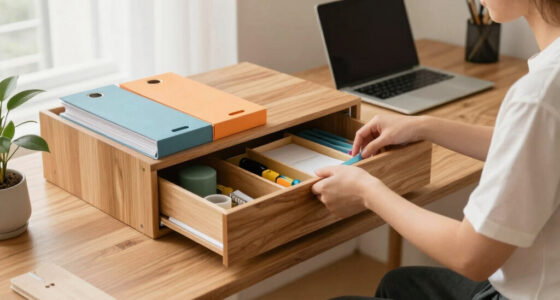
- 2Use vertical storageMove papers, books, and supplies off the surface without losing access.
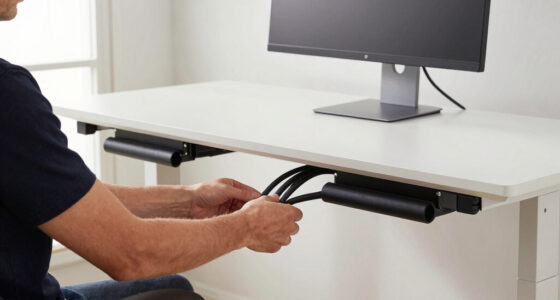
- 3Manage cablesReduce visual noise with clips, sleeves, trays, or underside routing.
- 4Design zonesReserve specific areas for input, reference, capture, and breaks.
- 5Declutter dailyUse a five-minute reset so the desk is ready before focus begins.
Ergonomics and space are one decision.
Deep work fails quickly when your body is fighting the setup. Leave room for straight wrists, relaxed shoulders, a stable mouse path, and a monitor at eye level.
Place the screen far enough back to avoid leaning in.
Keep elbows relaxed and wrists neutral while typing.
Allow movement without lifting or twisting the shoulder.
Use a task lamp that avoids glare and screen reflections.
Traceability: space becomes focus through sequence.
48″ × 24″ baseline
Tools get boundaries
Visual load drops
Fatigue stays lower
Attention lasts longer
Frequently asked questions.
The practical answer is simple: start with enough desk for your core tools, then protect that surface from clutter, discomfort, and mixed-purpose drift.
Can I do deep work on a tiny desk?
Yes, if the setup is disciplined. Keep only the essentials visible, use vertical storage, and reset the desk before each focused session.
What is the biggest setup mistake?
Letting the desk become storage. Unrelated objects add visual decisions, and those tiny distractions make it harder to enter deep focus.
Are adjustable desks better?
They can help because alternating posture reduces fatigue. The desk still needs enough depth and organization to keep work comfortable.
What Size Desk Supports Deep Focus Without Clutter?
Deep work thrives in environments that balance space and organization. For most digital tasks, a desk measuring around 48 inches in length and 24 inches in depth provides enough room for a laptop, monitor, and some essentials without feeling overwhelming.
Picture a neat setup: a sleek monitor, a tidy keyboard, a notepad, and a cup of coffee. There’s enough space to stretch out without knocking things over. According to ergonomic studies, this size also supports good posture and reduces strain.
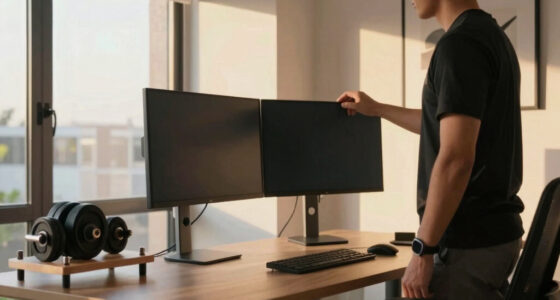
If you work with multiple monitors or physical materials, consider expanding to 60 or 72 inches long. But remember, more space can lead to clutter if not maintained. The key is not just size but how you utilize that space—an overly large desk can become a dumping ground if not organized properly, which ultimately hampers your ability to focus deeply. Conversely, too small a surface limits your capacity to spread out essential tools, forcing constant rearrangement and distraction. The ideal size strikes a balance, offering enough room for your workflow while encouraging tidy habits.

DUMOS 48 Inch Electric Standing Desk, Memory Adjustable Home Office Desk
- Electric Height Adjustment: 3 programmable presets, wide height range
- Quiet Motor: Ultra-quiet operation under 50 dB
- Spacious Desktop: 48-inch waterproof, scratch-resistant wood top
As an affiliate, we earn on qualifying purchases.
As an affiliate, we earn on qualifying purchases.
How Your Work Style Changes the Desk Size You Need
Your job determines your ideal workspace. Creative tasks like sketching or writing need more surface area to spread out materials. Digital tasks like coding or writing require less, but good organization is still key.
For example, a graphic designer might need a 60-inch desk to fit a drawing tablet, multiple screens, and reference books. Meanwhile, a writer working mostly on a laptop can get by comfortably with a smaller 48-inch setup. But beyond just fitting equipment, your work style influences how much space you need for mental clarity. Creative work often involves multiple tools and references, which can clutter a small space and distract you from the flow of ideas. Digital work, on the other hand, benefits from a minimalist approach—fewer physical items mean fewer distractions. The tradeoff is that larger workspaces require more effort to keep organized; without discipline, they can become cluttered, reducing your capacity for deep focus. Smaller setups demand careful curation of essentials, but they can foster a more disciplined, distraction-free environment. Ultimately, understanding your workflow and mental habits helps you tailor your space to support sustained concentration.

FEZIBO Electric Standing Desk with L-Shaped Crossbar & Cable Management System, 48 x 24 Inches Sit Stand up Desk, Adjustable Height Standing Desk for Home Office, Black Walnut
- Enhanced Stability with L-Shaped Crossbar: Improves structural integrity and reduces wobble
- Built-in Cable Management System: Keeps wires organized and out of sight
- Electric Height Adjustment: Adjusts from 28.3" to 46.5" easily
As an affiliate, we earn on qualifying purchases.
As an affiliate, we earn on qualifying purchases.
Compare Small vs. Large Desks: Which Works Better for Deep Work?
| Feature | Small Desk (36-48″) | Large Desk (60-72″) |
|---|---|---|
| Clutter potential | High — needs diligent organization | Lower — more space to spread out |
| Mobility & flexibility | More agile, easier to clean | Stable, better for multiple devices |
| Focus & distraction | Requires discipline to keep tidy | More room for zones, less distraction |
| Suitability for equipment | Best for minimal setups | Ideal for multiple screens, materials |
Choosing between small and large desks depends on your work style and space constraints. Larger desks support more tools and reduce clutter, but they can also tempt you to overfill the space, which can be counterproductive. Smaller desks force a disciplined approach: only keep essentials within reach, which can streamline your focus. However, they may also limit your ability to spread out, leading to frequent rearrangements that break your concentration. Larger desks, while offering ample room, require proactive organization—without it, they risk becoming cluttered zones that hinder deep work. The key is to match your workspace size with your discipline and work demands—balancing the benefits and tradeoffs of each to optimize your focus.

SHW Mission 48-Inch Home Office Computer Desk, Black
- Elegant Home Office Design: Warm finish with mission-style frame
- Durable and Stable Build: Powder-coated steel frame with engineered wood
- Spacious Work Surface: 48-inch wide desktop for ample workspace
As an affiliate, we earn on qualifying purchases.
As an affiliate, we earn on qualifying purchases.
How to Organize a Small Desk for Deep Work
- Prioritize essentials: Keep only what you need within arm’s reach. This minimizes distractions and mental clutter, making it easier to stay focused. Every item should serve a purpose; extras can be stored away or discarded.
- Use vertical storage: Shelves or wall-mounted holders free up desk space and create visual separation. Vertical storage encourages better organization and prevents your surface from becoming a clutter trap, which can distract your mind.
- Implement cable management: Keep cords tidy to avoid visual chaos. Tangled cables can be a constant distraction and even cause frustration or accidental disconnections, breaking your focus.
- Design zones: Even on a small surface, allocate specific areas for different activities—work, breaks, supplies. Clear boundaries help your brain switch modes more easily and prevent overlapping clutter.
- Declutter regularly: Spend 5 minutes daily to tidy up and remove unnecessary items. Consistent maintenance prevents accumulation of clutter that can drain your mental energy and disrupt deep concentration.
Imagine a small corner with a clean desk, a single monitor, and a sleek organizer for pens and papers. It’s easier to focus when your environment isn’t fighting for your attention. The tradeoff is that small setups demand discipline and strategic organization to maximize their potential for deep work.
As an affiliate, we earn on qualifying purchases.
Why Ergonomics and Space Go Hand-in-Hand
Deep work isn’t just about space — it’s about comfort. An ergonomic desk setup prevents fatigue and pain, helping you stay focused longer.
For example, a desk at the right height lets you keep your wrists straight and your eyes level with the monitor. Enough space around your keyboard and mouse prevents awkward postures. When your workspace supports proper ergonomics, you reduce physical discomfort that can interrupt your concentration, allowing you to maintain a state of flow for longer periods. Conversely, ignoring ergonomics—such as using a poorly adjusted chair or cramming all your equipment into a tight corner—can lead to discomfort, pain, and eventual fatigue. This physical strain diminishes your ability to sustain deep focus over extended sessions. The tradeoff is that ergonomic setups might require more initial investment and space planning, but the long-term benefits in focus and health make it a worthwhile consideration for any dedicated deep worker.
Frequently Asked Questions
Can I do deep work on a tiny desk?
Yes, if you organize it carefully. Keep only essential items on your desk, use vertical storage, and maintain a tidy space. Even a small desk can support deep focus with disciplined organization.
What’s the biggest mistake people make with their desk setup?
Cluttering the space with unnecessary items. It distracts the mind and hampers focus. Regularly decluttering and sticking to essentials is key for deep work.
Should I prefer standing or sitting desks for deep work?
Many find standing desks or adjustable setups more beneficial. Alternating between sitting and standing reduces fatigue and keeps your mind alert during long focus sessions.
How do I maximize small desk space for deep work?
Use vertical storage, keep only what’s necessary, and organize cables. Creating zones on your desk for different activities also helps keep clutter away and focus sharp.
Conclusion
Your ideal deep work desk isn’t about the biggest surface — it’s about the right size for your needs and how well you organize it. A cluttered, cramped desk stifles focus; a neat, well-sized one invites flow.
Think of your workspace as a tool, not just a place. When you tailor it to support your work style and keep it tidy, you create a zone where focus and productivity flourish — no matter the size.
Flea & tick season Picks
flea and tick prevention
As an affiliate, we earn on qualifying purchases.