
TL;DR

Get business pricing on your home office setup
- Business-only prices and quantity discounts
- Tax-exempt purchasing
- Multiple users, one account, clear invoices
Saddle seating improves lower-back comfort by positioning the hips at an open angle, encouraging better posture and reducing lumbar pressure. Proper setup and user awareness are key to reaping these benefits.
Imagine sitting on a saddle, like a bicycle seat. It might seem unconventional, but this design taps into a simple yet powerful idea: changing how your hips sit can dramatically impact your lower-back health. If you’ve ever felt that dull ache after hours at your desk, saddle seating could be the game-changer you need.
In this guide, you’ll learn why the hip angle matters so much, how saddle chairs support better posture, and practical tips for making this ergonomic shift work for you. No fluff—just straightforward insights based on real research and experience.
Saddle seating positions your hips at an open angle of 45-60 degrees, supporting natural spinal alignment.
Adjusting the saddle tilt and height is crucial for reducing lower-back strain and maximizing comfort.
Active sitting—engaging core muscles—enhances the back-supporting benefits of saddle chairs.
Use saddle seating as part of a varied posture routine, not a one-size-fits-all solution.
Listen to your body: discomfort during initial use is common, but persistent pain warrants professional advice.
The Hip-Angle Secret: Why Saddle Seating Eases Lower-Back Strain
Saddle seating changes the relationship between your hips, pelvis, and spine. The result can be a more natural lumbar curve, less static pressure, and a posture that stays active—provided the chair is adjusted with care.
Your hips set the posture upstream
A conventional seat can encourage the pelvis to roll backward, flattening the lower back. A saddle seat opens the hip position and gently tips the pelvis forward, helping preserve lumbar lordosis—the spine’s natural inward curve.
Open hips create room for alignment
The target is an open, supported position—not an aggressive forward lean.
Open the hips
Raise the saddle until the thighs slope downward while both feet remain stable and flat.
Guide the pelvis
A slight forward saddle tilt supports gentle anterior pelvic positioning without forcing it.
Share the load
Weight spreads across the pelvis and thighs, reducing concentrated static load around the lumbar region.
One angle, four connected changes
The benefit is not produced by the saddle alone. It emerges from a connected biomechanical chain—and each link depends on appropriate adjustment and body awareness.
Open hip position
The thighs descend instead of projecting straight forward.
Pelvis tips gently
The pelvis is less likely to collapse into a backward roll.
Lumbar curve holds
Natural lordosis supports more balanced spinal loading.
Pressure disperses
Active muscles and broader contact reduce localized fatigue.
Key distinction: active sitting means making small, continuous postural adjustments. It does not mean bracing the core rigidly or holding one “perfect” pose all day.
Saddle versus traditional seating
Saddle chairs make an aligned posture easier to access, while conventional chairs often make a passive position easier to sustain. Neither removes the need to move regularly.
| Feature | Saddle seating | Traditional office chair |
|---|---|---|
| Hip position | ✓Open, typically around 45–60 degrees | ~More closed, often near or below 90 degrees |
| Pelvic behavior | ✓Gentle forward tilt supports the natural curve | ✗Slouching can roll the pelvis backward |
| Movement pattern | ✓Encourages active balance and micro-movement | ~Can support movement, but passive sitting is common |
| Pressure distribution | ✓Shared across pelvis and thighs | ✗May become concentrated around the lower back |
| Learning curve | ~Adjustment period and setup awareness required | ✓Immediately familiar for most users |
| Best role | ✓One element in a varied posture routine | ~Useful when fitted well and alternated with movement |
Five adjustments that make it work
Treat setup as a calibration process. Small changes in height and tilt can produce large differences in pelvic comfort, stability, and lower-back effort.
Keep both feet grounded
Raise the seat enough to open the hips, but retain full-foot contact and stable weight distribution.
Target: 45–60° open positionMake the change subtle
Use a slight forward tilt to guide the pelvis. Excessive tilt can create sliding, pressure, or instability.
Adjust in small incrementsStay active, not rigid
Maintain light abdominal engagement while allowing natural breathing and frequent micro-adjustments.
Support, never braceReset every 30 minutes
Stand, stretch, walk, or change position. Movement prevents static loading regardless of chair type.
Vary posture oftenBuild use gradually
Initial muscular fatigue may occur as underused postural muscles begin contributing more actively.
Short sessions firstLet symptoms guide you
Minor unfamiliarity can be normal. Persistent or escalating pain is a signal to stop and seek advice.
Pain is not a targetThe 30-minute movement rhythm
Use the saddle as part of a cycle: sit actively, reset, then return or switch posture.
A timer can make posture variation automatic until the habit becomes natural.
What saddle seating cannot fix
A saddle chair is an ergonomic tool, not a treatment. It cannot compensate for excessive sitting, unsuitable dimensions, aggressive tilt, or an underlying hip, pelvic, or spinal condition.
Early fatigue
Postural muscles may tire while adapting. Increase saddle time gradually rather than pushing through.
Too much tilt
A steep angle can create pressure, sliding, and excessive muscular effort.
Existing conditions
People with hip, pelvic, or musculoskeletal concerns should seek professional guidance first.
Persistent pain
Stop use and consult a qualified healthcare professional if pain persists or worsens.
Why Your Hip Angle Matters More Than You Think
Your hips are the foundation of good posture. When you sit in a traditional chair, your hips often stay at a closed angle—less than 90 degrees—causing slouching and lumbar strain. Saddle seating flips that script.
By positioning your hips at a more open angle—around 45-60 degrees—you naturally tilt your pelvis forward. This tilt encourages your lower back’s natural curve, easing pressure on lumbar discs and muscles. Imagine sitting on a bike saddle: your hips are open, your pelvis tips forward, and your spine aligns effortlessly.
Understanding this is crucial because the angle at which your hips sit directly influences how your pelvis and spine align. A closed hip angle often leads to posterior pelvic tilt, which flattens or reverses the natural lumbar curve, increasing strain. Conversely, an open angle promotes anterior pelvic tilt, supporting the spine’s natural lordosis. The tradeoff, however, is that maintaining a more open hip angle requires active engagement and proper adjustment; without this, it can lead to discomfort or instability. Recognizing the importance of this angle helps you make informed choices about your seating setup and posture habits.
As an affiliate, we earn on qualifying purchases.
How Saddle Seating Reduces Lumbar Pressure in 3 Simple Steps
- Open the hips: Adjust the saddle height so your feet are flat, and your hips are at a 45-60 degree angle. This position aligns your pelvis to support the spine’s natural curve, reducing strain on lumbar discs. It’s not just about comfort; it’s about creating a biomechanical environment that supports long-term spinal health. Proper hip angle can prevent slouching and reduce fatigue.
- Tilt the pelvis slightly forward: Use the tilt mechanism to encourage a gentle pelvic tilt, supporting your natural spine curve. This forward tilt helps maintain lumbar lordosis, which is essential for distributing loads evenly along your back. However, over-tilting can cause discomfort or excessive strain, so subtle adjustments are key.
- Maintain active sitting: Engage your core muscles as you sit, preventing slouching and promoting stability. Active sitting encourages small, continuous adjustments that keep your pelvis in optimal position, reducing static pressure points and muscle fatigue. This dynamic engagement is what makes saddle seating more supportive than passive traditional chairs, but it requires awareness and practice.
For instance, a remote worker experimenting with these steps found her lower-back discomfort reduced by nearly 50% after just a week. The combination of open hips and active engagement made all the difference, illustrating how understanding the biomechanics can lead to tangible health benefits.
adjustable saddle seat for back pain
As an affiliate, we earn on qualifying purchases.
As an affiliate, we earn on qualifying purchases.
Compare Saddle Chairs to Traditional Office Chairs — Which Supports Your Back Better?
| Feature | Saddle Seating | Traditional Office Chairs |
|---|---|---|
| Hip Angle | Open (~45-60 degrees) | Closed (<90 degrees) |
| Pelvic Tilt | Forward tilt supports natural curve, promoting active engagement | Often neutral or slouched, which can flatten the lumbar curve and increase strain |
| Active Sitting | Encouraged, engages core muscles and stabilizes pelvis | Passive, leading to less movement and potential postural collapse |
| Back Pressure Distribution | Spread across pelvis and thighs, reducing localized lumbar load | Concentrated mainly on lumbar region, risking fatigue and discomfort over time |
Choosing between them depends on your needs. Saddle seats foster a more natural spinal alignment, which can reduce lower-back strain and promote active engagement. Traditional chairs, while familiar, often require conscious effort to maintain proper posture and may lead to prolonged static load on the lumbar spine. The tradeoff involves adjusting to a different posture and the potential need for ongoing awareness, but many find saddle seating offers a more sustainable ergonomic solution for back health over time.
As an affiliate, we earn on qualifying purchases.
Practical Tips to Make Saddle Seating Work for You
- Adjust your height: Feet flat, knees at 90 degrees, hips open at 45-60 degrees. This positioning ensures your pelvis is aligned to support the lumbar curve, reducing strain and fatigue.
- Set the tilt: Slight forward tilt of the saddle supports the pelvis and spine, but over-tilting can cause discomfort or instability. Experiment with small adjustments to find what promotes natural posture without strain.
- Move often: Use movement breaks—stand, stretch, or shift positions every 30 minutes. This prevents static load on muscles and joints, encouraging circulation and reducing fatigue.
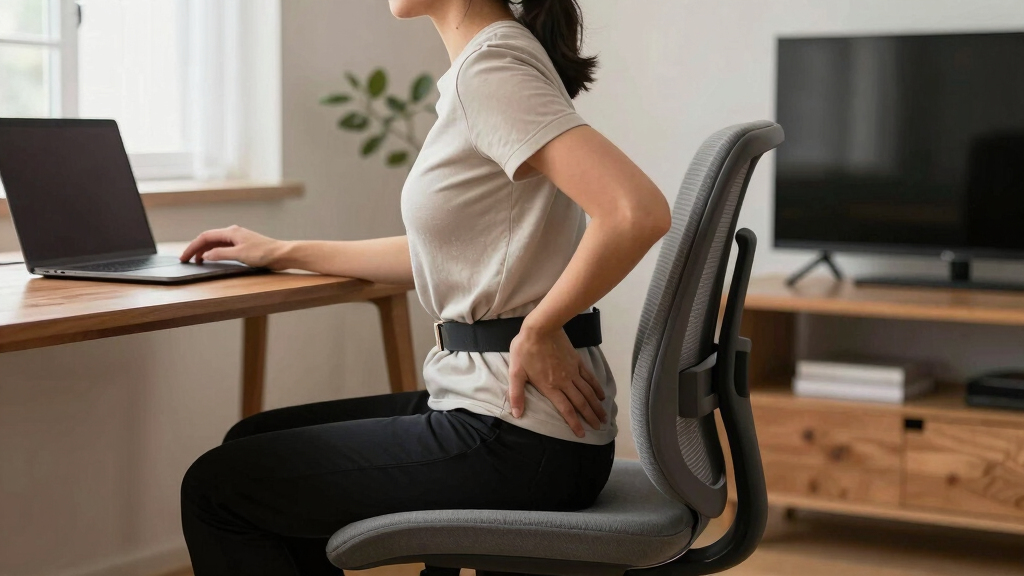
- Engage your core: Keep abdominal muscles slightly active to support your back. Proper core engagement acts as an internal brace, maintaining spinal alignment and reducing reliance solely on the chair.
- Listen to your body: Discomfort during initial use is common. Adjust gradually, and if persistent pain occurs, seek professional advice. Recognizing early signs of strain can prevent long-term issues and help you fine-tune your setup.
For example, a student using a saddle chair reported feeling more energized and less stiff after implementing these tips during her study sessions. The key is consistency and awareness—small adjustments can lead to significant improvements in comfort and spinal health over time.
As an affiliate, we earn on qualifying purchases.
What to Watch Out For When Using Saddle Seating
Saddle chairs aren’t magic. They can cause discomfort if not set up properly or used for too long. Initial soreness or fatigue is common—your muscles need time to adapt. This adaptation period involves strengthening postural muscles that may have been underused with traditional seating, but it also means that overdoing it initially can lead to setbacks.
If you experience persistent pain, especially in your hips or pelvis, consult a healthcare professional. Not everyone is suited for saddle seating—people with pre-existing hip, pelvic, or certain musculoskeletal issues should proceed cautiously. Ignoring these warnings can exacerbate underlying conditions or cause new discomfort.
Remember, saddle seating is most effective when combined with movement and varied postures. Sitting still for hours isn’t healthy, no matter your chair. Incorporating regular posture changes and movement routines is essential to avoid overloading specific muscle groups and joints, ensuring long-term comfort and spinal health.
Frequently Asked Questions
How long should I sit on a saddle chair each day?
Start with 20-30 minute sessions, gradually increasing as your body adapts. Remember to take breaks and switch positions to prevent fatigue and promote circulation.Can saddle seating help with existing lower-back pain?
Many users report relief from lower-back discomfort when properly adjusted, as saddle seating encourages proper spinal alignment. However, consult a healthcare professional if pain persists.Is saddle seating better for everyone?
Not necessarily. People with hip, pelvic, or certain musculoskeletal conditions should seek medical advice before switching. It’s best suited for those seeking an active, open-hip position.What if I find saddle seating uncomfortable at first?
That’s normal. Your muscles need time to adapt. Make small adjustments, sit for shorter periods, and gradually increase your time as comfort improves.Can I use saddle seating alongside a traditional chair?
Absolutely. Alternating between different postures and chairs helps prevent fatigue and encourages movement—key to long-term back health.Conclusion
Changing your chair isn’t just a tweak—it’s a shift in how your hips and spine work together. Saddle seating leverages that simple biomechanical truth to ease lower-back pain and promote healthier posture.
Try experimenting with your saddle setup and incorporate regular movement. Your lower back will thank you, and so will your daily comfort. Why not give your hips a bit more freedom—your spine might just thank you in return.
Columbus Day / Indigenous Peoples' Day Picks
long weekend sales
As an affiliate, we earn on qualifying purchases.