
TL;DR

Get business pricing on your home office setup
- Business-only prices and quantity discounts
- Tax-exempt purchasing
- Multiple users, one account, clear invoices
Professional organizer Mary Cornetta advises gathering physical photos in one place before sorting, then letting go of blurry images, duplicates and pictures with little meaning to you. Keepers can be organized in albums or another labeled system; check with relatives before discarding family photos they may value.
Professional organizer Mary Cornetta has published advice on sorting old physical photographs, recommending that people gather them in one place, remove obvious duplicates and poor-quality images, and organize the pictures they choose to keep. The guidance, published by Apartment Therapy, addresses a common challenge: deciding what to do with family photos that can carry emotional weight as well as take up space.
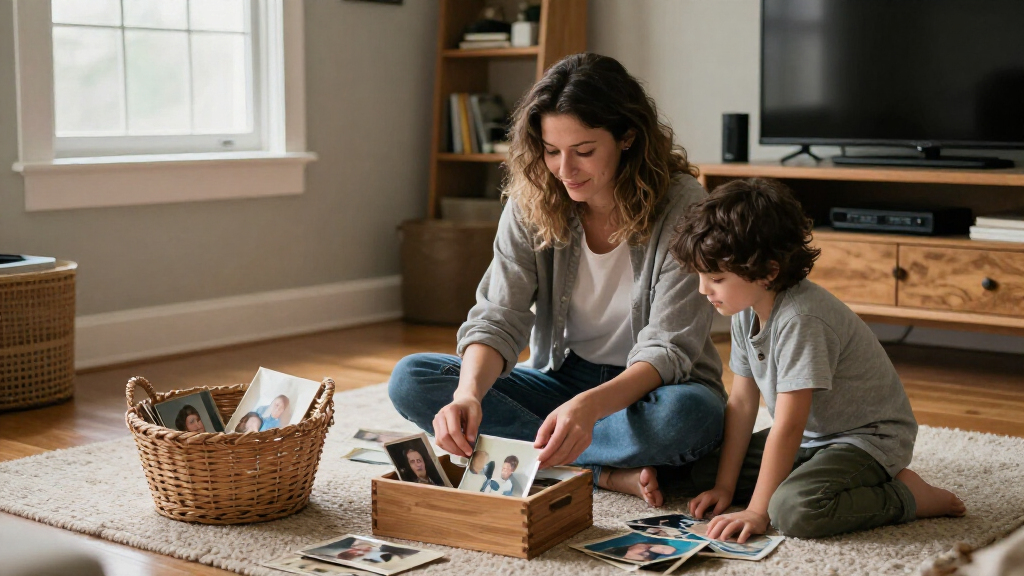
Cornetta suggests preparing before sorting. If photos turn up during a larger home-organizing project, she recommends collecting them in a box and waiting to review them until the rest of the project is complete. Once ready, bring the pictures together in one location and use a clear surface, such as a large table, to sort them. Seeing the collection as a whole can help with decisions, she writes.
She also recommends asking someone else to help when the pictures matter to more than one person. During sorting, labels or index cards can keep groups organized by year, place, person, event or theme. For images to consider removing, Cornetta lists blurry or difficult-to-identify photos, awkwardly cropped shots, duplicates and near-identical prints. She suggests asking relatives to identify unfamiliar people in family pictures before deciding their fate.
Not every image needs to be discarded simply because it brings up a difficult relationship or memory. Cornetta says someone may choose to keep one or two pictures of an ex-partner or former friend in a personal memory box, separate from current family photos. She also advises offering relevant pictures to relatives who may want them, but says to ask first rather than passing along a pile for someone else to sort.
Keeping Photos Manageable and Meaningful
The advice offers a practical way to reduce an unwieldy collection without treating every photograph as equally important. A smaller, deliberately chosen set can be easier to store and revisit, while sorting by labels makes it easier to find pictures later. The approach also recognizes that decisions about family images can affect relatives, not just the person doing the organizing.
Cornetta’s suggestions are guidance, not a universal rule for what deserves to be kept. People may value photographs differently, particularly when they document relatives, relationships or events that are no longer easy to revisit. Checking with family before discarding unidentified or potentially meaningful pictures can reduce the risk of throwing away an image someone else would have wanted.
Products Worth Considering

Bosch 1617EVSPK 2.25 HP Fixed- and Plunge-Base Router Kit

WORX WG430 13 Amp Electric Leaf Mulcher

DEWALT 20V MAX 1/4-Inch Hydraulic Impact Driver (DCF870B)
As an affiliate, we earn on qualifying purchases.
Why Old Photo Collections Accumulate
Cornetta says two factors make photo sorting difficult: the emotions images can bring up and the sheer number of prints many households have accumulated. She describes working with clients who have large collections and says looking through them can stir joy, nostalgia or sadness. Her own example is her father’s collection of hundreds or possibly thousands of photos kept in shoe boxes in a basement.
The report focuses on physical photographs and covers preparation, deciding what to remove, and organizing what remains. Cornetta is a professional organizer who founded Sort and Sweet Inc., a Long Island organizing company, in 2017. The supplied report begins its organizing section by recommending photo albums for people who want to handle and flip through pictures, but the available source text ends before giving the full set of storage methods.
Storage Advice Beyond Albums
The supplied source material does not include the complete list introduced as “6 Smart Ways to Organize Physical Photos.” It confirms that Cornetta recommends albums for pictures people want to browse, but does not provide the remainder of the list or detailed instructions on storage materials and conditions. The report also does not set a fixed number of photographs to keep or prescribe one method for every household.
Whether an old or unfamiliar image has historical or family value may not be clear from the photograph alone. Cornetta suggests checking with relatives and says pictures that may have historical significance could be donated or sold rather than immediately discarded. The source does not specify how to determine historical value or identify a suitable recipient.
Sort First, Then Choose Storage
The next step for readers following Cornetta’s process is to gather the prints, prepare a sorting space and decide on a labeling system before reviewing the collection. Once the keepers are selected, the source specifically recommends photo albums for people who want to handle and browse their pictures. Readers with images they cannot identify can consult relatives before making a final decision.
The supplied report does not state a follow-up date or additional planned guidance. It also does not contain the full storage recommendations, so the specific method beyond albums remains unconfirmed from the material provided.
Key Questions
What photos does Mary Cornetta suggest removing?
She suggests considering blurry or hard-to-identify photos, awkwardly cropped shots, duplicates and nearly identical prints. Her advice is a guide, not a requirement to discard every image in those categories.
Should I throw away photos I cannot identify?
Cornetta recommends checking with a relative first when sorting family photographs. Someone else may recognize the people or know why the picture matters.
What should I do with photos of a former partner or friend?
Cornetta says someone who wants to keep an image tied to a past relationship may save one or two in a personal memory box, separate from current family photos. The choice depends on the person’s own feelings about the image.
How should I organize the photos I keep?
She recommends using labels or index cards to group pictures by year, place, person, event or theme. The report also identifies photo albums as an option for people who want to flip through their collection.
Should I send unwanted photos to relatives?
Ask first. Cornetta advises offering relevant images to relatives who may want them, rather than giving someone an unsorted pile without checking.
Source: apartmenttherapy.com