
TL;DR
A Hunker report describes DIYers using picture frames and other wall-mounted objects to make thermostats blend into home decor. The approaches vary, but any covering should leave the controls accessible and avoid obstructing airflow, which can affect temperature readings.
A Hunker report highlights DIYers using picture frames and other decorative covers to make wall thermostats less prominent without removing them from view. The ideas, shared by users on social media, offer homeowners a way to incorporate an everyday control device into a room’s decor, though some coverings may affect airflow and thermostat readings.

Get business pricing on your home office setup
- Business-only prices and quantity discounts
- Tax-exempt purchasing
- Multiple users, one account, clear invoices
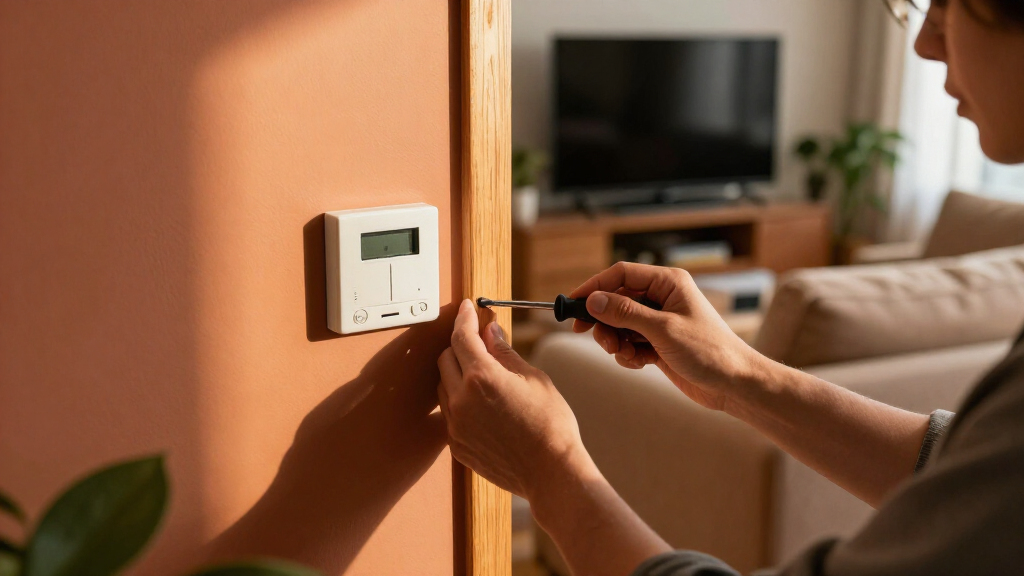
One approach is to place a frame around the thermostat, removing the glass so the unit remains visible and accessible. Hunker says the frame can be attached with double-sided adhesive fasteners, avoiding the need to drill into the wall in some cases. The shape and size of the frame need to match the thermostat; the report gives a round frame as an example for a round unit and recommends a rectangular frame for a rectangular control.
The report also describes alternatives to picture frames. An Instagram account identified as brickhomehaven uses an open-weave basket, with a thermostat-shaped opening cut into its back. TikToker Morgan Geyer uses a trinket box as a door casing and places accessories on top, creating a small shelf-like feature around the device.
These examples are presented as decorating ideas, not as a single standardized installation method. Hunker cautions that a box or other cover can restrict airflow and affect the accuracy of temperature readings. The report does not provide testing or measurements comparing the performance of different designs.
Making Wall Controls Fit the Room
Thermostats are practical fixtures that can be conspicuous in a carefully decorated room. Framing or visually grouping one with artwork may help it sit more naturally on the wall while preserving access for people who need to adjust the temperature. The approach is particularly relevant to hallways and gallery walls, where a thermostat can interrupt an otherwise coordinated arrangement.
The trade-off is function: a decorative surround should not turn the control into an inaccessible object or interfere with how it senses room conditions. Since Hunker specifically warns that restricted airflow can affect readings, the design choice is not only aesthetic. Homeowners considering a cover need to account for clear access and unobstructed airflow, rather than treating the thermostat as a display object alone.
Products Worth Considering

EGO Power+ SNT2425 24-Inch Two-Stage Snow Blower with Two 7.5Ah Batteries and Dual-Port Charger

EGO Power+ SNT2420 24-Inch Two-Stage Self-Propelled Snow Blower (Battery and Charger Not Included)

Metabo HPT Brad Nailer, 18 Gauge Cordless, 18V Kit, NT1850DG
As an affiliate, we earn on qualifying purchases.
Frames, Baskets and Box Covers
The idea builds on a simple distinction: the thermostat can remain in place and operational while its surroundings change. Hunker describes framing as a common method and notes that some DIYers incorporate the device into a larger gallery wall. Others use open-backed or modified objects to create a border or casing, adapting the concept to different thermostat shapes and styles.
The report says some frames may be attached without drilling, using adhesive fasteners, and that removing the frame’s glass is part of the described setup. It also mentions a Google Nest Learning Thermostat, third generation, as an example of a round unit, alongside a round rattan frame listed at $32 in the article. That price is an example cited by Hunker, not a general cost estimate for the projects.
“The thermostat can remain “accessible, functional, and visible to guests who may want to adjust it.””
— Hunker
Airflow and Fit Need Checking
Hunker does not specify how much clearance different thermostat models need, how to test whether a cover affects readings, or whether any particular frame or basket is suitable for every device. It also does not report results from performance tests. The social media examples show possible designs, but they do not establish that each one works equally well in different homes.
The report does not identify a single installation standard or address the requirements of individual thermostat manufacturers. Readers should check the instructions for their own device and avoid blocking openings or controls. Whether an adhesive fastener will hold securely can also depend on the wall surface and the weight of the frame; the article gives no durability data.
Check the Device Before Decorating
Anyone adapting the idea can begin by measuring the thermostat and choosing a surround that fits without blocking its controls or airflow. For a frame, Hunker’s instructions call for removing the glass; its examples also include open-backed basket and box designs. After installation, the device should remain easy to operate, and homeowners should watch for signs that the room temperature readings are no longer behaving as expected.
Hunker’s report does not announce a product launch, formal guidance or scheduled follow-up. The next step for readers is to check their thermostat’s manufacturer instructions and assess whether a chosen surround leaves the unit clear and usable. The source provides no further information about testing or long-term performance of the featured DIY designs.
Key Questions
What are DIYers using to make thermostats blend into decor?
Hunker describes picture frames, open-weave baskets and trinket boxes used as decorative surrounds. Some examples incorporate the thermostat into a gallery wall.
Does a frame have to be attached with screws?
Not necessarily. Hunker says some frames can be attached with double-sided adhesive fasteners, though it does not provide durability data or say that adhesive will suit every wall surface.
Can a thermostat cover affect how it works?
It may. Hunker warns that a box or other covering can restrict airflow and affect the accuracy of temperature readings. The report does not provide measurements for specific designs.
Should the thermostat remain accessible?
Yes. The frame method described by Hunker leaves the device visible and accessible so people can still adjust it. Homeowners should also consult the instructions for their own thermostat before adding a surround.
Source: rss