
TL;DR

Get business pricing on your home office setup
- Business-only prices and quantity discounts
- Tax-exempt purchasing
- Multiple users, one account, clear invoices
Laminate desks excel in durability and affordability, bamboo offers eco-friendly appeal with decent strength, and solid wood provides classic beauty and longevity. Your choice depends on what matters most—cost, sustainability, or timeless style.
Choosing the right desk material isn’t just about looks. It’s about how it survives day-to-day life—scratches, spills, and the occasional bump. If you’ve ever wondered whether your desk can withstand your busy work routine or your eco-conscious values, this guide is for you.
We’ll compare laminate, bamboo, and solid wood—three popular options—so you can pick what truly fits your needs. Think of this as a straightforward chat with a friend who knows the ins and outs of workspace materials, without the fluff or hype.
Laminate desks excel in resisting scratches, stains, and heat—great for high-traffic spaces.
Bamboo offers a sustainable, modern look and can be as durable as traditional hardwoods if properly finished.
Solid wood desks bring timeless beauty and can be refinished multiple times, extending their lifespan.
Environmental impact varies: bamboo is highly renewable, while responsibly sourced hardwoods are also eco-friendly.
Maintenance routines differ—laminate is low-effort, bamboo needs gentle cleaning, and wood benefits from polishing and moisture control.
Which Desk Material Is the Toughest for Daily Use?
When it comes to resisting wear and tear, laminate takes the crown. Its tough, plastic-like surface stands up to scratches, heat, and spills—perfect for a busy home office or student desk.
Imagine spilling coffee on your desk. Laminate’s non-porous surface means it stays clean and stain-free, unlike wood or bamboo, which can absorb liquids and stain.
Bamboo, while fairly resistant, can scratch if you slide heavy objects across it repeatedly. Solid wood, though durable, can get dents or scratches over time, especially if you’re using your desk heavily or have pets nearby.
Understanding these traits helps you weigh the tradeoffs: laminate offers superior resistance but can feel less authentic, while solid wood provides natural beauty but requires more care to avoid damage. Bamboo strikes a middle ground, balancing eco-friendliness with decent durability—though it might need some protection against scratches if used heavily.
laminate desk with scratch resistance
As an affiliate, we earn on qualifying purchases.
As an affiliate, we earn on qualifying purchases.
How Do These Materials Look? Style and Feel Compared
Laminate offers a broad palette of colors and patterns, from sleek black to realistic wood grains. It feels smooth and uniform—like a plastic surface, but with a modern edge.
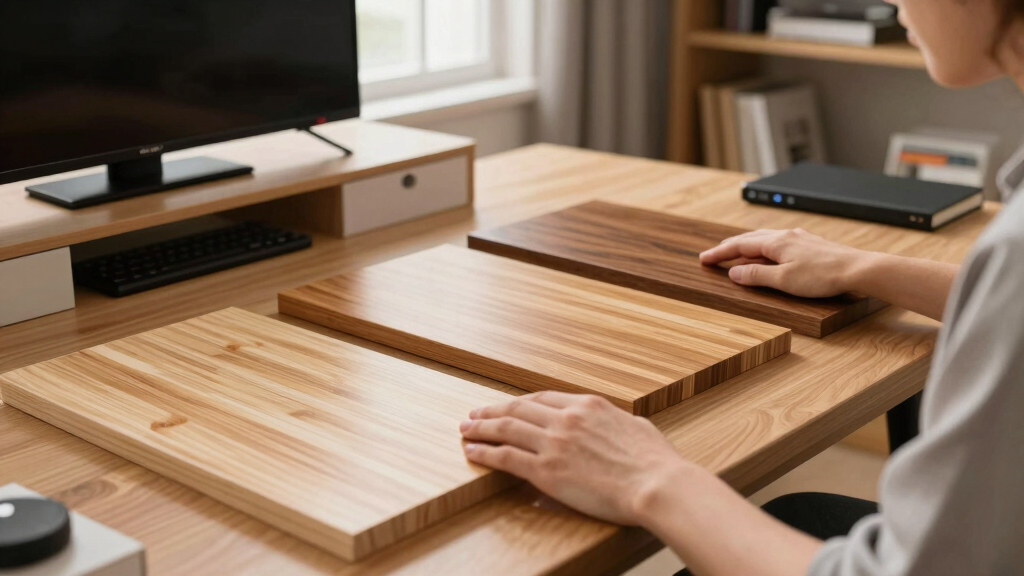
Bamboo displays a fresh, natural look—light honey tones with a distinctive grain pattern that’s both modern and eco-friendly. It’s like bringing a piece of nature into your workspace.
Solid wood exudes timeless elegance. Rich grain patterns and warm hues—oak, walnut, cherry—make your desk feel like a piece of art. You can finish or stain it in countless ways to match your style.
Picture a cozy, sunlit room: a natural bamboo desk pairs perfectly with green plants, while a dark, polished hardwood adds a touch of classic sophistication. Both have a tactile, warm feel that invites you to touch and work.
Choosing between these options isn’t just about appearance; it’s about how each material influences your environment. The natural textures of bamboo and solid wood can create a warm, inviting atmosphere, while laminate’s modern look can complement a sleek, contemporary space. The tactile feel also impacts your daily experience—natural materials often feel more engaging and comforting, encouraging a sense of craftsmanship and authenticity.
As an affiliate, we earn on qualifying purchases.
Which Material Is Better for the Environment?
Bamboo is a standout eco-champion. It’s a grass that grows rapidly—up to 3 feet per day—and can be harvested sustainably without damaging ecosystems.
Solid wood can also be eco-friendly, but only if sourced responsibly. Look for certifications like FSC or PEFC to ensure your desk comes from well-managed forests. Responsible sourcing ensures that the harvesting process doesn’t contribute to deforestation or habitat loss, which is crucial when considering long-term environmental health.
Laminate, on the other hand, is mostly made from synthetic materials and resins. Its production has a larger carbon footprint, and it’s less eco-friendly overall. Additionally, laminates often contain chemicals that can off-gas over time, raising concerns about indoor air quality and chemical exposure.
Understanding these implications matters because choosing sustainable materials supports ecosystems and reduces your overall environmental impact. Bamboo’s rapid growth makes it a renewable resource, but ensure the manufacturing process is also eco-conscious. Similarly, sourcing solid wood responsibly with certifications guarantees that your environmental footprint remains minimal. While laminate may be less eco-friendly, it’s worth noting that some manufacturers are working to develop greener composites, but they are still less common.
As an affiliate, we earn on qualifying purchases.
Cost Comparison: What’s Your Budget?
| Material | Average Cost |
|---|---|
| Laminate | Low — typically $100 to $300 |
| Bamboo | Moderate — usually $200 to $500 |
| Solid Wood | Higher — often $400 to $1,200 or more |
In general, laminate is your budget-friendly pick, perfect for those who want durability without breaking the bank. Bamboo sits in the middle—offering a good balance of price and eco-friendliness. Solid wood is the investment, providing durability and a classic look that can last decades. While the initial cost is higher, solid wood can be refinished multiple times, extending its lifespan and value over time. Consider this aspect when weighing your budget: paying more upfront for a durable, timeless desk might save money in the long run.
As an affiliate, we earn on qualifying purchases.
How Do You Take Care of Each Material?
Laminate is easy to clean—just wipe with a damp cloth. It’s resistant to spills but avoid abrasive cleaners that might scratch or peel the surface over time.
Bamboo needs gentle cleaning, too. Use a damp cloth and avoid excess water, which can cause warping or swelling. Applying a light oil or finish periodically keeps it looking fresh and helps maintain its natural sheen. Proper maintenance preserves its eco-friendly appeal and structural integrity.
Solid wood requires a bit more care. Regular dusting, occasional polishing, and protecting it from moisture help keep it in top shape. Refinishing is possible if scratches or dents appear, which can actually enhance its character over time. The natural aging process can add to its beauty, but neglecting maintenance can lead to warping or cracking—so consistent care is key to longevity.
Picture yourself maintaining your desk: laminate is like wiping down a countertop—quick and simple. Bamboo needs gentle handling, much like caring for a delicate plant. Solid wood benefits from a more attentive routine, like caring for a treasured piece of furniture, to ensure it ages gracefully and maintains its aesthetic and structural qualities.
Latest Trends and Innovations in Desk Materials
Eco-conscious choices are booming. More desks now combine sustainable materials like bamboo with modern finishes—think scratch-resistant coatings and water-repellent layers—making them more durable and functional for everyday use.
Hybrid designs are gaining popularity: a solid wood edge paired with a laminate surface, creating a durable yet elegant workspace. This approach balances aesthetic appeal with resilience, often offering the best of both worlds.
Customizable options are also on the rise—patterns, colors, finishes—making it easier than ever to match your desk to your style and needs. Technological advancements now allow for environmentally friendly manufacturing processes that reduce waste and emissions, further aligning with green values.
Imagine a sleek bamboo top with a water-resistant coating or a mixed-material desk that combines the warmth of wood with the practicality of laminate—these innovations keep pace with modern work lifestyles and environmental concerns, ensuring your workspace is both stylish and sustainable.
What You Need to Know Before Picking Your Desk Material
Durability, style, cost, and eco-friendliness all matter. Think about how you use your desk daily—do you need a surface that withstands scratches and spills? Or is sustainability your top priority? Your decision should reflect your lifestyle and values, balancing practical needs with environmental impact.
Consider your budget and whether you’re willing to invest in a piece that lasts decades or prefer something more affordable that might need replacing sooner. Remember, investing in a higher-quality material can often mean less frequent replacements and repairs, saving money over time.
Assess your aesthetic preferences—do you want a natural look, sleek modern vibe, or a timeless classic? The visual and tactile qualities of each material influence your overall workspace ambiance. Finally, check sourcing certifications if eco-impact is a concern—this ensures your choice aligns with sustainability values and supports responsible forestry and manufacturing practices.
So, ask yourself: what’s the one feature your desk absolutely must have? Let that guide your choice, ensuring your workspace supports your productivity and aligns with your principles.
Frequently Asked Questions
Which desk material is the most durable for everyday use?
Laminate is generally the toughest choice for resisting scratches, heat, and spills—ideal if your workspace gets a lot of use or rough treatment.
Is bamboo as strong as traditional hardwoods?
Engineered bamboo can be quite strong and durable, comparable to some hardwoods, but it may not match the hardness of dense woods like oak or maple.
Are solid wood desks worth the extra investment?
Yes—if you value a timeless look, longevity, and the ability to refinish, solid wood desks can last for decades with proper care.
Which material is better for the environment?
Bamboo is the most eco-friendly due to its rapid growth, but responsibly sourced solid wood is also a sustainable option. Avoid cheap laminates with synthetic resins if eco-impact is a concern.
How should I care for my bamboo or solid wood desk?
Use a damp cloth for cleaning, avoid excess water, and apply oils or finishes periodically. Protect solid wood from moisture and scratches to prolong its beauty.
Conclusion
Choosing the right desk material boils down to what you value most—resilience, style, eco-friendliness, or budget. Each option—laminate, bamboo, or solid wood—brings its own strengths to your workspace.
Remember, a desk isn’t just a surface; it’s the foundation of your productivity. Pick what feels right for your daily life, and your workspace will serve you well for years to come.
Halloween Picks
halloween
As an affiliate, we earn on qualifying purchases.