
TL;DR
Livingetc’s Style Pulse report for spring/summer 2027 identifies the “decorative gesture”: a single ornamental detail used to add contrast to a contemporary room. Designers quoted in the report describe such finishing touches as a way to make interiors feel more personal and resolved, though the trend is editorial guidance, not a measured industry finding.
Livingetc’s spring/summer 2027 Style Pulse report highlights the “decorative gesture,” a design approach that adds one ornamental or unexpected detail to a contemporary room. The idea offers readers a way to bring contrast and character into minimalist interiors without changing their overall style, though the report presents it as a trend forecast rather than evidence of a broad shift measured across the industry.

Get business pricing on your home office setup
- Business-only prices and quantity discounts
- Tax-exempt purchasing
- Multiple users, one account, clear invoices
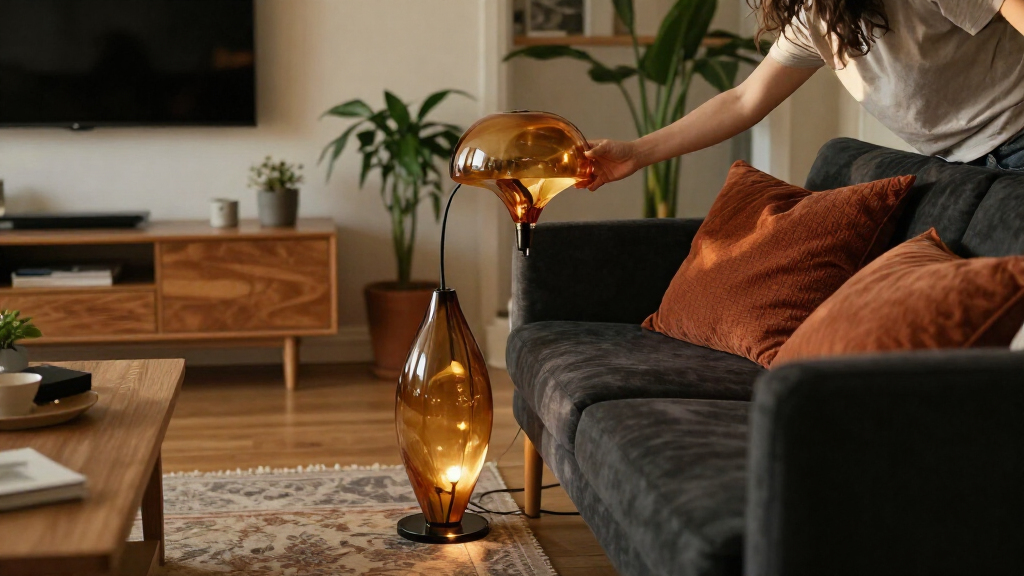
The gesture can be a small accent rather than a room-wide change: a tassel on a light fitting, fringe on a sofa, a gilded frame in a minimalist home, or an ornate brass handle against veined marble. Livingetc describes these details as elements that make a viewer look twice by interrupting an otherwise restrained scheme.
Los Angeles designer Ryan Saghian told the publication he looks for an element that challenges its surroundings, such as an antique or ornate detail. He said he does not want every object to match or appear to come from the same decade, arguing that a degree of contrast gives a room interest.
Marisa Gutmacher, senior vice president of design at Samuel & Sons, described a finishing detail as a way to make a design feel resolved. Such an accent can add visual weight or connect upholstery with the space around it, she said. The report also points to passementerie—decorative trimmings such as tassels, cords and braids—as a traditional craft now being used in contemporary settings.
A Small Accent, A Different Mood
The trend speaks to people who like modern interiors but find an all-matching room too uniform. Rather than replacing furniture or adopting a fully traditional style, the approach suggests introducing one contrasting detail to change how the existing scheme reads. A single accent can draw attention to a light, frame, textile or piece of hardware without requiring a major redesign.
It also puts the focus on craft and personalization. Elizabeth Ashdown, a passementerie artist quoted by Livingetc, said a trim can be designed for a particular room, making it feel more individual. That is the report’s design argument, not a guarantee that every decorative accent will suit every space: the effect depends on the object, its placement and the room around it.
Products Worth Considering

WORX Nitro 40V Cordless Chainsaw, 16 Bar, Brushless Motor, 2 Batteries & Dual Charger (WG385)

EGO Power+ 12-Inch Cordless Electric Snow Shovel with 56V 2.5Ah Battery and Charger

EGO POWER+ NEXUS 1400W Portable Power Station with Two 56V 6.0Ah Batteries and Charger
As an affiliate, we earn on qualifying purchases.
From Traditional Trim To Modern Rooms
Livingetc places the idea within a wider interest in ornament and traditional detail, which can feel at odds with contemporary interiors built around simple forms. Its proposed solution is not to abandon minimalism, but to introduce a controlled contrast through a single detail.
The report uses passementerie as one example of that shift. Tassels and other upholstery trimmings have often been associated with traditional rooms, but the article describes them appearing as graphic accents on lighting and mirrors. It also cites Workstead’s Lantern Pyramid collection, which pairs minimalist forms with single tassels. The examples show the report’s design direction; they do not establish how widespread the style is among homeowners or designers.
““I think the best interiors have a little contradiction in them.””
— Ryan Saghian, Los Angeles-based interior designer, quoted by Livingetc
How Broad Is The Trend?
The source is a trend report and design feature, not a survey or market study. It does not provide sales figures, consumer polling or other data showing how many people are adopting decorative gestures, nor does it establish whether the approach will remain prominent through SS27.
The examples are selected by the publication and the designers it quotes. The report also does not set a formula for what counts as the right accent or explain how to choose one for different room sizes and styles. Its central point is subjective: contrast may make a room feel more distinctive, but the outcome depends on the specific combination.
More SS27 Design Forecasts
Livingetc presents the decorative gesture as one part of its SS27 Style Pulse report, which identifies design directions for the upcoming season. The publication says readers can consult the rest of that report for additional forecasts; the source material does not specify a further release date or a next industry milestone tied to this trend.
For now, the practical takeaway is limited and straightforward: the report invites readers to test a single contrasting detail—such as a tassel, trim or frame—within an existing room. Whether that approach becomes a lasting preference or remains a seasonal editorial theme is not yet established.
Key Questions
What does “one decorative gesture” mean?
It means adding one ornamental or unexpected accent to a room, such as a tassel on a light, fringe on a sofa or an ornate frame in a minimalist space.
Does the trend require a traditional interior?
No. Livingetc describes the gesture as a way to use traditional details in contemporary rooms without changing the room’s overall modern style.
What is passementerie?
Passementerie is the craft of making decorative trimmings, including tassels, cords and braids. The report highlights its use as an accent in current interior design examples.
Is there evidence that this is a widespread consumer trend?
The source does not provide polling, sales data or adoption figures. It is a Livingetc trend forecast, so the scale of consumer interest remains unclear.
Source: rss