
TL;DR

Get your home office setup delivered free — and shop member deals
- Fast, free delivery on millions of items
- Access to Prime Big Deal Days deals on October 6–7
- Prime Video, Amazon Music and more included
L-shaped desks offer more surface area and better corner use, making them ideal for multitasking. Straight desks are simpler, more affordable, and fit smaller spaces. Your choice depends on your space and tasks.
Imagine sitting at your desk, surrounded by clutter, trying to juggle two monitors, paperwork, and a coffee mug. It’s chaos, right? Choosing the right desk shape can dramatically change your workflow and comfort. Whether you’re a remote worker, student, or creative professional, understanding the difference between an L-shaped and a straight desk can help you craft a workspace that boosts productivity and reduces stress.
This guide breaks down what each desk type offers, highlighting real-world scenarios, and giving you clear, practical advice. No fluff—just the facts to help you pick the best setup for your multitasking needs and space constraints.
L-shaped desks excel at multitasking and corner space utilization, fitting larger setups with multiple monitors and zones.
Straight desks are simpler, more affordable, and ideal for smaller or narrow rooms, but may need extra accessories for multitasking.
Proper configuration and accessories can make either desk ergonomic—just think about monitor placement and reach zones.
Trends favor modular, height-adjustable, and eco-friendly desks that adapt as your needs evolve.
Always match your desk choice to your space, workflow, and style—there’s no one-size-fits-all solution.
Why your workspace shape matters for multitasking
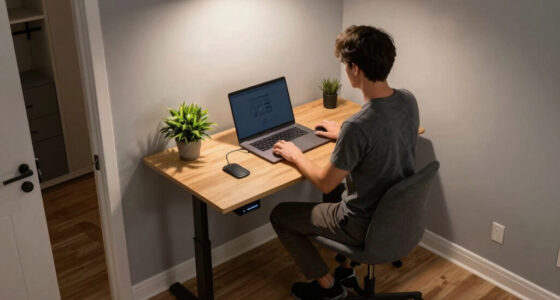
The layout of your desk isn’t just about aesthetics; it’s about how easily you can switch between tasks and stay organized. An L-shaped desk provides a natural corner workspace, perfect for creating dedicated zones for different activities. This separation can significantly improve your efficiency by reducing the need to constantly shuffle equipment or papers around, which often leads to interruptions and decreased focus.
Moreover, this physical division helps your brain mentally compartmentalize tasks, reducing cognitive overload. When you have distinct zones, you can focus more effectively on each activity without the distraction of clutter or misplaced items. On the other hand, a straight desk offers a continuous workspace that encourages a streamlined workflow but may require additional organizational tools to create zones. The choice impacts not only your physical organization but also your mental clarity, influencing how smoothly your day flows and how quickly you can transition between different types of work.
As an affiliate, we earn on qualifying purchases.
How space utilization shapes your decision
| Feature | L-Shaped Desk |
|---|---|
| Space efficiency | Uses corner space to maximize surface area without expanding the overall footprint, making it ideal for larger rooms or open-plan offices where multiple zones are needed. This layout minimizes wasted space and helps organize multiple tasks within a confined area, boosting productivity by keeping everything within arm’s reach. The tradeoff is that it can make the room feel more crowded if not carefully planned, and it requires a larger footprint to implement effectively. |
| Size requirements | Typically requires a larger footprint, around 60-80 inches in width and depth, which may be a tradeoff if space is limited. The larger size supports multiple monitors and accessories, but it’s essential to assess whether your room can accommodate it comfortably without feeling cramped or blocking pathways. |
| Flexibility in placement | Designed to fit into corners and utilize underused spaces, making it versatile for creating dedicated multitasking hubs. While this maximizes space efficiency, it can limit flexibility if your room layout changes frequently or if you need to reposition your workspace often. It’s ideal for permanent setups where the corner use is fixed. |
| Feature | Straight Desk |
|---|---|
| Space efficiency | Fits well in narrow or small rooms, often along a wall or in tight corners, conserving space for other furniture or movement. However, this can constrain your ability to create dedicated zones for different tasks, potentially leading to clutter if not well-organized. The tradeoff is that it’s easier to fit into existing spaces but might limit multitasking capacity without extra organizational tools. |
| Size requirements | Usually ranges from 48 to 72 inches wide, making it suitable for compact spaces. The narrower footprint makes it easier to fit into small rooms but may force compromises on surface area for multitasking equipment. It’s a practical choice for those prioritizing space-saving but may require additional organizational accessories for multiple monitors or peripherals. |
| Placement options | Best positioned along a wall or in tight corners, which can limit the extent of multitasking zones but keeps the workspace simple and uncluttered. This setup is ideal for single-task focus but may require additional organizational tools for multiple monitors or accessories. The simplicity of placement offers versatility but less dedicated zoning. |
As an affiliate, we earn on qualifying purchases.
Boosting productivity with layout design
Choosing the right desk can significantly influence your efficiency and mental clarity. An L-shaped desk allows you to dedicate different zones for specific tasks, such as one side for your main computer and another for secondary activities like note-taking, drawing, or research. This physical separation reduces the mental effort needed to switch contexts, which can lower cognitive fatigue and increase focus.
For example, a graphic designer might keep their drawing tablet on one side and their computer on the other, making it easier to work on multiple projects without constantly repositioning equipment. This zoning also encourages better organization, which prevents clutter from accumulating and helps maintain a clean, focused workspace. The clear division of zones supports a more efficient workflow, enabling you to switch between tasks with minimal disruption, ultimately boosting productivity and creative output.
As an affiliate, we earn on qualifying purchases.
How ergonomic flexibility influences your choice
Both L-shaped and straight desks can be configured to support ergonomic comfort, but their adaptability varies. An L-shaped desk often provides more options for monitor placement, allowing you to position screens at eye level on each side, which reduces neck and eye strain during long work sessions. Its corner design naturally facilitates a more ergonomic arrangement, enabling better lighting and keyboard positioning and reducing awkward reaches that can cause discomfort.
Conversely, a straight desk might require additional accessories like monitor arms or risers to achieve similar ergonomic benefits. While a straight desk can be easily adjusted with accessories, it might lack the inherent spatial advantages of an L-shape for multi-monitor setups or complex ergonomic arrangements. The key is how well you configure your workspace; a well-planned setup on either type can promote healthy postures, but the L-shaped desk’s natural corner advantage often makes it easier to create a balanced ergonomic environment.
As an affiliate, we earn on qualifying purchases.
Aesthetics and design — what suits your style?
Looks matter, especially if you spend hours at your desk. L-shaped desks often look modern and spacious, fitting well in open-plan offices or creative spaces. Their design can give your room a professional, organized vibe, especially when paired with sleek materials and clean lines. The visual impression of space and order can also influence your mood and motivation, making your workspace feel more inviting and inspiring.
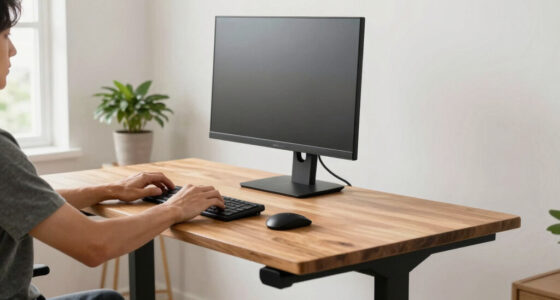
On the other hand, straight desks tend to have minimalist, simple designs that complement smaller or more traditional offices. Their straightforward appearance often blends seamlessly into various decor styles, creating a neat, uncluttered look. If your priority is a clean aesthetic that doesn’t draw too much attention, a straight desk might be the better choice. Both options can be customized with accessories, finishes, and colors to match your personal style, ensuring your workspace reflects your taste while remaining functional.
Cost, assembly, and long-term value
Expect to pay more for an L-shaped desk—often 10-30% higher—due to their larger size, more complex construction, and additional materials needed. This higher initial investment can be justified by the increased functionality and space efficiency if you utilize multiple zones regularly. However, the assembly process may be more involved, requiring more time and effort, especially if the desk is modular or customized, which can be a consideration if you prefer quick setup or minimal effort.
In contrast, straight desks tend to be more affordable, with simpler assembly that usually involves attaching a few legs or panels. They are ideal for budget-conscious setups or temporary arrangements. Over the long term, consider durability and adaptability: modular L-shaped desks can reconfigure or expand as your needs change, providing better value if your workflow evolves or space requirements shift. Investing in quality materials and modular components can enhance longevity and flexibility, making your setup more sustainable over time.
The future of desk design: adaptable and eco-friendly options
Trends now favor modular and adjustable desks that can adapt to changing workflows and ergonomic needs. Both L-shaped and straight desks are increasingly available with height-adjustable frames, enabling users to switch between sitting and standing positions easily. This flexibility not only promotes healthier work habits but also helps prevent fatigue and musculoskeletal issues that can arise from prolonged static postures.
Eco-friendly materials like bamboo, recycled metal, and sustainably sourced wood are gaining popularity, allowing for greener workspace choices. These sustainable options reduce environmental impact, improve indoor air quality, and add a natural aesthetic to your setup. Choosing such features can future-proof your workspace, making it adaptable, sustainable, and aligned with environmentally conscious values as your needs and preferences evolve.
Choosing the right desk: what really matters
Focus on your available space, your multitasking demands, and your ergonomic comfort. If your room is large and you need to create distinct zones for different activities, an L-shaped desk can be a game-changer, offering dedicated areas that improve workflow and organization. For smaller rooms or a minimalist approach, a straight desk provides a streamlined, space-saving option that still supports effective work habits.
Remember, the ultimate goal is a workspace that enhances your productivity and comfort. Think about how you move around during your workday, where your equipment goes, and how easily you can adapt the setup as your needs change. A well-chosen desk isn’t just furniture—it’s an investment in your efficiency and well-being.
Frequently Asked Questions
Is an L-shaped desk better for multitasking?
Yes. An L-shaped desk offers more surface area and better zone separation, making it easier to switch between multiple tasks without clutter. It’s especially helpful if you work with several monitors or need dedicated space for different projects.Can I convert a straight desk into an L-shaped one?
Not directly, but modular desks or add-on components can help. You can buy supplementary pieces to extend your straight desk into an L-shape or opt for a desk with a detachable corner unit for flexibility.What space considerations should I keep in mind?
L-shaped desks need more room, especially in the corner area—typically 60-80 inches wide and deep. Straight desks fit in narrower spaces, usually along a wall, but might limit multitasking zones. Measure your room carefully before choosing.Are L-shaped desks more expensive than straight desks?
Generally, yes. L-shaped desks cost about 10-30% more due to their size, complexity, and materials. However, their flexibility and space-saving benefits often justify the higher price.How do I pick the best desk for my workflow?
Assess your space, multitasking needs, and ergonomic preferences. If you handle multiple projects or use several monitors, an L-shaped desk may be best. For simple or compact setups, a straight desk might be enough.Conclusion
Ultimately, your workspace should serve your flow, not hinder it. An L-shaped desk can turn a corner into a command center, while a straight desk keeps things clean and simple. The best choice depends on your space, tasks, and personal style. Make your desk work for you, not the other way around.
Think about how you move through your day. Visualize your ideal setup. Then, build a workspace that helps you focus and thrive—your productivity will thank you for it.
Halloween Picks
halloween
As an affiliate, we earn on qualifying purchases.